
The Primal Fear Behind the Helm
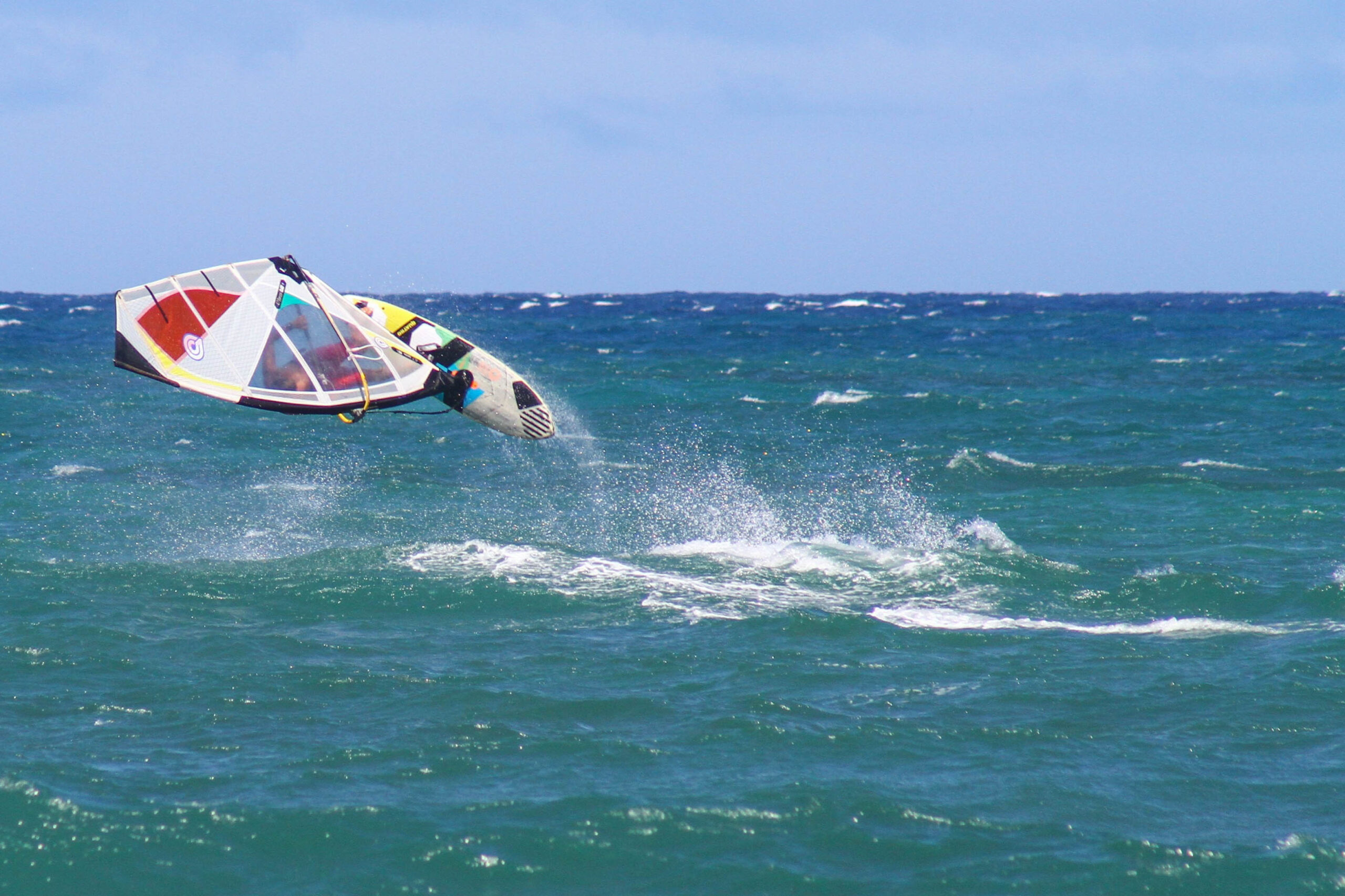
At first glance, throwing a forward loop on a windsurfer has absolutely nothing in common with skippering a charter yacht.
One involves throwing a somersault at 20 knots on a light carbon-fibre board; the other is a slow-motion game of chicken in an eight-ton displacement craft between concrete docks and hundreds of thousands of Euros worth of other people’s boats.
Yet underneath the surface, they share the exact same psychological hurdle: both trigger a visceral, primal fear, and both ruthlessly expose whether you actually own the fundamental mechanics or are simply winging it.
Your brain is hardwired for self-preservation. When you initiate a forward loop, you have to deliberately sheet in hard with your back hand, catapulting your body and rig directly over the front of the board while suspended in mid-air. Everything you learned from day one tells you to fight that instinct. But at some point, if you want to complete the rotation, you have to switch off the panic and commit.
Standing behind the helm of a yacht triggers a different version of the exact same panic.
You suddenly have total responsibility for an expensive, easily damaged piece of equipment that belongs to someone else. It feels gravitationally attracted to anything hard, sharp, or costly. Unless you are completely immune to stress or exceptionally gifted, your nervous system screams: “You have no business being in charge of this thing.” (Even circumnavigating Yachtmaster Oceans occasionally admit to this feeling).
When that primal fear spikes, most sailors do one of two things: they freeze, or they rush. And almost universally, they try to skip past the basics to prove they aren’t terrified.
The Maui Humbling: When 30 Years of Experience Collapses
In 2016, I returned to Maui. At that point, I had windsurfed for nearly 30 years, had lived on the island for almost two years, and had been a qualified Level 5 instructor. On paper, my credentials were fairly solid.
The Meltdown at Hookipa
I started the trip at the “commoners” beach—the forgiving spot where any intermediate sailor can cruise—and aced it. I threw forwards, carved 360s, stuck every gybe, and felt untouchable.
Riding that wave of confidence, I packed up and drove straight to Hookipa.
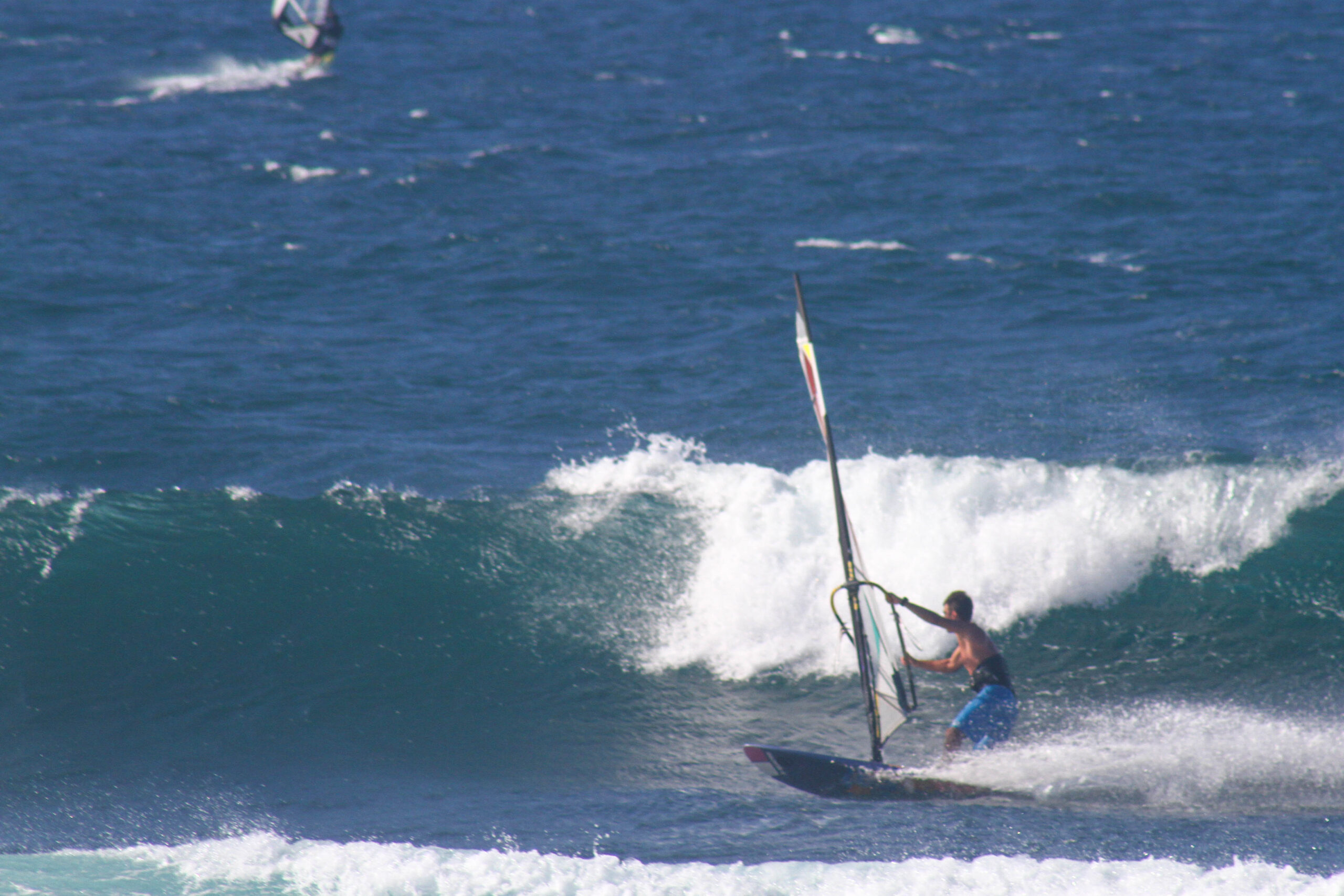
Hookipa is the mecca of windsurfing. It is where the posters on my childhood bedroom wall were shot, where the videos I studied were filmed, and where you rig your gear right next to your childhood heroes. The launch itself is barely 25 metres wide, bordered on both sides by jagged volcanic reef and a relentless shorebreak. Once you clear the impact zone, the wind drops inside a heavy current. It does not tolerate sloppy technique.
I rigged in a hurry, didn’t bother tuning the sail properly, and sprinted down the sand. I dropped my gear on the back of a wave, went for a beach start, and got blown backwards up the beach, pinned under my own rig.
I dragged myself out, walked past the break, and scrambled onto the board. Out the back, the wind dropped. Terrified of getting swept downwind onto the rocks, I forced another bad decision: I turned straight for the beach, directly into the rip current I knew was there. I spent the next twenty minutes swimming against the current with all my gear just to survive the wash.
I dragged my kit up the grass embankment, dropped it, put my head in my hands, and cried.
I hadn’t just embarrassed myself in front of my heroes; I had broken my own internal identity. I spent the next two weeks hiding at the beginner beaches. I sailed well enough, but I was terrified to go back to the break.
The Intervention at Kanaha
With only days left on the island, I swallowed my pride and hired a local pro whose fluid, powerful style at Hookipa I admired. When he asked if I wanted to meet at Hookipa, I was too ashamed: “No, let’s go to Kanaha.”
At Kanaha, we launched into steady trade winds. A hundred metres off the sand, I spotted a ramp, loaded the tail, accidentally hooked into my harness line in mid-air, and slammed into the water in a tangled heap.
As I surfaced, spitting saltwater, Levi sailed past, launched off the same wave, threw a textbook planing frontloop over my head, and sailed away without a drop of spray on his face.
I waterstarted, got back on the plane, and immediately threw myself into another rotation with the exact same ugly result.
Levi dropped his rig in the water right next to me. He didn’t offer a technical lecture on aerodynamics, board trim, or harness lines. He looked at me and said:
“No more forward loops today. You’re done.”
He banned me from rotating. Instead, he gave me an unglamorous, basic drill: go hit ramps, jump straight up, and pull your knees to your chest. Tuck, stay level, and land flat.
I had demonstrated this exact jump to hundreds of students over my career. Yet there I was, swallowing my ego, doing ten consecutive straight jumps with zero rotation. Just tucking.
On jump eleven, Levi nodded: “Now loop.”
I hit the ramp, sheeted in, and whipped it around. Ankles dry.
The issue had never been courage, rotation speed, or natural skill. The problem was that I was getting ahead of myself—forcing bad situations and rushing the rotation just to get the scary part over with. I had abandoned the foundational mechanics of the jump. The moment I stepped back and let the basic tuck become automatic, the advanced move solved itself.
When I admitted my Hookipa meltdown to Levi, he looked at me and said my sailing was more than good enough, and that I had nothing to worry about. A gatekeeper had unlocked the door. I drove straight back to Hookipa that afternoon and sailed it without issue.
Why “Skills Build Skills” is the Real Key to Skipper Confidence
Where Theory Meets Practice
I see this exact disconnect on cruising yachts every season.
You work hard to master navigation, COLREGs, weather theory, and passage planning. By the time you step onto the pontoon, you understand how a yacht works on paper and have earned the right to take the helm.
But then you check in at a charter base in Croatia, cast off the lines, and reality hits: knowing how to plot a course or read a chart doesn’t automatically give your hands the raw feel for how the boat behaves at 1 knot. Unless you have spent quiet, uninterrupted time just experimenting with throttle, momentum, and prop walk—whether on your own or during a dedicated skipper coaching week– it’s missing muscle memory that creates the hesitation.
When you feel that internal gap, it is easy to fixate on the single thing that triggers the most stress: docking. You overthink the marina approach, work yourself into an adrenaline spiral, and force bad situations that turn a relaxed holiday into an exercise in gelcoat (and pride) preservation.
They are trying to throw a hooked-in forward loop before they have learned how to jump straight.
On a cruising boat, skills build skills. Nothing exists in an isolated vacuum:
- You cannot slide a 40-foot yacht between two expensive boats in a 20-knot crosswind if you cannot bring the hull to a dead stop within six inches of a floating fender in an open, flat-water bay.
- You cannot safely run an asymmetric gennaker on a broad reach if the emergency snuffer douse isn’t boring, unconscious muscle memory in 8 knots of breeze.
- You cannot read subtle wind shifts in a tight harbour if you struggle to pick up a mooring buoy under sail in open water.
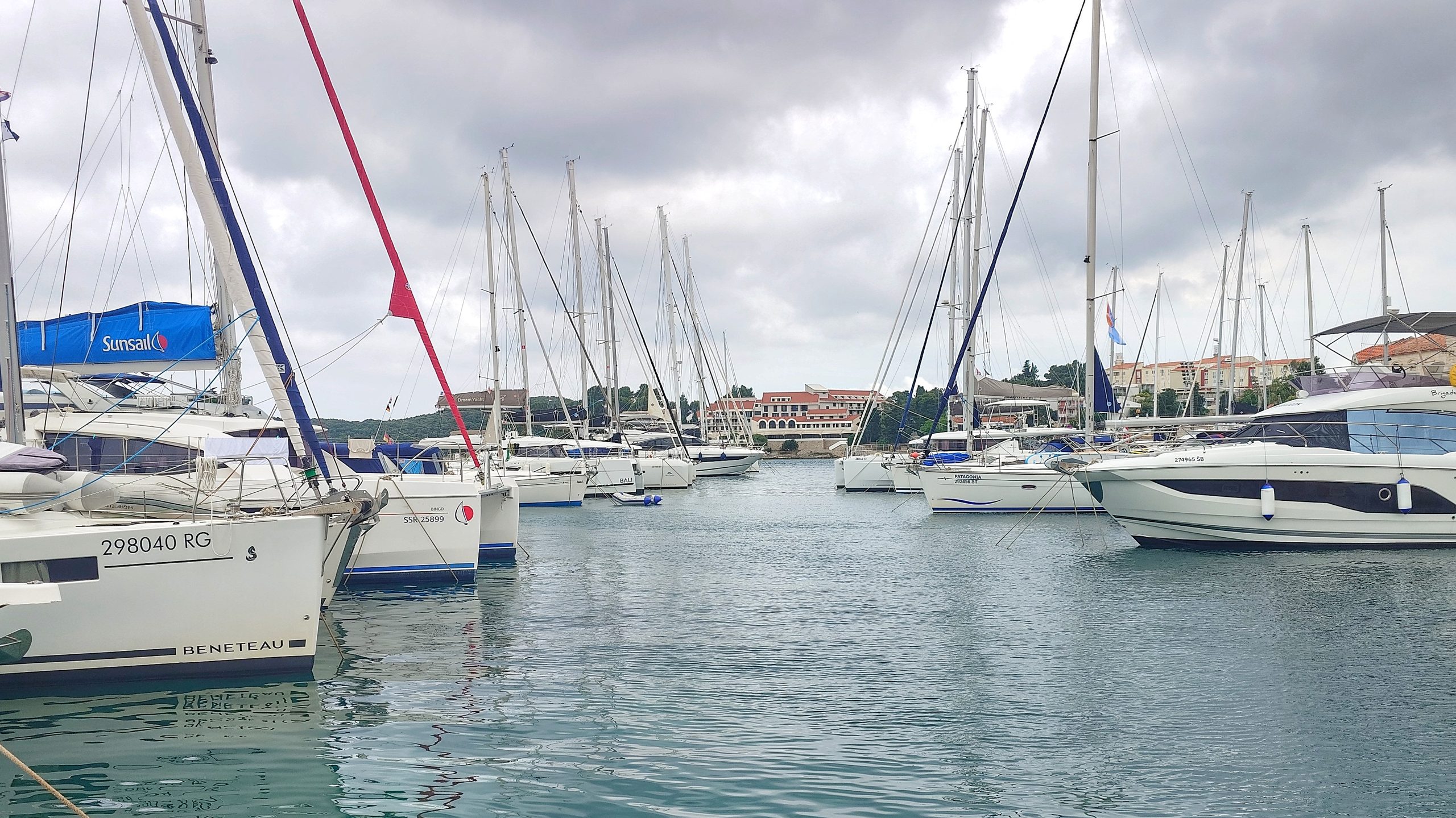
When a manoeuvre falls apart, the solution is almost never to push harder. The solution is to take a step back to go forward. Strip away the variables. Lower the consequences. Rebuild the baseline mechanic until your hands execute without your brain panicking.
How to Build Your Own Sailing Sandbox (Without the High Stakes)
If you are a cautious skipper holding a fresh license, you do not need a sixth commercial sailing course with an instructor breathing down your neck.
An instructor on board is an emotional buffer. As long as someone with a commercial Yachtmaster ticket is standing within arm’s reach of the throttle, your brain never shoulders the full, quiet weight of command. You never truly conquer the primal fear.
You don’t need another badge. You need a sandbox—a low-consequence environment where you can make mistakes without an audience.
1. Target the Shoulder Season
Avoid July and August at all costs. Charter in late April, May, or October. The charter bases are quiet, the fairways are empty, and the marina staff have the bandwidth to take a line without five other yachts waiting behind you.
2. Downsize the Platform
Resist the temptation to charter a 45-foot, twin-rudder condo for your first independent passage. Pick a modest 32-to-35-foot monohull. The winch loads are low, the lines are light, windage is manageable, and the hull responds immediately to basic helm inputs.
3. The Sunday Morning Marina Practice
On standard charter turnovers, Saturday is pure chaos, and Sunday morning sees every skipper scrambling to put miles on their logbooks. By 10:30 or 11:00 on Sunday, the home marina is virtually deserted.
Do not leave. Resist the urge to rush out on a 150-mile passage. Stay tied to the dock until the fairways clear.
Spend two quiet hours backing in and out of an empty hammerhead berth, back down the fairway at 1 knot. Shift into neutral and observe how far the hull glides. Give the throttle a short, hard burst of reverse and watch exactly which way your stern kicks against prop walk.
No spectators. No cross-traffic. Massive margins for error.
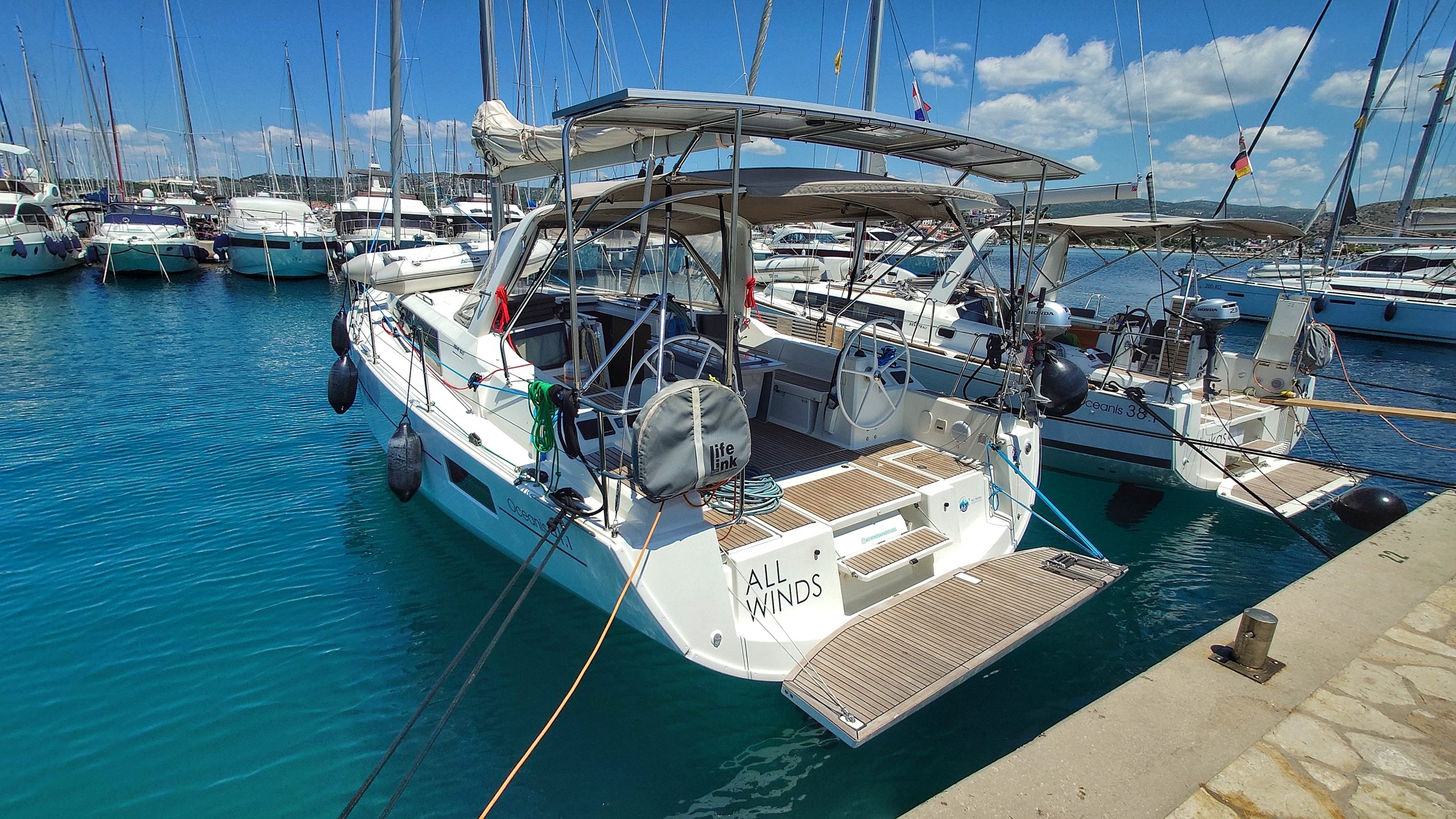
You are simply doing your ten straight jumps.
Once those physical mechanics are wired directly into your muscle memory, you take genuine skipper confidence with you out to sea. And when you decide to step up to high-current tidal waters or advanced offshore passages, you won’t be doing it to outrun your anxiety—you’ll be doing it because your foundation is unbreakable.
Sometimes, stepping back is the only way forward.
Where Are You Taking Your Seamanship Next?
Whether you are bridging the gap from license to real confidence, chartering your next holiday, or sailing locally in Switzerland, choose the pathway that matches your plans.
Build Real Seamanship & Confidence
Ditch empty mile-building and crowded bunks. Join Head Coach Dave aboard our Beneteau Oceanis 41.1 in Croatia. Maximum 3 guest cabins, private accommodation, and dedicated coaching grounded in sports biomechanics.
Charter With Mechanical Sympathy
Charter All Winds directly from Marina Frapa, or let our independent agency source and vet quality bareboat yachts worldwide. We handle the technical vetting so you avoid tired charter fleets and deposit traps.
Join Us in Switzerland
Step aboard on Lake Zug for after-work social sails, join a windsurfing clinic, or attend our online workshops covering boat-handling dynamics, weather app interpretation, Swiss D-Schein exam strategy and much more.
Absolutely. Passing an exam proves you understand navigation and rules, but it doesn’t give you a kinetic boat feel or spatial awareness. Imposter syndrome is incredibly common among newly certified skippers. The cure isn’t another certificate; it’s focused, low-speed practice to build muscle memory.
Apply the “Sandbox Test.” Can you confidently bring the yacht to a complete standstill next to a floating fender in open water and hold it there using just throttle and prop-walk? If yes, you are ready for a low-stakes off-season charter. If you still freeze or guess at the controls, you need a bit more guided coaching first.
In July and August, marinas are full, fairways are tight, and the pressure is immense. In April, May, or October, the charter bases are quieter. You have the physical space and the time to practice manoeuvres, make mistakes, and reset without an audience of fifty other boats watching you.
Mental rehearsals away from the boat are a great start, but sailing smaller boats—like dinghies or small keelboats—is where you learn mechanics deeply. Small boats give immediate physical feedback: you feel sail pressure, helm balance, and wind drift without the distraction of heavy winches or engines. That deep mechanical understanding makes it much easier to break down and explain manoeuvres on larger cruising yachts.
It means lowering the variables. If you are struggling to reverse into a berth in 15 knots of wind, stop trying. Go out into open water, drop a fender in a calm bay, and practice reversing up to it until your hands work the wheel and throttle without thinking. Once the foundation is solid, you can add the wind and the concrete walls back in.

No responses yet