Walk down any marina dock from Split to Lefkas, and you will hear someone warning a nervous skipper about modern twin-rudder cruisers. Sailing forums treat them like an untamable, slip-sliding beast in a tight marina, and coaches advertise specialised “Twin-Rudder Masterclasses” playing directly into the anxiety.
It is almost entirely marketing hyperbole.
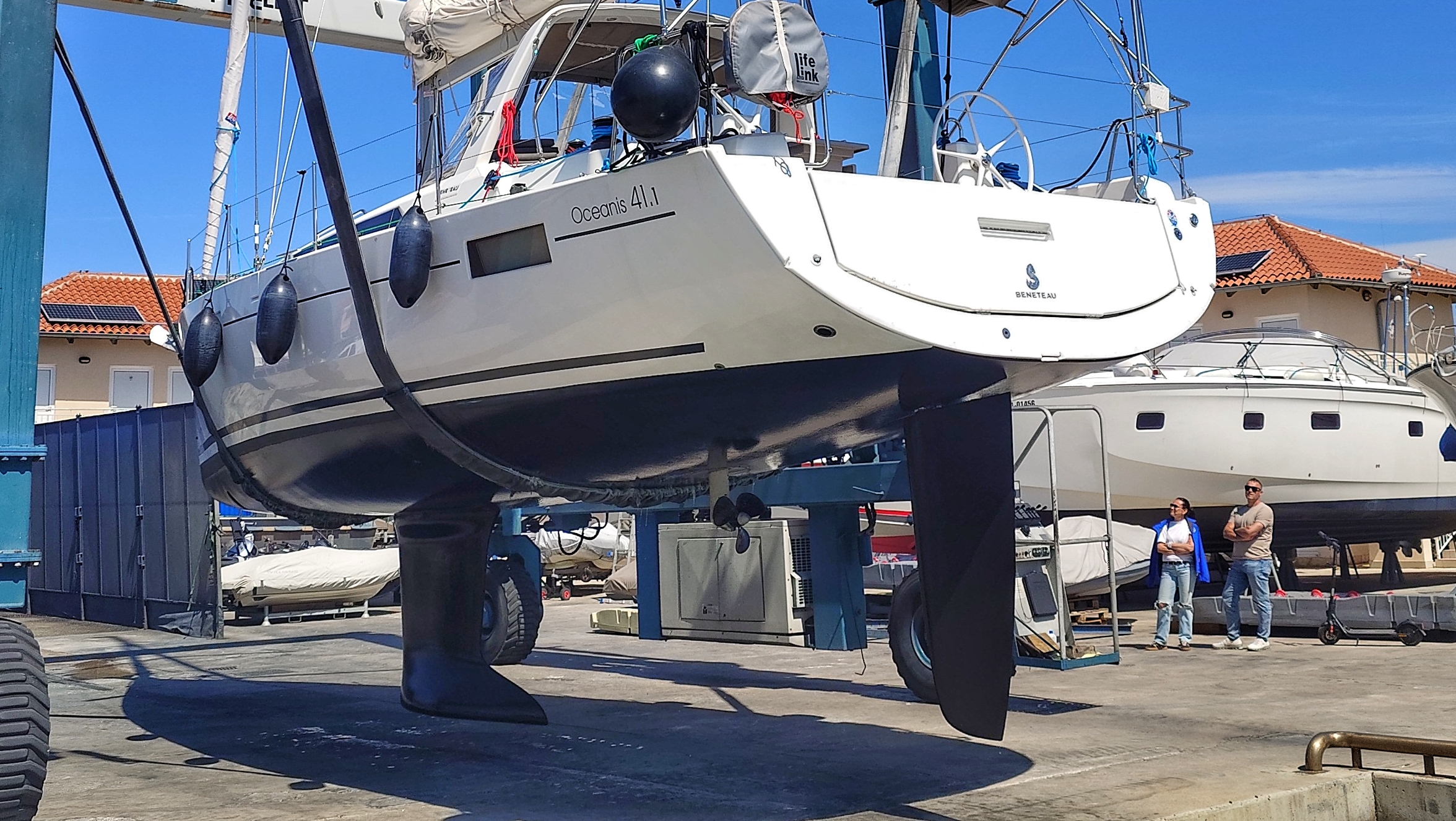
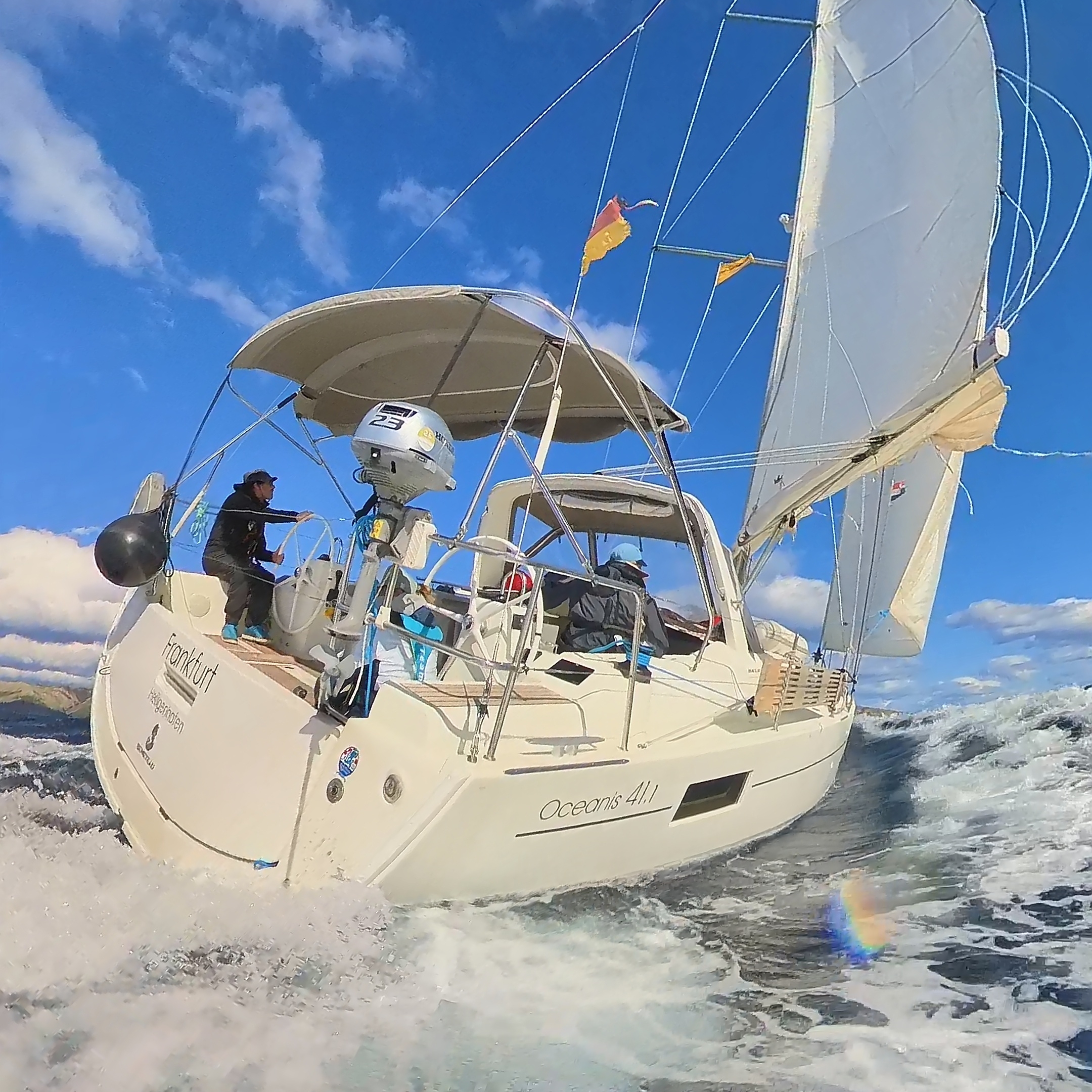
On a modern fin-keel yacht, a twin-rudder boat and a single-rudder boat behave virtually identically in 95% of real-world close-quarters situations. Going ahead, both rotate around a central keel pivot point. Going astern, once water moves over the foils, both steer with the directness of a car. Modern charter boats often have twin rudders, but many single-rudder boats can be found in charter fleets such as our own Beneteau Oceanis 41.1.
The entire debate hinges on one narrow operational window: when the boat is stationary (or barely moving) and you put an impulse into the throttle.
In that single moment, prop wash over a single rudder can be a useful tool—if, and only if, you 100% understand what the water flow is doing. But if you lack that instinctive feel, that same single rudder becomes a liability that gets you into trouble faster than twin rudders ever could. In fact, for many skippers, a twin-rudder boat is actually the far more forgiving platform.
Our Core Mantras: The Foundation of Clean Handling
Before obsessing over how many blades hang beneath your hull, throw out the dockside panic and anchor your boat handling in our two core mantras:
1. A moving boat is a stable boat.
The moment water moves across a foil—keel or rudder—at even 1 knot, the boat tracks predictably. The moment an anxious skipper panics, chops all boat speed, and sits motionless in the fairway, the boat ceases to be a steerable vessel and becomes a flat-bottomed raft at the mercy of windage.
But remember as slow as possible, as fast as you need.
2. Neutral is a gear.
Inexperienced skippers treat the throttle like a car accelerator—constantly revving, braking, and slamming the cone clutch across the gate. Engaging gear is simply a way to transfer energy to the hull. Once you have established that momentum, return to neutral. Gliding in neutral gives you clean water flow over the foils without turbulent prop churn fighting your rudders, buys you time to assess your line, and saves the gearbox.
If you follow these two rules, whether you have one rudder or two is almost completely irrelevant.
Premature Helm: When the Foil Becomes a Brake
The single biggest mistake skippers make when backing down—on both single and twin rudders—is throwing the helm over while the boat is still dead in the water.
When motionless, angled rudder blades don’t steer; they act as underwater brakes. Instead of slicing cleanly to let the hull gain that crucial 1 knot of flow, the flat faces of the blades create massive drag, keeping the boat stuck in the “dead zone.” Even worse, cocking the rudders sideways eliminates their lateral resistance, giving prop walk and crosswinds free rein to shove the transom off line.
The rule is absolute: Keep the wheel dead straight until the boat actually has speed through the water. Once you have flow, then introduce the turn.
One final, non-negotiable rule: never let go of the wheel in reverse. Going astern, water hits the fine trailing edge of the foil first; if your grip slips, the water force will violently whip the helm into the steering stops, risking bent quadrant stops, stripped cables, damaged rudders or broken fingers.
When backing into a Med-moor berth, the sequence is identical on both boats: line the hull up straight (or slightly angled into the wind or prop walk), keep the helm centred, drift in neutral, and apply smooth reverse to stop forward way and establish sternway. Once the boat is gliding backwards, both single and twin rudders give positive, direct steerage.
Progressive Throttle vs. The “Panic Blast”
One of the biggest mistakes skippers make when trying to manoeuvre is “blasting” the throttle in erratic bursts.
You should never punch the throttle forward or slam it into hard reverse. Apply power smoothly and constantly, increasing revs progressively if needed, and then return cleanly to neutral.
On a single-rudder boat sitting stationary in light wind, you don’t need a massive rev spike to initiate a turn. Simply clicking the throttle into forward gear at dead idle revs pushes just enough gentle prop wash across the deflected blade to start the boat rotating on the spot without leaping forward.
As the crosswind increases, you need more throttle to overcome the windage on the bow. But there is a ceiling to this physics: eventually, the wind becomes strong enough that the boat will not rotate without gaining forward speed anyway.
Once you are forced to gain forward speed to make the turn, that alleged “single-rudder prop wash superpower” is gone. You are relying on hull speed over the foils—and at that point, you might as well be in a twin-rudder boat.
The 5% Difference: When Single Rudders Bite Back
The Legitimate Single-Rudder Superpower: Springing Off using a Spring Line
To be fair to traditional single-spade rudders, they hold one undeniable mechanical advantage over twin rudders: springing off a berth.
If you are pinned against a quay by wind, a single rudder lets you use prop wash as a hydraulic lever. Pin the boat against a forward spring line, turn the wheel hard towards the dock, and apply gentle forward throttle. The direct prop wash hits the deflected blade and forces the stern out into the fairway against the line’s tension. Once the stern is clear, shift to reverse, slip the line, and back out smoothly.
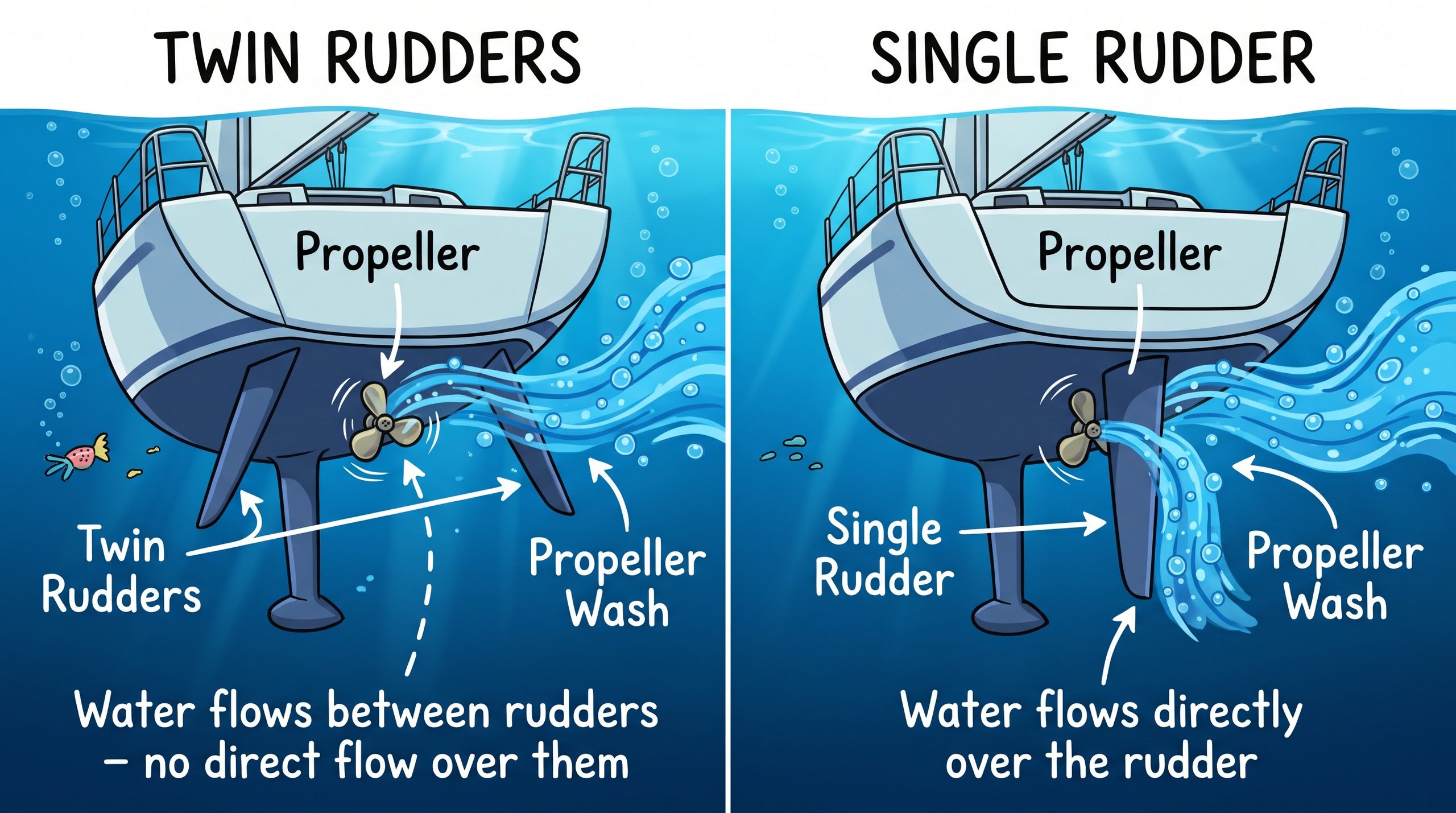
On a twin-rudder boat, you cannot do this with prop wash alone because the discharge shoots harmlessly between the blades. You have to rely purely on hull shape, fender compression, and spring geometry to lever the boat out. If you leave tight quays using spring lines regularly, this is the one area where a single rudder is genuinely superior.
The direct prop wash on a single rudder can be used almost like a stern thruster by a master skipper. But without complete mechanical sympathy, that same wash sets two very common traps:
1. The “Obstacle Avoidance” Paradox
Imagine you are manoeuvring in tight quarters. You have open water to port, but a concrete quay or a yacht’s bowsprit sits tight to your starboard quarter.
The intuitive, untrained reaction is to turn the wheel hard to port to “steer away” from the danger, followed by an anxious push of forward throttle. On a single-rudder boat, that blast of water hits the port-deflected blade and immediately kicks the stern violently to starboard—slamming your transom straight into the very obstacle you were trying to dodge.
On a twin-rudder boat, the prop wash shoots harmlessly between the blades into empty water. The boat moves gently ahead without the violent, unexpected lateral kick.
2. The Med Moor Stopping Misconception
You are backing down toward a stone quay between two yachts. On a single-rudder boat, you must be 100% perfectly lined up with the rudder dead straight before engaging forward gear to stop your sternway.
If you are tense, looking over your shoulder, and holding the wheel just 15° off-centre when you apply forward throttle to stop, the prop wash strikes the angled blade. Instead of acting as a pure brake, the rudder acts as a giant lever, kicking your stern sideways and laying your boat helplessly across the berth.
A twin-rudder boat is vastly more forgiving here. Because the prop wash flows into empty water between the two blades, the boat stops in a dead-straight line, whether your rudders are straight or cocked off-centre. In the high-stress moment of stopping feet from the stone, the twin rudder provides a built-in margin of safety.
Nevermind Prop Walk: Wind Is Your Superpower
Marina pontoon debates endlessly obsess over prop walk: “She walks to port in reverse, so you can only turn to starboard.”
In dead-flat, windless water inside an enclosed basin, that is true. But the moment you have 15 knots of breeze blowing across the marina, windage completely overpowers prop walk.
A modern 40-foot cruising yacht has high topsides, a plumb bow, and a large dodger acting as a sail. If you try to back out of a berth and turn the stern against a 15-knot crosswind simply because “the prop walk kicks that way,” the wind will pin the bow, blow you sideways, and leave you draped over the downwind anchor chains.
Stop fighting prop walk. Use the wind as your superpower:
- Look at which direction the breeze wants to push the bow.
- Turn the boat with the wind, not against it.
- Let the wind push the bow through the eye of the turn while you manage your momentum.
The Tight-Quarters Pivot (Turning in Your Own Length)
You do not need prop wash to spin a modern yacht within its own length. You need the fin keel, which acts as the vertical pivot pin the entire hull balances upon.
Here is how to spin either a single- or twin-rudder boat 180 degrees in a narrow channel:
- Build Forward Way: Engage forward gear smoothly to establish roughly 1 to 1.5 knots of forward movement, then shift immediately into neutral.
- Apply the Helm: Put the wheel full over. With clean water flowing over the hull, the boat will begin to carve around its keel.
- The Controlled Reverse: While the boat is actively pivoting around its fin keel (see the pivot point mechanics explained below), leave the rudder as it is and apply smooth, gentle reverse power to arrest forward travel without killing hull rotation.
- Kill Way, Keep Rotation: This reverse power checks your forward travel before you hit the far side of the fairway, but the hull’s rotational momentum keeps the boat spinning.
- Neutral, Then Forward: Before the boat actually begins moving backwards through the water, shift to neutral, adjust your heading, and apply smooth forward throttle again.
Executed smoothly, a twin-rudder boat will turn almost on its own length. A single-rudder boat—even with a well-timed throttle kick—will only turn marginally tighter. The fin keel is doing 80% of the rotational work, not the rudder blades.
The Pivot Point
Much of the mythology around twin versus single rudders comes from unfair comparisons—pitting a modern, wide-transom twin-rudder boat against a traditional full-keel or heavy skeg-hung single rudder.
In reality, if you compare two modern fin-keel boats with similar hull shapes and balanced spade rudders, the pivot point going forward is in almost exactly the same place: right around the keel foil (with slight variations depending on keel profile, rudder placement, and whether she runs a saildrive or shaft).
When motoring ahead, turning the wheel forces the stern to kick out from behind this pivot point. Going astern, the hydrodynamic roles reverse: the keel and water flow drag the bow along behind the turn, making the boat track much like a front-wheel-steered car driving forward.
Why Twin Rudders Feel “Grippier” in Reverse
Many skippers who step onto twin-rudder boats report a distinct subjective sensation: they feel slightly better and more positive in reverse than single-rudder boats, almost as if the stern is being actively drawn into the turn.
When backing down, the water flow travels from transom to bow, meaning the rudders are not operating in the propeller or sail-drive wash on either setup.
While textbook hydrodynamic studies rarely dwell on production cruising sterns, a compelling explanation lies in foil physics: you have two foils interacting with clean water flow.
As the boat moves astern with the helm over, both rudders develop high- and low-pressure sides simultaneously across a wider structural footprint on the hull. That combined pressure differential can generate significantly more lateral lift toward the direction of the turn than a single centre-mounted spade blade fighting the turbulent profile of the aft hull.
Whether that exact dual-foil lift profile is ever measured in a university cavitation tank doesn’t change the cockpit reality: once a twin-rudder boat has clean sternway, it tracks astern with exceptional stability.
The Real Performance Advantage: Powering Off the Wind
Where twin rudders truly excel is in performance under sail—and not just upwind.
Many sailors mistakenly assume twin rudders are designed solely for balance when heeling upwind. In truth, modern wide-transom hulls with high-volume forward sections aren’t built for pinching high upwind angles anyway. Where this hull shape genuinely shines is cracking off onto a reach or running powered up deep downwind.
Going downwind in 25 knots of breeze, lateral resistance is at a minimum, and bearing away in the gusts is the textbook tactic. Sailing a single-rudder boat like our Oceanis 41.1 downwind at 12 knots is exhilarating and entirely manageable—but it demands continuous concentration and a firm, proactive hand on the helm.
As the power comes on, the boat leans slightly over, weather helm increases, and the rudder begins lifting toward the surface. Counteracting this requires heavy physical input on the wheel; the later you are to correct, the more pressure you fight. Overcorrecting turns the deflected blade into a high-drag brake, eventually stalling the flow over the foil and breaking traction. If you lose control, you lose it fast.
This is where a twin-rudder cruiser like the Sun Odyssey 410 feels fundamentally different. Because the blades are canted outboard, as the boat rolls and tracks across following seas, the leeward blade stays deeply immersed in clean water.
Even as the rig loads up, the helm remains surprisingly light—almost like steering a responsive dinghy rather than a 10-tonne cruising yacht. You aren’t wrestling the wheel, and the boat grants a far wider margin for error before it threatens to break away.
That directional stability off the wind is why twin rudders have become standard across shorthanded offshore racing (Mini Transats, Class 40s, IMOCAs)—not because a single rudder can’t handle speed, but because twin rudders allow you to sustain that speed with a fraction of the physical fatigue and a much larger safety buffer.
The Reality
Twin rudders were designed to improve sailing performance—allowing modern wide-beam hulls to lock onto a chine, heel to 20 degrees, and track on rails without rounding up in gusts.
They were not designed to make docking difficult.
Stop treating them like a handicap. Apply throttle smoothly rather than stabbing at the lever, respect the wind across your high-sided bow, treat neutral as an active gear, and let the hull’s momentum do the work. Once you master the glide, you will realise that whether you have one blade or two below you, the principles of good seamanship never change.
Explore the Elements with All Winds Adventures
Mastering close-quarters boat handling transforms docking from a high-stress gamble into a calm, repeatable routine. Understanding hull momentum, windage, and mechanical sympathy is what turns an anxious holiday into confident manoeuvres.
- Charter All Winds Directly: Our beautifully prepared Beneteau Oceanis 41.1 is available for private charter bookings directly from our base in Croatia.
- Worldwide Charter Brokerage: Looking to explore other waters across the Ionian, Adriatic, or Tyrrhenian seas? As an independent charter agency, we source and vet quality fleets worldwide, managing all background logistics for you.
- Sailing & Windsurfing Coaching: Want to master heavy-weather sail trim, analyse complex local wind compression zones, or perfect your Mediterranean mooring techniques? Build your practical capabilities on the Swiss Lakes (Zug/Zurich) or join us for an intensive training week in the Mediterranean.
Where Are You Taking Your Seamanship Next?
Whether you are bridging the gap from license to real confidence, chartering your next holiday, or sailing locally in Switzerland, choose the pathway that matches your plans.
Build Real Seamanship & Confidence
Ditch empty mile-building and crowded bunks. Join Head Coach Dave aboard our Beneteau Oceanis 41.1 in Croatia. Maximum 3 guest cabins, private accommodation, and dedicated coaching grounded in sports biomechanics.
Charter With Mechanical Sympathy
Charter All Winds directly from Marina Frapa, or let our independent agency source and vet quality bareboat yachts worldwide. We handle the technical vetting so you avoid tired charter fleets and deposit traps.
Join Us in Switzerland
Step aboard on Lake Zug for after-work social sails, join a windsurfing clinic, or attend our online workshops covering boat-handling dynamics, weather app interpretation, Swiss D-Schein exam strategy and much more.
Yes, absolutely. Once the yacht establishes even 0.5 to 1 knot of sternway, dual foils provide direct, car-like steerage. Furthermore, twin rudders eliminate the dangerous lateral kick caused by off-centre prop wash when braking forward near the stone—provided you follow our two core throttle mantras.
The propeller sits on the hull centreline, while the rudders are mounted wide on either quarter. When stationary, the stream of water driven by the propeller passes through empty space between the two blades. Without water physically flowing across the surface of the foils, the rudders cannot generate hydrodynamic lift or pivot the boat until the hull begins moving forward through the water.
Use the fin keel as a pivot pin rather than relying on engine blasts. Build 1 to 1.5 knots of forward speed, shift cleanly into neutral, and put the helm hard over. As the hull carves through the turn on its own momentum, apply smooth, gentle reverse to check forward way without killing the rotation. Shift back to neutral before the boat travels astern, and pulse forward to complete the manoeuvre.
Yes, but its influence is often misunderstood. The propeller blades still produce transverse thrust in reverse, pulling the stern slightly to one side as the shaft engages. However, on a modern cruiser with high topsides, crosswinds exert far more lateral force than prop walk ever will. Furthermore, because there is no centre rudder to deflect prop wash, you cannot use throttle bursts at zero knots to artificially overcome or exploit that walk.
You can, but the mechanics differ. On a single-rudder boat, you can deflect prop wash directly into the dock to force the stern out against a spring line. On twin rudders, the wash bypasses the foils, so engine wash alone will not lever the stern outward. Instead, you must rely on hull geometry, progressive fender compression, and spring tension to ease the stern out into the fairway. Alternatively, use a stern spring to spring the bow out. This often works better on a Twin Rudder boat.
Turning the helm while the boat is dead in the water turns the rudder blades into massive underwater brakes. Instead of allowing the hull to accelerate cleanly to the 1 knot required for steerage, angled blades create drag that pins the boat in the dead zone. Additionally, angled foils lose their resistance to lateral drift, allowing crosswinds and prop walk to drag the stern completely off course. Always keep the helm centered until you have established clean movement through the water.

No responses yet