
Over the years, I’ve had the pleasure of spending considerable amounts of time with Mountain guides. They have a bit of an in-joke in saying that the most dangerous group you can ski off-piste with is a group of mountain guides. While this is usually tongue-in-cheek, there is some reasoning behind it. As they are so used to carrying the responsibility for those with them, when with other guides, everyone quietly assumes someone else is checking the snowpack, watching the line, and keeping an eye on the clock.
It might not be quite the same on a cruising boat, as someone is usually either the boat owner or the skipper, but put four skippers in the cockpit of a charter yacht, and you will often see a similar phenomenon unfold when things are going quite easy. (but can also change – sometimes for the worse – when conditions get more challenging)
It is remarkably easy, once we pass an exam and get comfortable in our local patch of water, to climb onto a small ivory molehill and decide we have figured sailing out. From up there, it becomes very tempting to judge everyone else—including the people sailing at the absolute pinnacle of the sport.
From the dry comfort of a sofa, everything at sea looks obvious. Scroll through any sailing forum after an offshore race hits rough weather, and there is always a small, loud chorus of armchair admirals quick to pass judgment without seeing the wider picture.
When Armel Le Cléac’h capsized the 32-metre Ultim trimaran Banque Populaire in the Route du Rhum, their verdict in the comments was instant: “Oh, another trimaran flipped over—what did they expect?
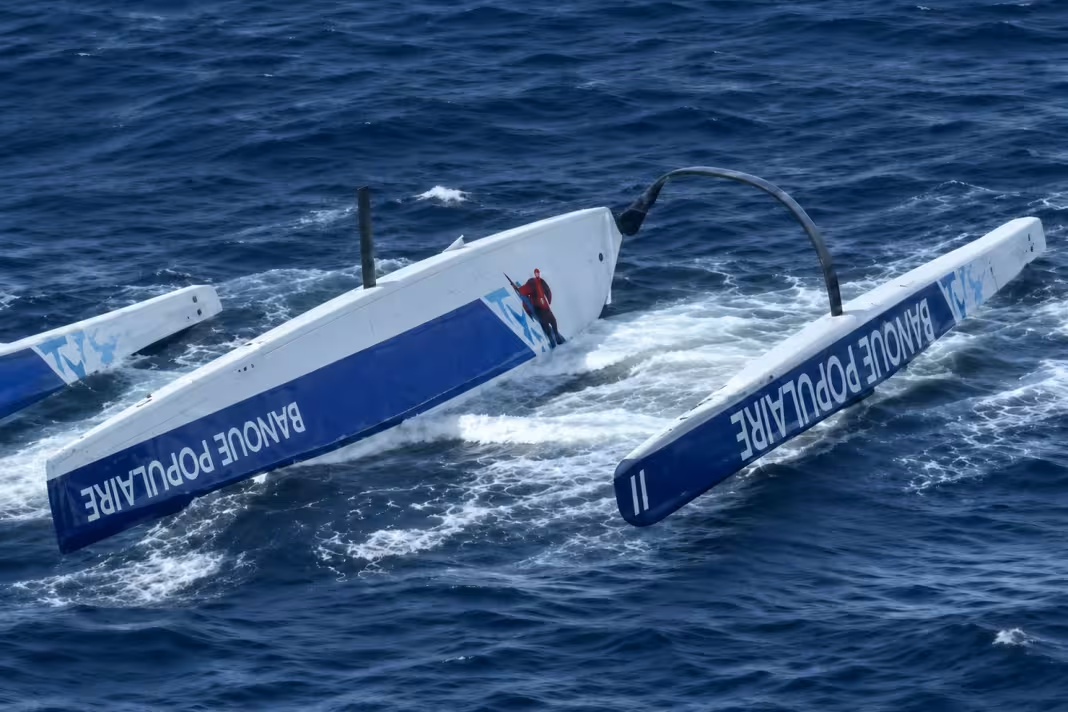
That view completely misses the point. Smaller Ocean 50 trimarans have historically had a habit of falling over almost as regularly as the local drunk heading home after closing time, whereas the giant Ultims have proved extraordinarily reliable over the past few years. In fact, the last Ultim to capsize was the previous Banque Populaire 8 years ago in the same race—with the same skipper at the helm.
We saw the same reflex when Holcim-PRB lost their mast in The Ocean Race, with a vocal few insisting from home that the crew got their radio protocol wrong by calling a Pan-Pan rather than a Mayday. Never mind that the crew were unharmed, the hull was intact, and nobody needed a helicopter rescue—which makes a Pan-Pan (urgent situation, no immediate danger to life or vessel) textbook seamanship.
Deep down, judging from shore is a comforting reflex: if we convince ourselves that things only go wrong for careless people, we don’t have to admit that the ocean can catch anyone out. Yet the best sailors on the planet operate with the exact opposite mindset.
Even 160,000 Miles Doesn’t Make You Bulletproof
Before that fateful night in the Route du Rhum, Armel Le Cléac’h had sailed more than 160,000 miles upright aboard Banque Populaire 11. That is roughly six and a half laps of the planet (including sailing the boat single-handed around the world to come second in the Arkea Ultim Challenge) without putting the mast in the water. It took one 40-knot gust while crossing a cold front in the pitch dark, 550 miles northwest of the Azores, to finally catch him out.
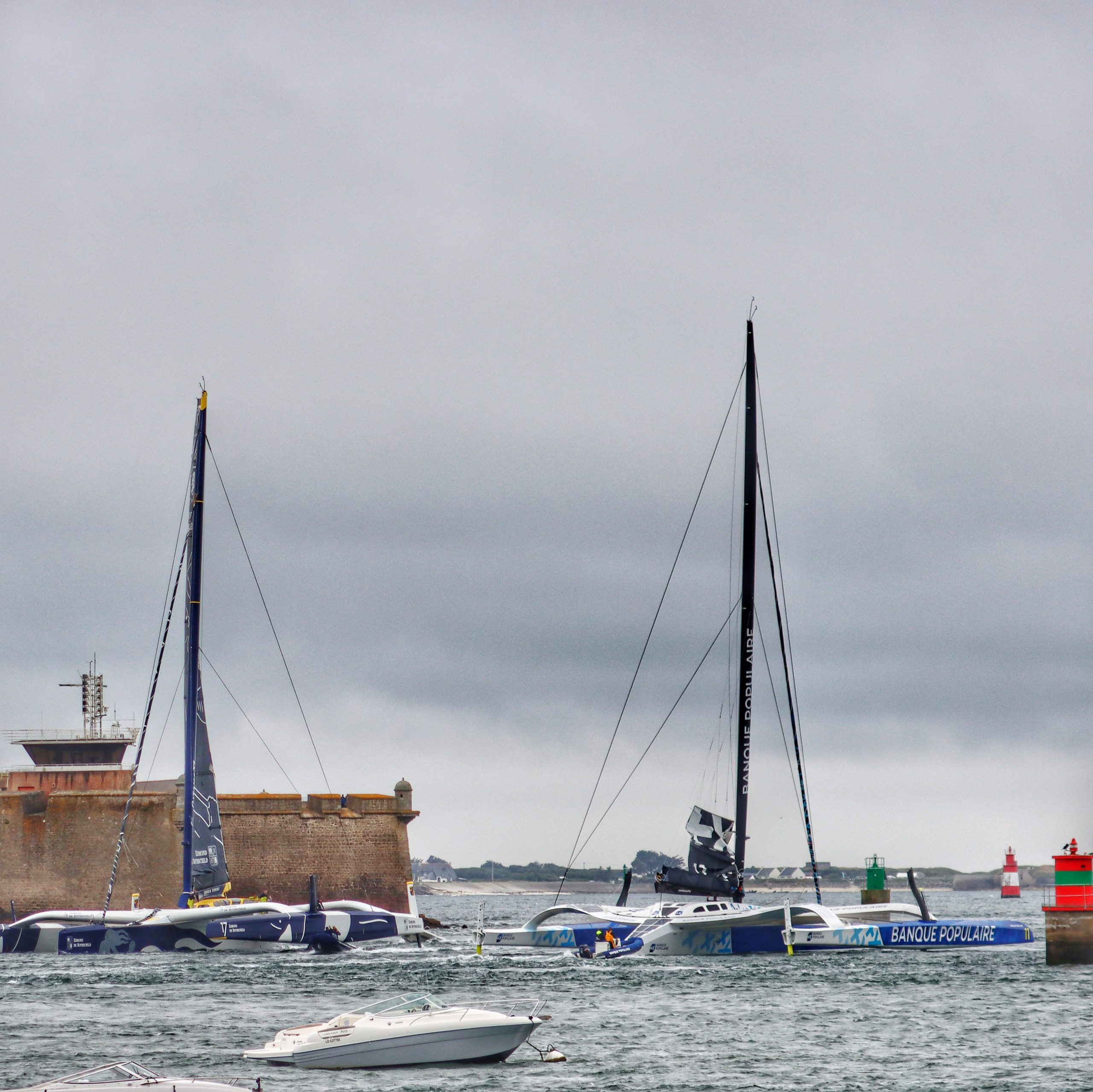
Charles Caudrelier—another titan of the Ultim class—has pointed out that modern flying Ultims are actually safer in many conditions than older designs, because the foils generate lift that holds the leeward hull clear of the water as the boat powers up, making it much harder to trip over a wave.
The contrast in the armchair skippers to the real skippers could not be more extreme. Tom Laperche – Skipper of SVR Lazartique, who subsequently won the Route du Rhum – was almost in tears when describing how he got notification of Armel’s distress beacon and started to make his way for a rescue, before being stood down when he was told that Armel was safe and uninjured in the upturned hull. The emotions returned when he described that he was now operating at 90% and not at 150%, an indication that he and Armel were pushing it beyond the ragged edge when they were racing neck and neck almost within sight of each other that night. Reading between the lines, seemingly an acknowledgement of the fear he felt when he realised it could just as easily have been him upside down.
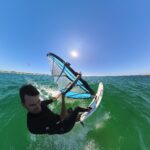
What I love most about these offshore skippers, though, is what they do on their days off. When the guys racing the largest, fastest, most technologically complex yachts on earth want to unwind, they don’t go for a gentle motor-sail on a 45-foot cruiser or sit on the sofa. You will find them wing-foiling, kite-foiling, or sailing International Moths or even foiling catamarans like an A-Cat or a Nacra.
They play in tiny, twitchy, unforgiving craft for fun—and to keep their feel for small-boat dynamics sharp. They know that big boats numb your senses. And they also know a fundamental truth about the ocean: you don’t win the Vendée Globe, the Route du Rhum, or The Ocean Race by making no mistakes. You win by making fewer mistakes than everyone else while exhausted, single-handed, and operating on razor-thin margins.
Why Perfection Is an Illusion (Even When Your Knees Are Shaking)
So why on earth do recreational sailors beat themselves up for needing a second attempt at a stern-to berth?
I know that pressure intimately, because I suffered from it for years. When I moved from a pragmatic, skills-based RYA background in Ireland and the UK into the German-speaking DACH sailing environment, I suddenly felt constantly watched—and weighed down by an unspoken expectation that a qualified skipper should execute everything cleanly on the first try, every single time.
On some of my own early charters in the Mediterranean, I literally stood at the helm docking the yacht with my knees physically shaking. It wasn’t because I didn’t know how to handle the boat—I had already worked for years as a sailing and motorboat instructor. It was purely the self-imposed stress of trying to look infallible in front of a quay full of onlookers.
Eventually, I looked around the marinas and realised a liberating truth: nobody out here is perfect. More often than not, the people quickest to point out someone else’s messy mooring line from the comfort of their cockpit chair are only doing it to make themselves feel a little better about their own nerves.
Perfection on the water is a complete illusion. We can always refine our feel and do better, and even world-class skippers make mistakes. What separates calm seamanship from chaos isn’t flawless execution—it is limiting the consequences when a mistake inevitably happens.
How Heavy Cruisers Lull Us Into “Autopilot”
In much of the cruising world—and especially in countries with strict licensing systems—we treat paperwork like a magic finish line. Before you hold the laminated card, you aren’t trusted to untie a bowline. The moment you pass your exam, you are suddenly deemed ready to take a 12-tonne yacht anywhere you like.
The problem is that many cruising sailors learn exclusively on heavy, forgiving yachts and never touch anything smaller.
I got a very vivid reminder of this not long ago when I took an experienced, licensed cruising skipper out for a spin on our Dart 18 catamaran. In light winds, everything was effortless. We had the gennaker up and down, tacked cleanly, gybed smoothly, and chatted away while gliding across the lake.
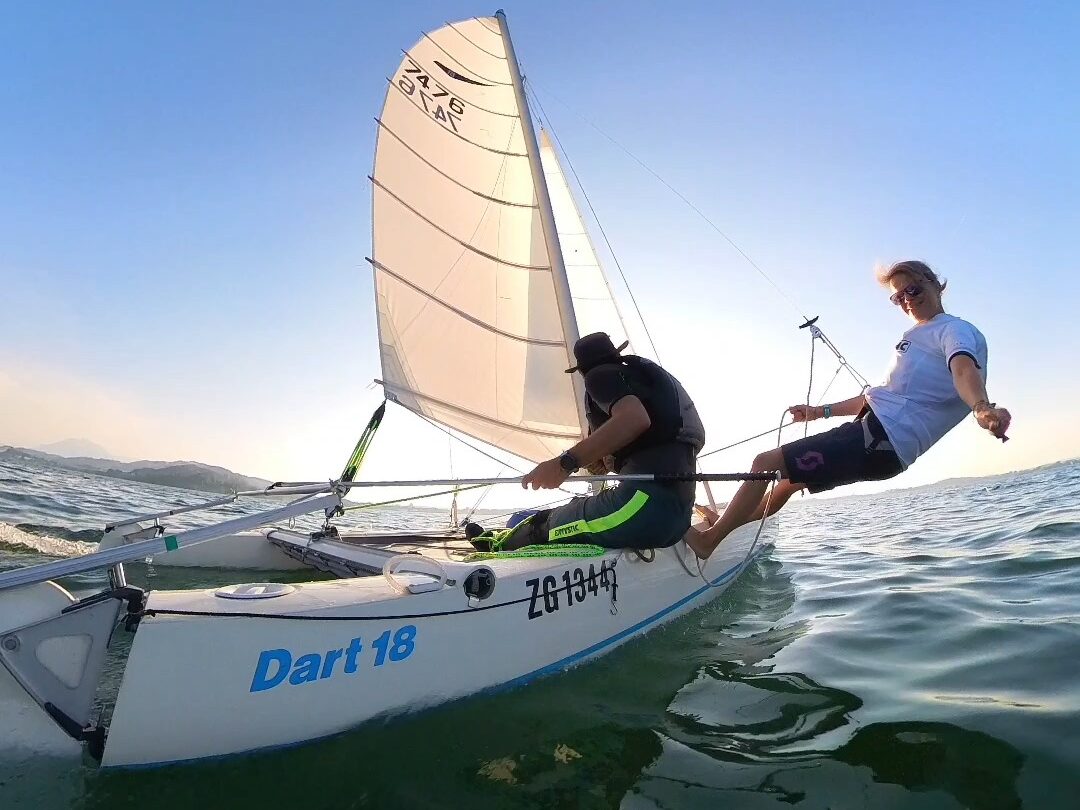
Then the breeze filled in. I was just thinking about clipping onto the trapeze wire when a sharp gust hit us. The windward hull lifted smartly out of the water, and I calmly said, “Just ease the sheet.”
Nothing happened. The hull kept climbing. I glanced across the trampoline only to realise that my helm was sailing an 18-foot catamaran with the mainsheet firmly cleated — and nicely strewn across the trampoline. A frantic, comical scramble followed to uncleat the line and dump the main before we joined Armel Le Cléac’h in the upside-down club.
He wasn’t a bad sailor; he was simply operating on big-boat muscle memory. On a cruising monohull with a deep lead keel, a 20-knot gust heels the boat, loads up the rudder, and gives you a generous amount of time to think about easing a sheet. That built-in forgiveness quietly trains us to switch off. A beach cat gives you roughly half a second. Heavy boats hide sloppy habits until the day the weather turns genuinely lively.
The Recreational Sailor’s Cheat Code: Margins Over Perfection
Here is the good news for those of us who sail for pleasure rather than trophies: we hold one massive trump card that Armel Le Cléac’h or Tom Laperche don’t have.
We are not racing across the North Atlantic sailing at the limit on a fixed schedule. We get to choose our playground. We decide when and where we go, how long we stay out, and how well rested we are before we weigh anchor—provided we don’t box ourselves into rigid schedules.
Safety on the water doesn’t come from superhuman perfection. It comes from building generous margins around human imperfection. A few simple habits make all the difference:
- Keep the main sheet on a winch and the clutch open: On larger keel boats it pays to keep the mainsheet on a winch and the clutch open so that you can dump it easily if you need to. On smaller boats with a cam cleat, keep the mainsheet close at hand.
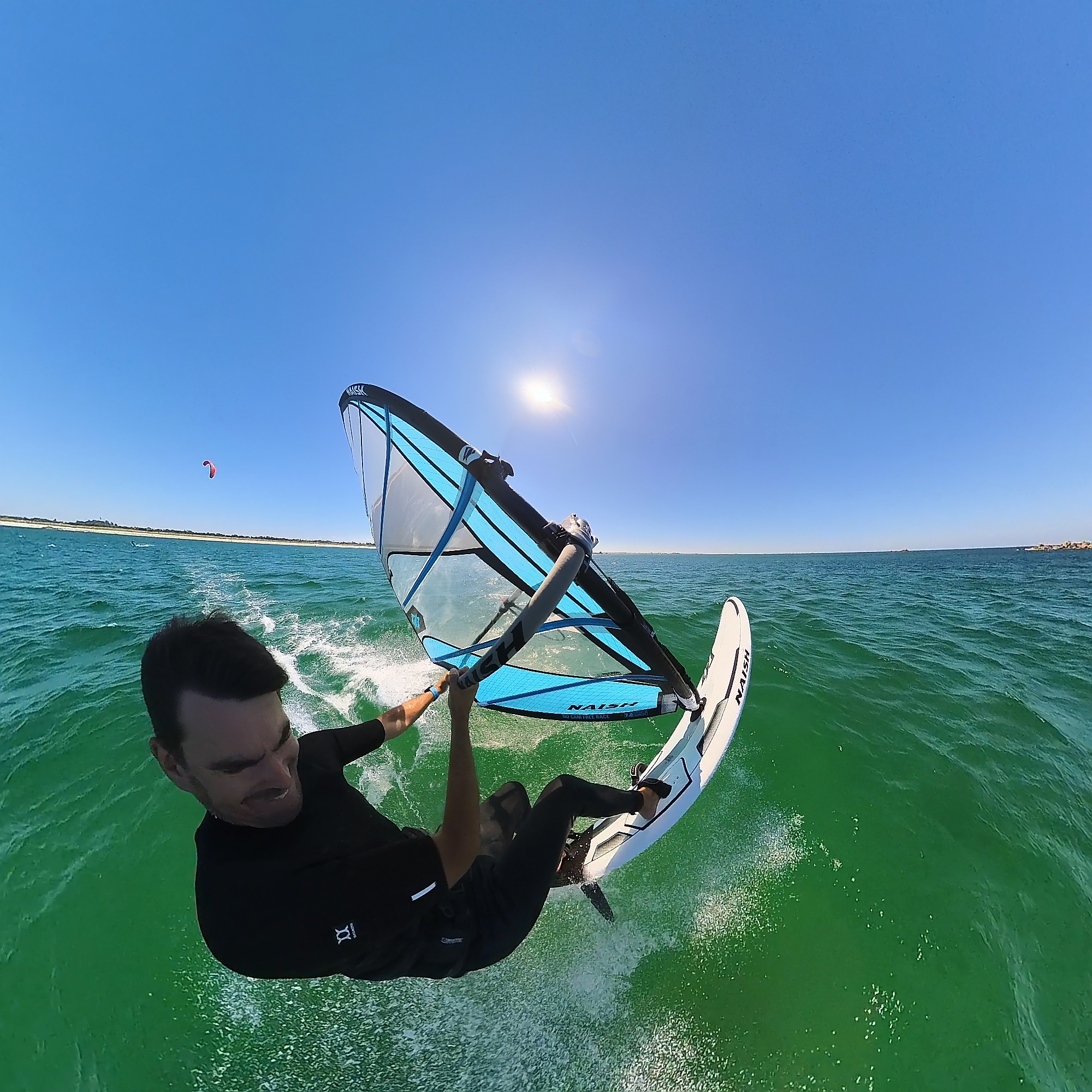
- Play in a smaller pond occasionally: Take a page out of the Ultim and IMOCA skippers’ playbook. Spending a couple of hours on a dinghy, beach cat, or windsurfer will sharpen your wind-shift instincts and trim feel faster than 100 straight-line motor-sailing miles.
- Protect your margins, not your ego: In other posts we have talked about the PAME acronym. (Plan, Approach, Manoeuvre, Escape), Make your plan with a margin for error and know your escape routes if things are not going according to plan.
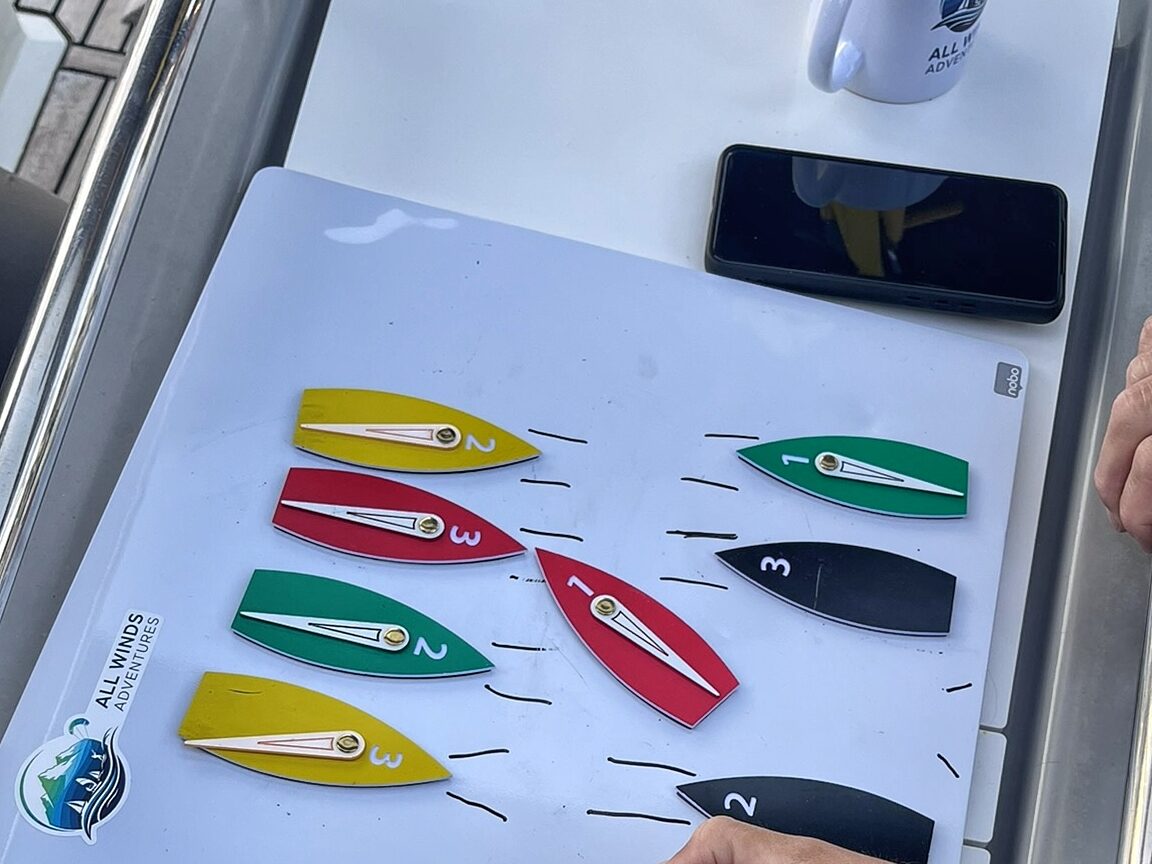
Things go wrong for everyone on the water, from Sunday afternoon lake sailors to round-the-world record holders. The scale of the consequences simply depends on the playground you choose and the margin you leave yourself. You don’t need to be perfect—you just need to stay awake, keep your hands near the sheets, and leave plenty of room for things to be human.
Explore the Elements with All Winds Adventures
Good seamanship isn’t about ticking off exam checklists or pretending you never make mistakes—it is about understanding how boats actually behave and building the confidence to adapt when conditions change.
- Sea Seamanship & Charter Coaching (Croatia): Join Dave aboard All Winds, our Beneteau Oceanis 41.1, for calm, practical coaching capped strictly at three guests (with guaranteed private double cabins, zero cash Bordkasse, and routes adapted to the live weather).
- Worldwide Bareboat Brokerage & Bareboat in Company: Planning your next charter holiday? We source and vet quality yachts worldwide at direct fleet rates, giving you an experienced shore team in your corner before you cast off.
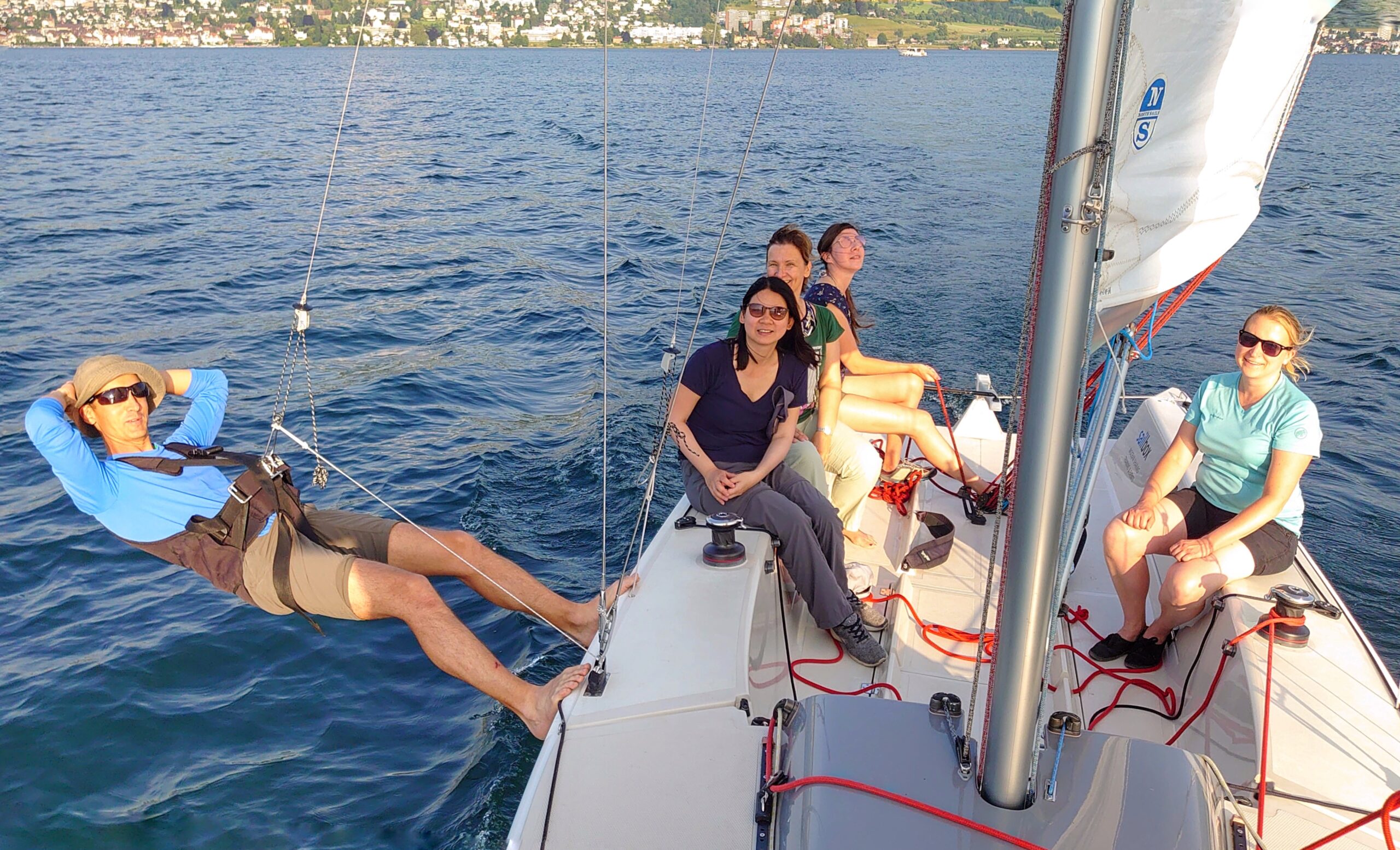
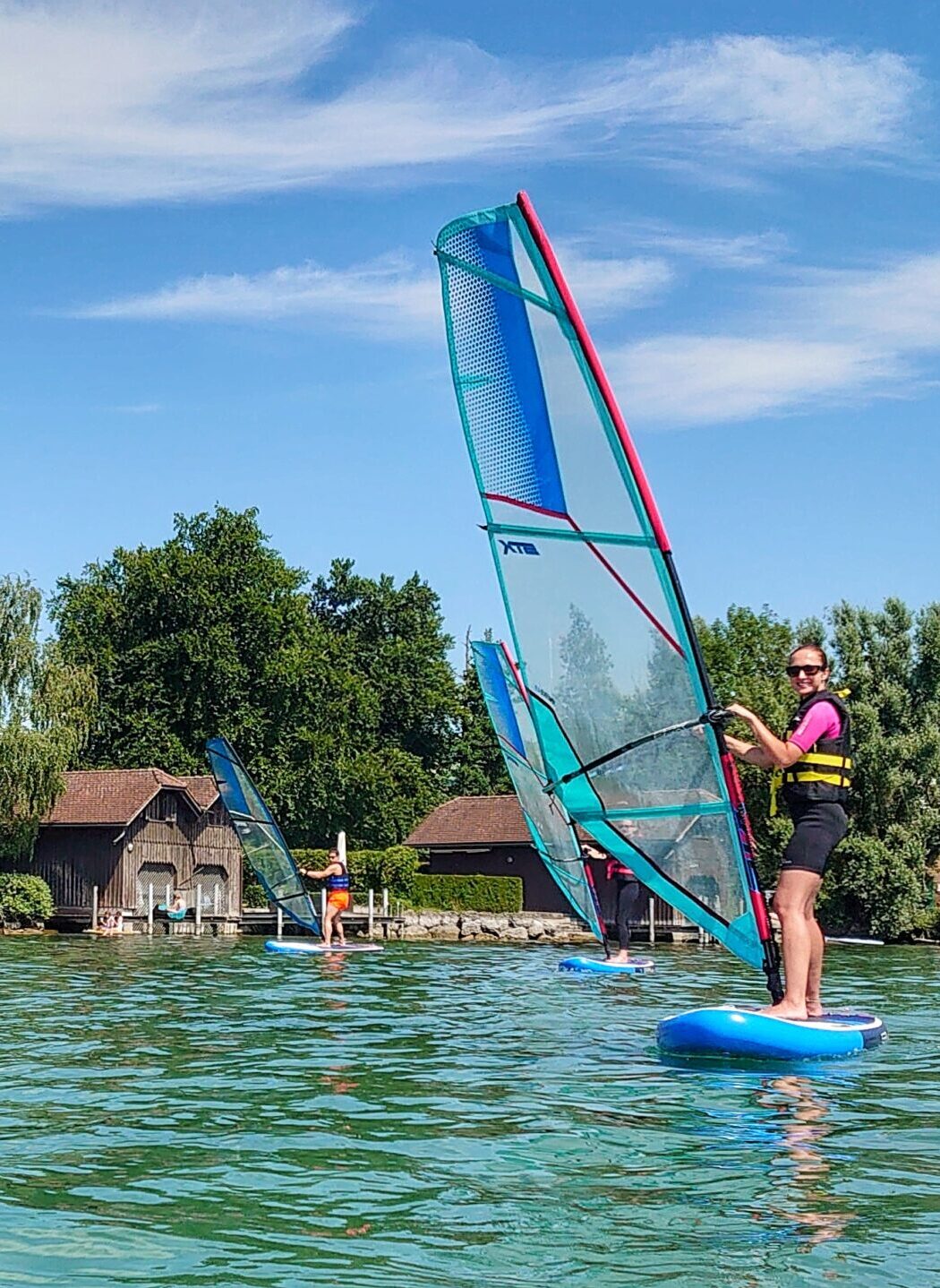
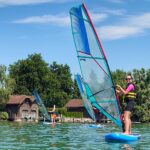
- Swiss Lake Sailing & Windsurfing (Lake Zug): Join us for relaxed Afterwork Social Sails, streamline your Swiss D-Schein path, or sharpen your small-boat instincts on the water right here in central Switzerland.
Where Are You Taking Your Seamanship Next?
Whether you are bridging the gap from license to real confidence, chartering your next holiday, or sailing locally in Switzerland, choose the pathway that matches your plans.
Build Real Seamanship & Confidence
Ditch empty mile-building and crowded bunks. Join Head Coach Dave aboard our Beneteau Oceanis 41.1 in Croatia. Maximum 3 guest cabins, private accommodation, and dedicated coaching grounded in sports biomechanics.
Charter With Mechanical Sympathy
Charter All Winds directly from Marina Frapa, or let our independent agency source and vet quality bareboat yachts worldwide. We handle the technical vetting so you avoid tired charter fleets and deposit traps.
Join Us in Switzerland
Step aboard on Lake Zug for after-work social sails, join a windsurfing clinic, or attend our online workshops covering boat-handling dynamics, weather app interpretation, Swiss D-Schein exam strategy and much more.
Large yachts—whether a 41-foot cruiser or a 32-metre trimaran—have massive inertia that masks subtle shifts in wind pressure and hull balance. Sailing lightweight, unballasted craft like Moths, beach catamarans, or wing-foils forces instant feedback, keeping a skipper’s wind instincts and sheet-handling reflexes sharp.
When a sharp gust hits, easing the mainsheet is your fastest way to depower the rig and keep the boat balanced. If the sheet is locked in a cleat—especially on a multihull or light keelboat—a half-second delay while you scramble to uncleat it can be the difference between a smooth acceleration and a knockdown or capsize. Even on keel boats or yachts, we like to keep the mainsheet on a winch with the clutch open so that we can easily dump it if we need to.
A Mayday is reserved strictly for grave and imminent danger to life or vessel where immediate assistance is required (such as sinking, fire, or a severe medical emergency). A Pan-Pan signals an urgent situation—like a dismasting or engine failure where the crew is safe, and the hull is sound—alerting nearby vessels and coastguard stations without triggering an unnecessary life-risking rescue.
Use the PAME framework—Plan, Approach, Manoeuvre, Escape. Before committing to a tight anchorage or stern-to berth, rig fenders on both sides, brief your crew on the plan, and identify a clear-water escape route so that aborting and going around feels like a calm, routine reset rather than an emergency.

No responses yet