The Golden Rule: The best beacon is the one you never use. “One hand for the ship, one hand for yourself.” Don’t fall in.
The Tether Warning: Standard tethers can drown you if towed at 6 knots. Upgrade to a release system like the TeamO BackTow.
The Charter Blindspot: An AIS beacon is useless if the boat you fall off has its AIS receiver turned off. (a massive problem on charter yachts).
How AIS Beacons Work: You cannot program an AIS target. All personal AIS beacons transmit a hardcoded 972 MMSI. The programmable MMSI is only for triggering your boat’s DSC VHF alarm.
Mixing Experience Levels: If you are an expert skipper sailing with a novice, mix your tech. Give the novice the AIS-MOB (with DSC), and you wear the PLB3. Read below to find out exactly why.
The marine electronics industry loves to sell us peace of mind in little plastic boxes. We strap them to our lifejackets, check the blinking green battery lights, and tell ourselves that if everything goes wrong, pushing a button will summon a helicopter. (If you are within range!)
But out on a rolling sea in the pitch black, things are rarely that simple.
For years running Swiss Alpine Adventure, we preached the “holy trinity” of off-piste skiing: a transceiver, shovel, and probe. It is a no-brainer because every skier knows the mountain rescue helicopter will arrive too late. Your survival depends entirely on “companion rescue”—your friends finding you in minutes.
Yet, when we step onto a yacht, that logic vanishes. We happily drop thousands on chartplotters but hesitate over a personal beacon, assuming “institutional rescue” (the Coast Guard) will magically appear. But falling overboard at 2:00 AM is no different than getting buried in an avalanche. Your best chance of survival isn’t a helicopter; it’s the people you left behind on the boat. When purchasing our own devices, this is the thought that made me stop thinking and actually buy them.
If you walk into a chandlery today to buy a personal rescue beacon, you will be hit with an alphabet soup of acronyms: PLB, AIS-MOB, DSC, EPIRB. Buying the wrong one for your specific crew dynamic could mean you are screaming for help when no one is listening.
Whether you are preparing your own boat or packing your kit bag for a bareboat charter, here is the pragmatic guide to electronic lifesavers.
1. The Ultimate Rule: Don’t Lose Connection
Your Primary Life Support: Your brain and your grip. “One hand for the boat, one hand for yourself.” Keep your centre of gravity low, move carefully, and do not fall in.
Your Secondary Life Support: Your tether. Clipping on is frequently overlooked, but if things go wrong, it is what might keep you from becoming a search-and-rescue statistic.
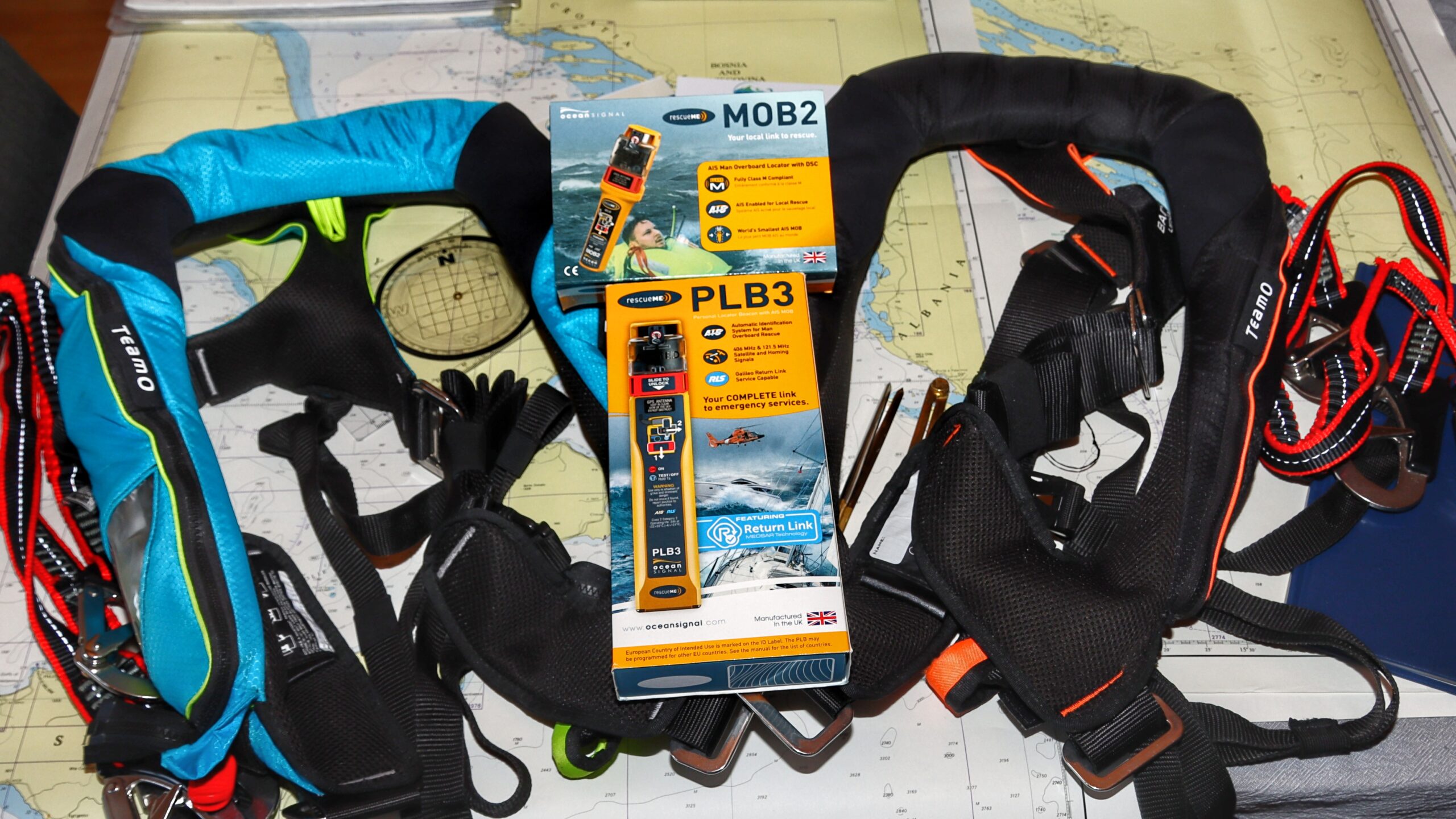
The Tether Problem: Standard tethers have a fatal flaw. If you fall over the side while the boat is doing 6 knots, being towed face down will drown you. We use the TeamO BackTow lifejacket, which you can release to tow you safely on your back, buying your crew critical time to stop the boat.
Autopilot Remotes: While marketing might suggest that some advanced autopilot remote control systems can turn the boat head-to-wind if you go overboard, these systems are rarely used on cruising boats—they are usually the territory of short-handed offshore racers. Even if you have one, the reality is that you are unlikely to be able to swim after a drifting, 45-foot yacht in a swell. If your physical connection to the boat is broken, you are in a desperate survival situation.
2. The Harsh Reality of Rescue Beacons
Rescue beacons are not magic bullets. They require you to actually have the device on your person, and in certain cases, you must be conscious to manually activate it.
To understand the stakes, look at two real-world extremes:
The Success (The Vendée Globe 2020): When Kevin Escoffier’s IMOCA 60 PRB snapped in half and sank in seconds in the Southern Ocean, his 406MHz EPIRB alerted Race Direction 8,000 miles away. His local AIS beacon helped fellow racer Jean Le Cam get to the right grid square. But in 5-meter waves and darkness, Le Cam still lost sight of him for hours. What ultimately allowed Le Cam to make the physical pickup? He saw the flashing light on Escoffier’s liferaft. Electronics bring the cavalry to the postcode; visual aids and seamanship finish the job.
The Tragedy (The ARC Transatlantic 2024): In December 2024, a highly experienced sailor went overboard from a Volvo 70 in 25-30 knots of wind mid-Atlantic. He was reportedly wearing an auto-inflating lifejacket equipped with a personal AIS beacon. Despite an immediate search by his crew and nearby yachts, he was never found.
Electronics give you a fighting chance, but they do not guarantee a rescue. Here is how to choose the right tool for the fight.
3. The Charter Boat Blindspot
Before you spend €400+ on an AIS-MOB, you need to understand that many charter boats do not have AIS receivers, or they are turned off!
When we were test-sailing our own yacht, All Winds, before buying her, the AIS was turned off and wasn’t even working properly when we switched it on. Over the years, we’ve even had to sneakily dive into the settings on bareboat charters to activate the AIS for night passages.
If you fall off a boat with no AIS receiver, your personal AIS beacon is transmitting to a blank screen. Your personal safety is only as good as the mother ship’s receiving equipment or another boat with AIS being close enough to help.
4. AIS-MOB Coding: How the Tech Actually Works
There is a massive misconception that you need to program your boat’s MMSI into an AIS beacon so your chartplotter recognises it. That is not how the technology works.
AIS is Hardcoded: Every personal AIS-MOB device is hardcoded at the factory with an MMSI that begins with 972. You cannot change this. 972 is the international code for “Person in the water.” When a chartplotter receives a 972 signal, it overrides normal display rules, sounds an alarm, and drops a red circle with an ‘X’ on the screen. (Incidentally, if you see an MMSI number on the AIS beginning with “974”, it is an EPIRB).
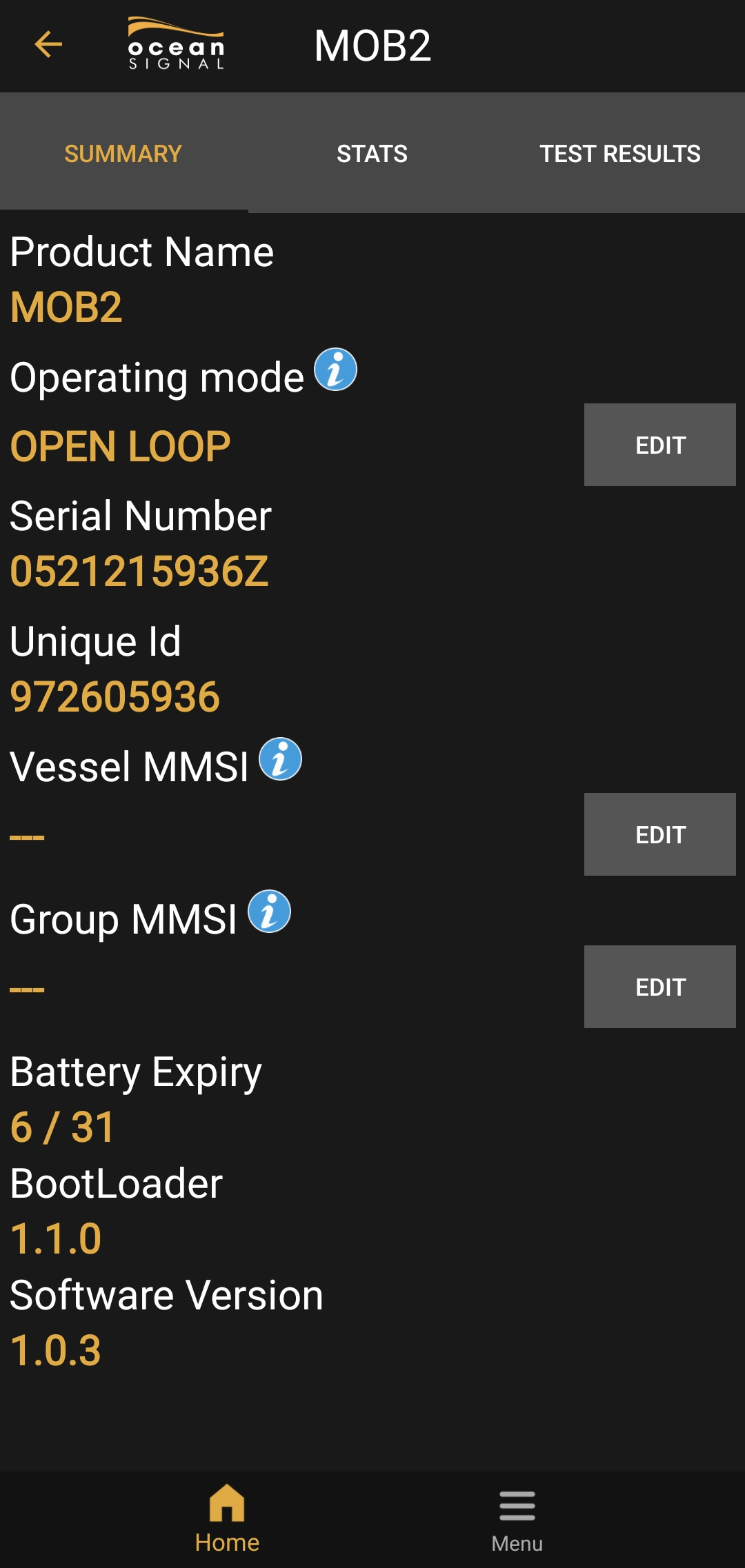
DSC is Programmable: Devices like the Ocean Signal MOB1 or MOB2 also feature DSC (Digital Selective Calling). This is where you program your mother ship’s MMSI. When activated, the device uses the DSC radio frequency to call your specific boat and trigger an ear-piercing alarm on your VHF radio to wake up the crew.
The Second-Hand Warning (Class M Compliance): A new law enacted in January 2025 requires Personal AISs to be “Class M” compliant, which means they must have both a DSC sender and receiver. This plays a big role if you plan on buying a second-hand Personal AIS that may no longer meet the current legal standard.
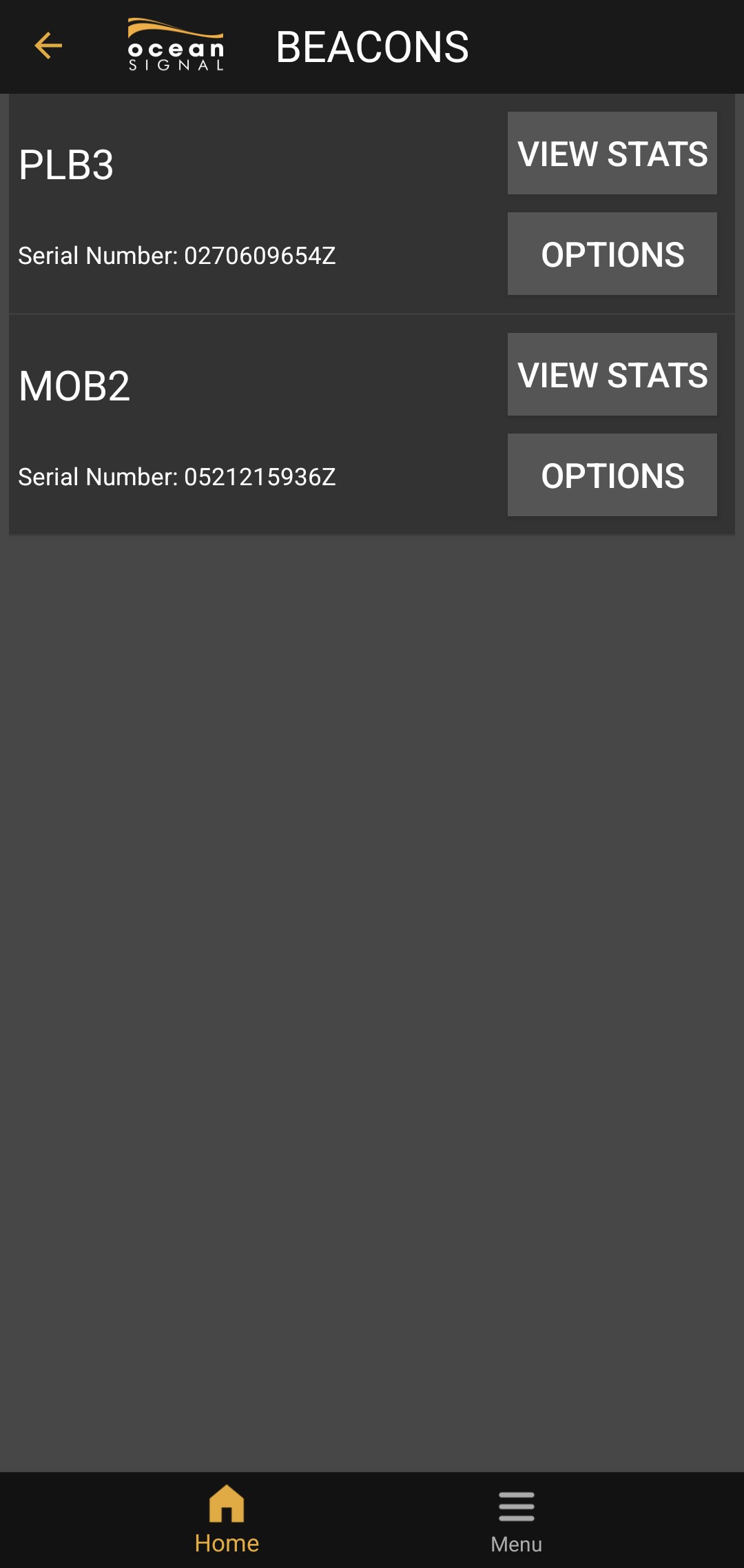
The Ocean Signal App showing the devices associated with the logged in user.
Ocean Signal App showing how to input the Vessel MMSI number for DSC calling.
5. The Big Misconception: The PLB3 Trade-off
If you have the budget, you might look at the top-tier Ocean Signal RescueME PLB3 and think: “It combines Satellite (406MHz) and AIS. I’ll buy that; it does everything!”
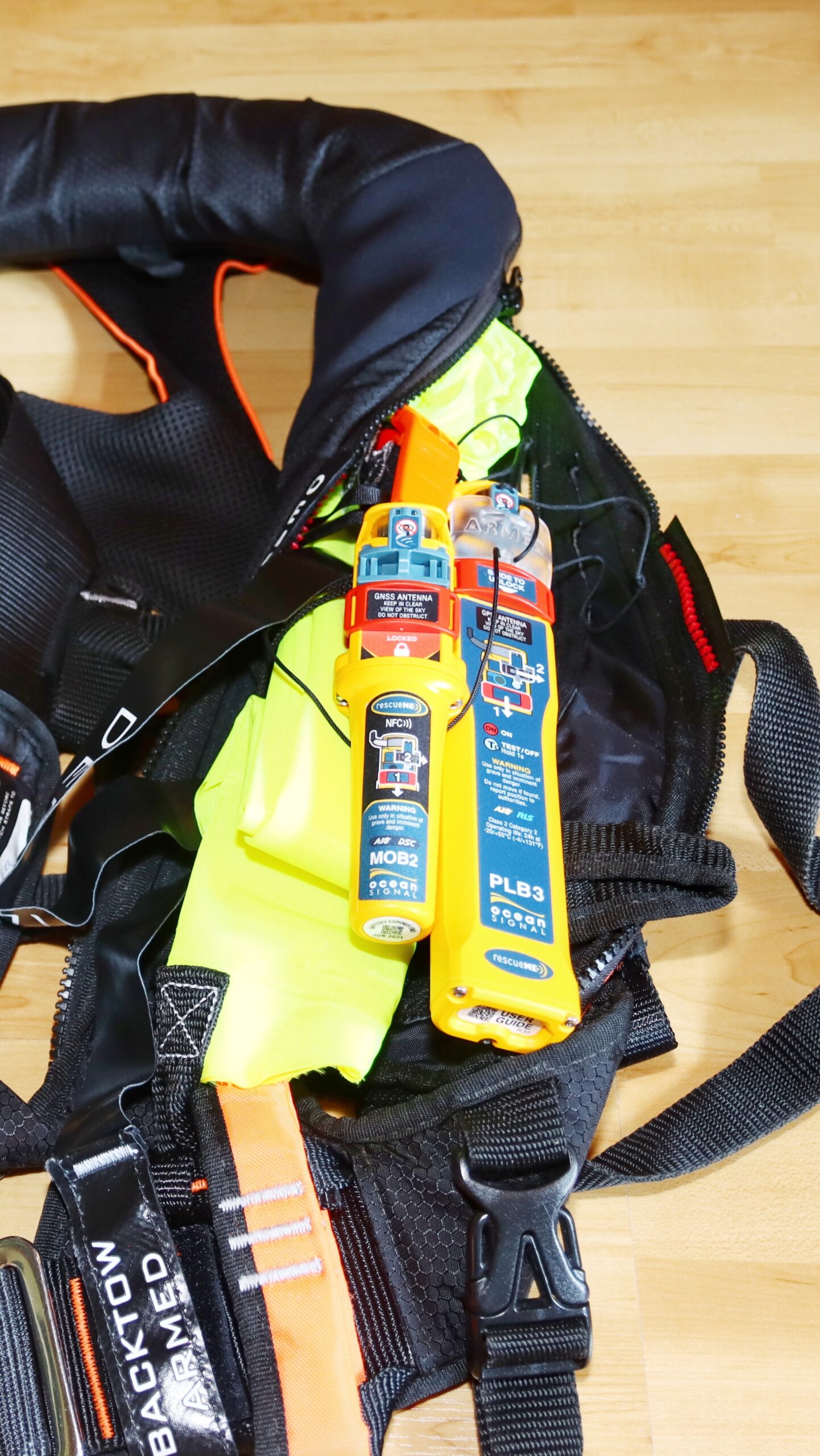
I recently spent time on the phone directly with Ocean Signal technical support, and here is the hard truth: The PLB3 does NOT have DSC. Because it packs so much satellite tech into a tiny package, you sacrifice the ability to trigger that closed-loop VHF alarm on your mother ship. It will call the Coast Guard via satellite, and it will put your 972 target on the chartplotter via AIS, but it will not set off your boat’s VHF radio alarm.
The Administrative Nightmare (A Real-World Warning): PLBs operate on global satellite networks, meaning they are hardcoded to specific country codes. If you buy a device abroad, you must get it factory-reprogrammed before you can legally register it in your home country. (in many countries it is a legal requirement to register your PLB)
When my own PLB3 arrived, I called the Swiss distributor to get it reprogrammed. Incredibly, they had no idea about the country coding rules and told me they couldn’t do it. I ended up having to inform the national distributor that they needed to take a factory training course just to be able to legally reprogram my device! (this was in the process of being corrected at the time of writing) Don’t leave your beacon admin to the day before you cast off.
The Pragmatic Workaround: If you buy a PLB abroad and it arrives hardcoded to a foreign country just days before you cast off, you don’t have to sail unprotected. The global Cospas-Sarsat system routes alerts based on the beacon’s embedded country code, not your passport. As a temporary fix, you can legally register the device on that specific country’s national database (e.g., the French CNES registry if it has a French code) using your actual emergency contact details. If activated, the alert simply routes to that country’s MRCC first, who will verify the emergency and immediately pass the coordination to the local Coast Guard sector you are floating in. It adds a minor administrative hop, but it gets you off the dock safely until you can get the device factory-reprogrammed at home.
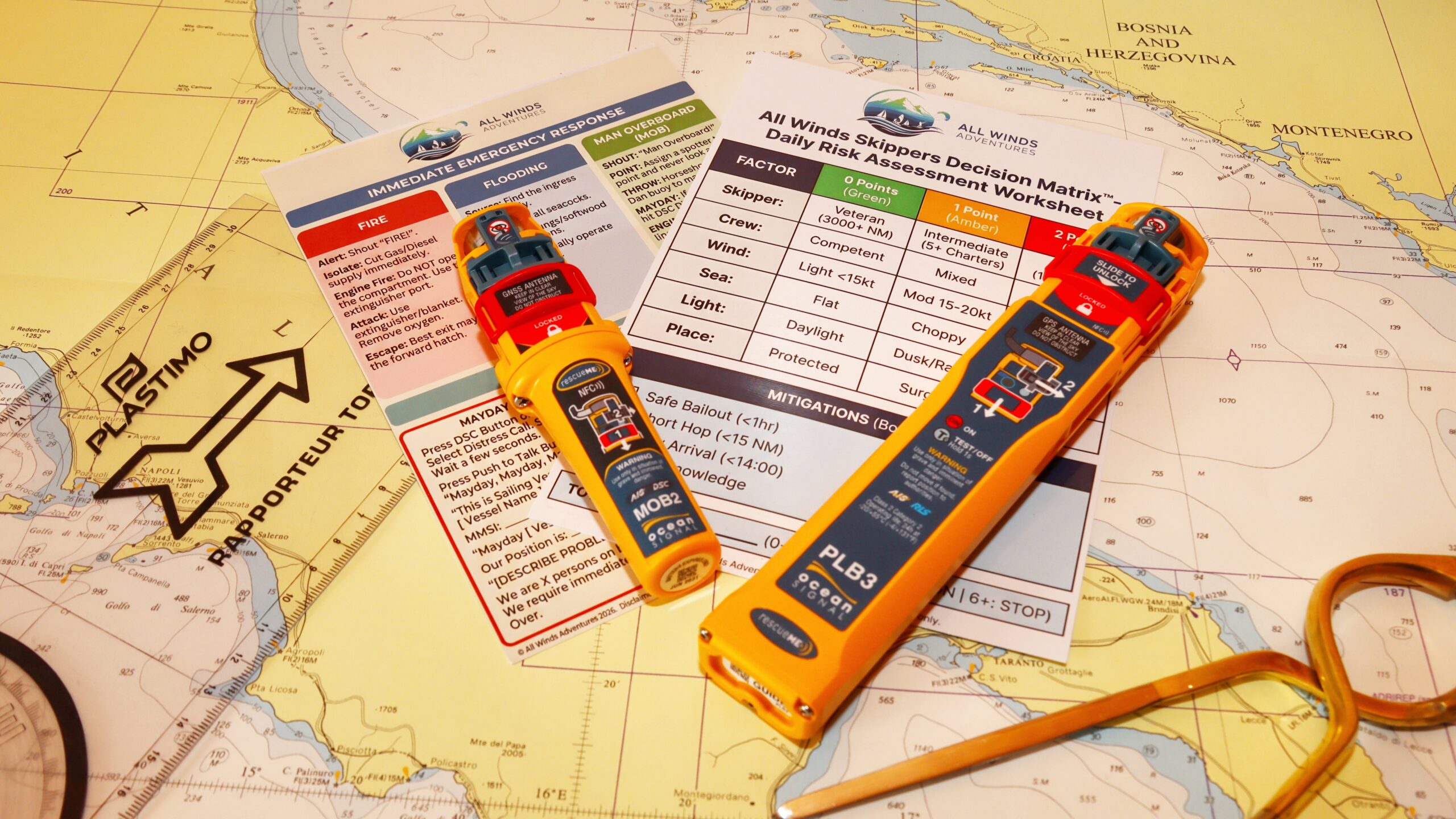
The AIS MOB2 is significantly smaller than the PLB3, here laid alongside for comparison.
6. Garmin inReach and similar devices
The Garmin inReach & Satellite Messenger Disclaimer It is worth addressing devices like the Garmin inReach, as many sailors wonder if they can replace a dedicated personal rescue beacon. While the inReach is a fantastic piece of kit, it is a Satellite Messenger, not a purpose-built MOB survival tool.
Yes, it has a dedicated SOS button, but that is where the similarities end.
Activation & Ergonomics: It cannot be automated. To get a signal out, you have to physically hold the device up out of the water to maintain a view of the satellites.
Durability: While it is water-resistant (typically IPX7, meaning 1 meter for 30 minutes), it is not built for prolonged immersion in a heavy sea state.
Transmission Power: An inReach transmits at roughly 1.5 watts on the commercial Iridium network. A true PLB blasts a 5-watt signal on the dedicated Cospas-Sarsat military/SAR network.
No Local Rescue: Crucially, an inReach has no AIS component. It cannot alert the boat you just fell off.
Where the inReach actually shines is two-way communication. If you are in a liferaft or dealing with a dismasting, being able to text rescue services the specific details of your emergency (or reassure your family) is invaluable. Keep it in your grab bag, use it to pull localised weather forecasts or text a shore-based router, but do not clip it to your lifejacket expecting it to be your primary man-overboard beacon.
7. The Unvarnished PLB vs AIS Buying Guide: Which One Do You Need?
Most articles stop at the tech specs. But at All Winds Adventures, we look at the human element. The beacon you buy should depend entirely on the crew you sail with.
Scenario A: The Solo Sailor or Remote Cruiser
You need a PLB or the hybrid PLB3. If you fall off, your boat is sailing away without you. There is no one at the helm to look at the chartplotter. You need the global Coast Guard.
Scenario B: The Fully Crewed Boat in Busy Waters
If you are racing in the Solent or chartering with six competent mates in the Med, get an AIS-MOB with DSC (like the MOB1 or MOB2). If you fall in, it sets off the VHF alarm, your crew sees your exact 972 location on the screen, and they come get you now, rather than waiting for a helicopter.
Scenario C: The Cruising Couple (Mixing Experience Levels)
This is the most common scenario we see: a couple sailing together where one person has more experience handling emergencies single-handed. Even if both sailors are highly competent (like my partner Karin, who routinely takes solo night watches), we still recommend mixing your technology.
The more experienced person wears the PLB3: If they fall in, the person left aboard may be overwhelmed trying to manage the boat and execute a recovery single-handed in rough weather. The PLB3 ensures the Cospas-Sarsat satellite network is immediately alerting the MRCC to coordinate a rescue, taking that massive burden off the person left aboard, while simultaneously putting the AIS target on the screen for passing traffic. You should, however, be aware that there is no DSC alert sent to local boats.
The less experienced sailor wears the AIS-MOB (with DSC): If they fall in, the DSC alarm wakes the more experienced skipper up. The skipper has the skills to track the 972 target on the plotter, execute a quick-stop manoeuvre, and pull off a textbook MOB recovery alone.
The Bottom Line: Gear Doesn’t Replace Drills
The most expensive beacon in the world is utterly useless if the person left on board doesn’t know how to heave-to, mark a waypoint, or throw a throwing line, or if you have not thought about how you might recover an unresponsive, incapacitated or exhausted person from the water.
You cannot buy competence in a chandlery.
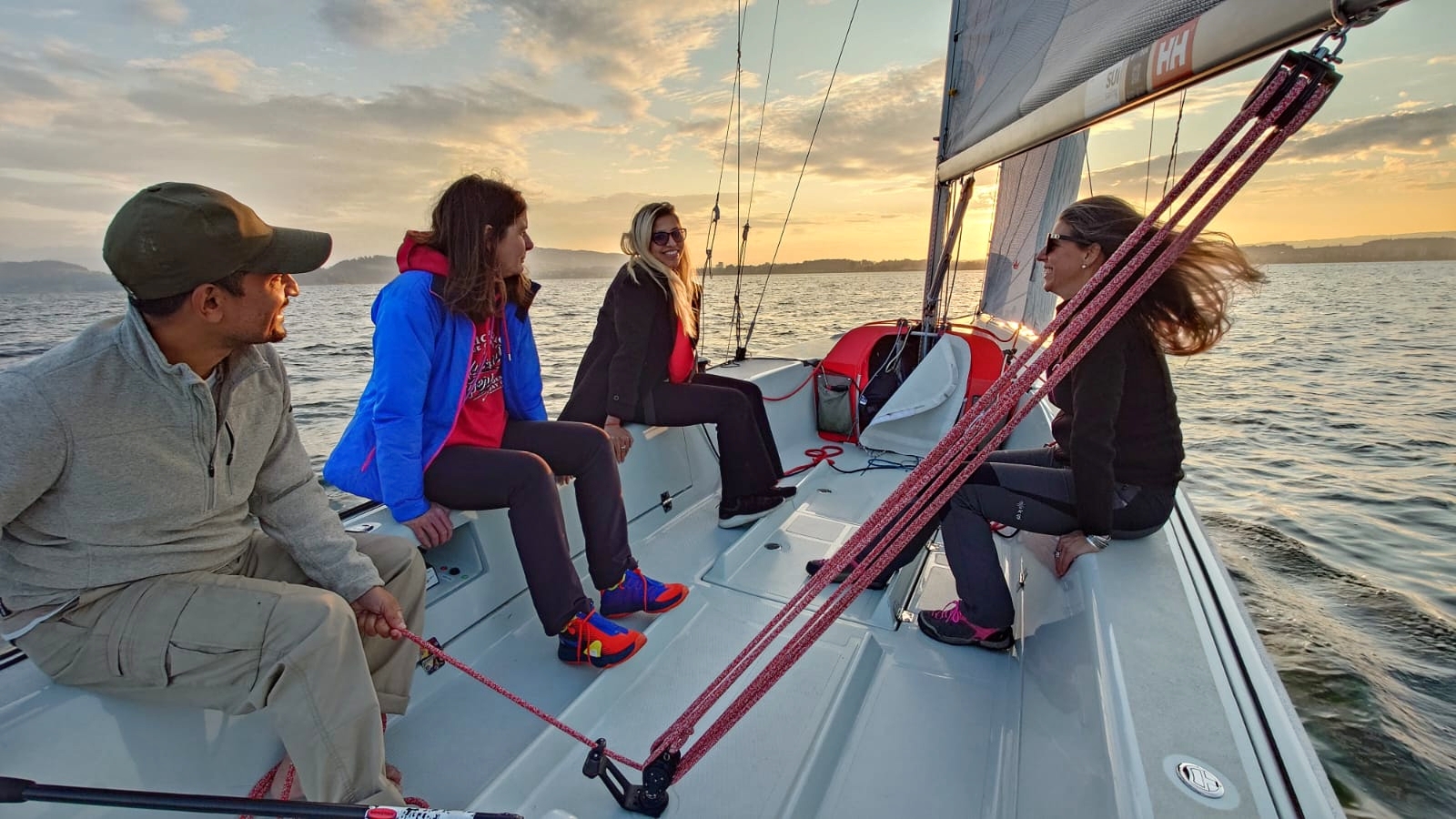
If you want to make sure your crew actually knows what to do when the DSC alarms go off, that is exactly why we run our coaching trips. We don’t just teach you what buttons to press; we take you out on the water, throw a fender overboard, and make you execute the recovery until it becomes muscle memory.
Need Advice or Looking to Get Your Hands on a Beacon? The marine electronics market is a minefield of changing regulations and confusing tech specs. If you’re prepping for a bareboat charter and aren’t sure what to buy, or if you are ready to purchase a new, fully compliant unit, drop us a line. As a registered dealer, we’re always happy to talk safety gear and make sure you have exactly what you need for your trip.
Coming Summer 2026: Swiss AIS-MOB Rentals Based in Switzerland and not ready to drop 500 CHF on a unit for a single week on the water? We are launching a dedicated AIS-MOB rental programme this summer. You’ll be able to rent a Class M compliant beacon that clips straight to your lifejacket for a fraction of the retail price. If you are interested in renting one for your next charter, get in touch now so we can put you on the radar as we build out the fleet.
What is the difference between a PLB and a Personal AIS (AIS MOB)
Both devices are designed to assist in your rescue should you go overboard at sea, however they work on two very different systems. The PLB works on the Cospas-Sarsat satellite system sending a signal over the satellites to the Maritime Rescue Coordination Centre (MRCC) of the country it’s registered in; they will then check the registered details and coordinate a rescue with a local MRCC. Your rescue goes through official channels and may take some time to reach you. Personal AIS (AIS MOB) works on the VHF airwaves and puts a target on chart plotters in the immediate vicinity showing a person in the water. This allows your boat or local boats to immediately respond to the situation. AIS MOBs with DSC will also set off alarms on local GMDSS enabled units. A PLB is good if you are in areas with little traffic (so long as you are not close to the poles!) or if you are with an inexperienced crew who may not be able to easily rescue you. AIS MOBs are good if you have a trained crew or are travelling in areas with a lot of marine traffic who can immediately see your AIS signal. (Note: There is currently one device on the market which combines both devices—the Ocean Signal PLB3—but this device does not have DSC capability).
Do I need to pay a monthly subscription fee for a PLB or AIS-MOB?
No. Unlike satellite messengers (like the Garmin inReach or Zoleo) which require active monthly data plans, dedicated rescue beacons do not have subscription fees. A PLB uses the government-funded Cospas-Sarsat military and SAR network, which is free to use in an emergency. An AIS-MOB uses standard VHF radio frequencies, which are also free.
Can I save money by buying a second-hand AIS-MOB on eBay or Facebook Marketplace?
Be extremely careful. First, as of January 2025, new “Class M” regulations require personal AIS devices to have both DSC send and receive capabilities. Many older, second-hand units do not meet this standard. Second, reprogramming the mother ship’s MMSI into a used AIS-MOB often requires sending it back to the manufacturer or finding a certified dealer to flash the memory. By the time you pay for shipping and reprogramming, the savings are often wiped out.
I’m going on a bareboat charter. Which beacon should I pack in my hand luggage?
If you are sailing fully crewed, an AIS-MOB with DSC is usually the most practical choice—assuming the charter boat has a functioning AIS receiver. Because charter boats are notorious for having no or deactivated AIS systems, you must verify the boat’s equipment during handover. If you want a self-reliant safety net that doesn’t depend on the charter boat’s electronics, the hybrid PLB3 is the ultimate backup.
How do I know my rescue beacon actually works without calling out a helicopter?
Every PLB and AIS-MOB has a dedicated, highly specific “Test” function (usually involving holding a specific button until a light flashes). This sends a microscopic burst of data to verify battery and transmission without triggering a live distress alert. Never trigger the main activation slide just to “see if it works”—you will initiate a live Search and Rescue operation and could face massive fines.
Do I need to register my PLB in the country I live in?
In theory yes you do, but the PLB has to be hardcoded to the country you live in. If this is not the case then in some cases you can register the PLB to its coded country even if you are a citizen or living there (this may not work for all countries). In our case we registered our PLB in France as this was the country it was coded to when it arrived and there was no time to get the coding changed before we needed it.
What is the range of a PLB or AIS MOB
The range of a PLB is worldwide, but unless fitted with AIS, it requires specialised equipment for local searching. AIS MOBs are line of sight. This means if you are in the water and boats searching for you have their AIS/VHF aerial quite low with any wave running, the range could be as little as <1 mile. But on sailing boats with the VHF/AIS antenna at the top of the mast, it may be as much as 5 miles.
Will I see a personal AIS (AIS MOB) on Marine Traffic
No you will not, these devices broadcast their own MMSI with a 972 code and are not usually seen on Marine Traffic. An AIS Receiver on your boat is required to guarantee that you will be seen.
Will my AIS MOB set off the VHF on my boat?
Only DSC enabled Personal AIS sets will work on the GMDSS network to set off an alarm on your VHF Radio. Since January 2025 it is a legal requirement that all Personal AIS devices are Class M compliant. This means they can both send and receive DSC notifications.
Join our low-stress Croatia sailing coaching week in Rogoznica. Max 3–4 guests, private cabins, and personalized coaching for beginners and certified skippers alike.


No responses yet