
I recently jumped into the water fully kitted out for a Sea Survival Course. There is nothing quite like the reassurance of feeling your life jacket inflate instantly when you hit the water. But after the course, I had a job to do: re-arm and repack my jacket. It’s not that complicated to service your life jacket, but if you are unsure about doing it yourself, it is best to bring it to a professional who will do it for you.
While I was servicing my deployed jacket, I decided to inspect my partner Karin’s jacket. It had been sitting in the locker and looked brand new. What I found was a perfect example of why you can’t trust a jacket based on looks alone.
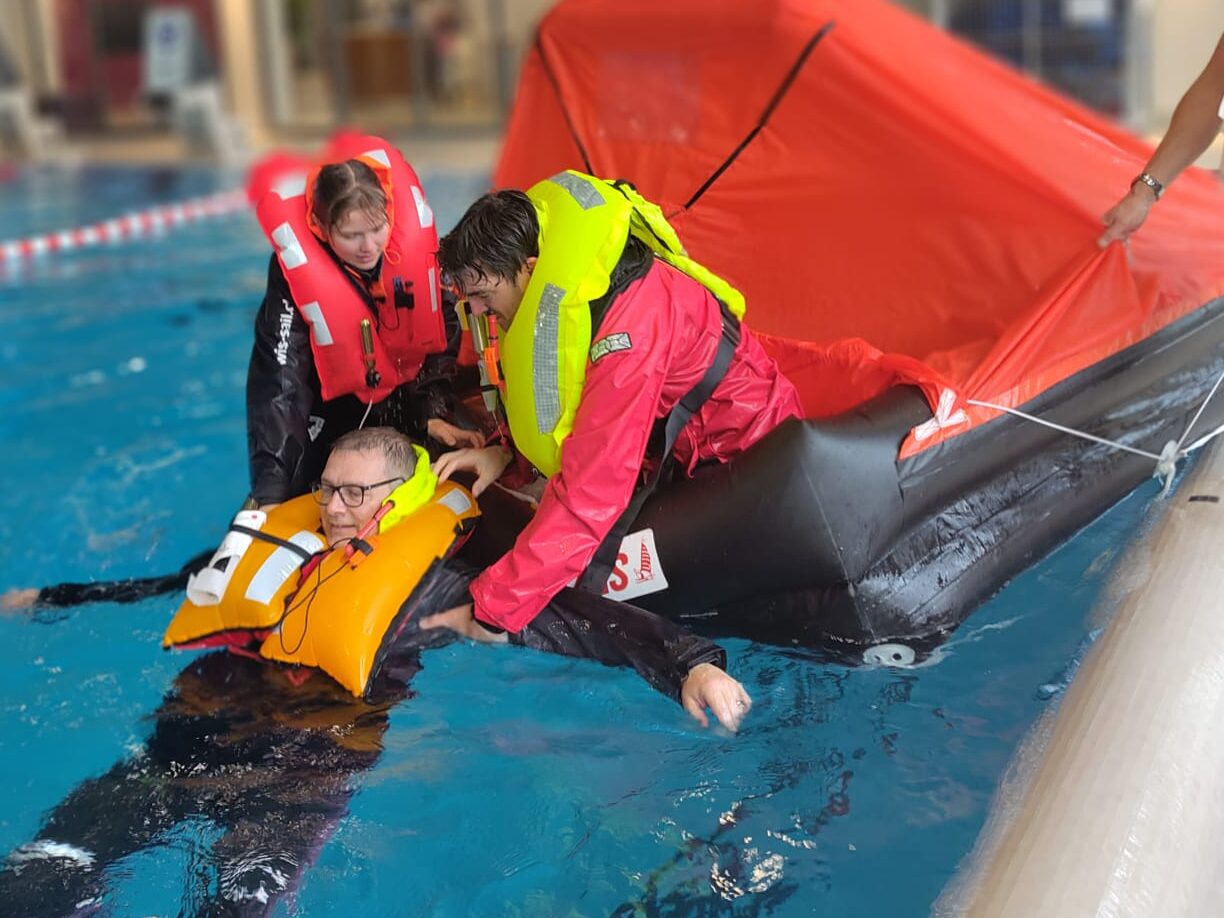
While my jacket needed service because I fired it, Karin’s needed service because it had silently expired. Here is exactly what we found and how you can perform these checks at home. We are using the TeamO Ocean 275 and Offshore 170 Back Tow Life Jackets.
1. The CO2 Cylinder: The Weight Test
The green indicator clip isn’t enough. You must unscrew the cylinder and weigh it. I had two cylinders to compare: the empty one from my course, and the “full” one from storage.
How to calculate the weight
Every cylinder has the Gross Weight (cylinder + gas) stamped on the metal body. You need a precise digital kitchen scale.
- The Deployed Cylinder (Fail): We weighed the used 60g cylinder. The stamp said 236.53g, but the scale read 175g. That missing 61g is the CO2 gas that kept me afloat.
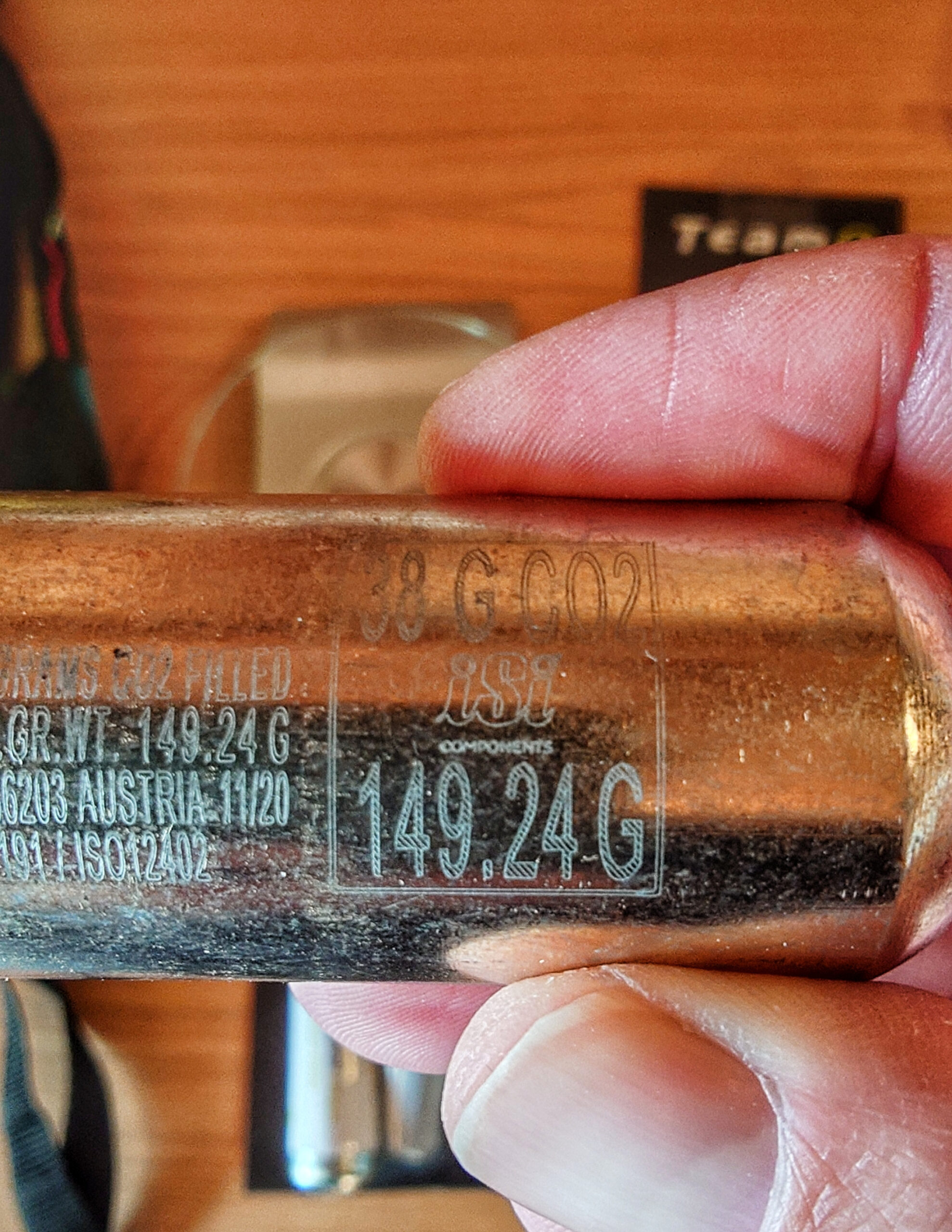
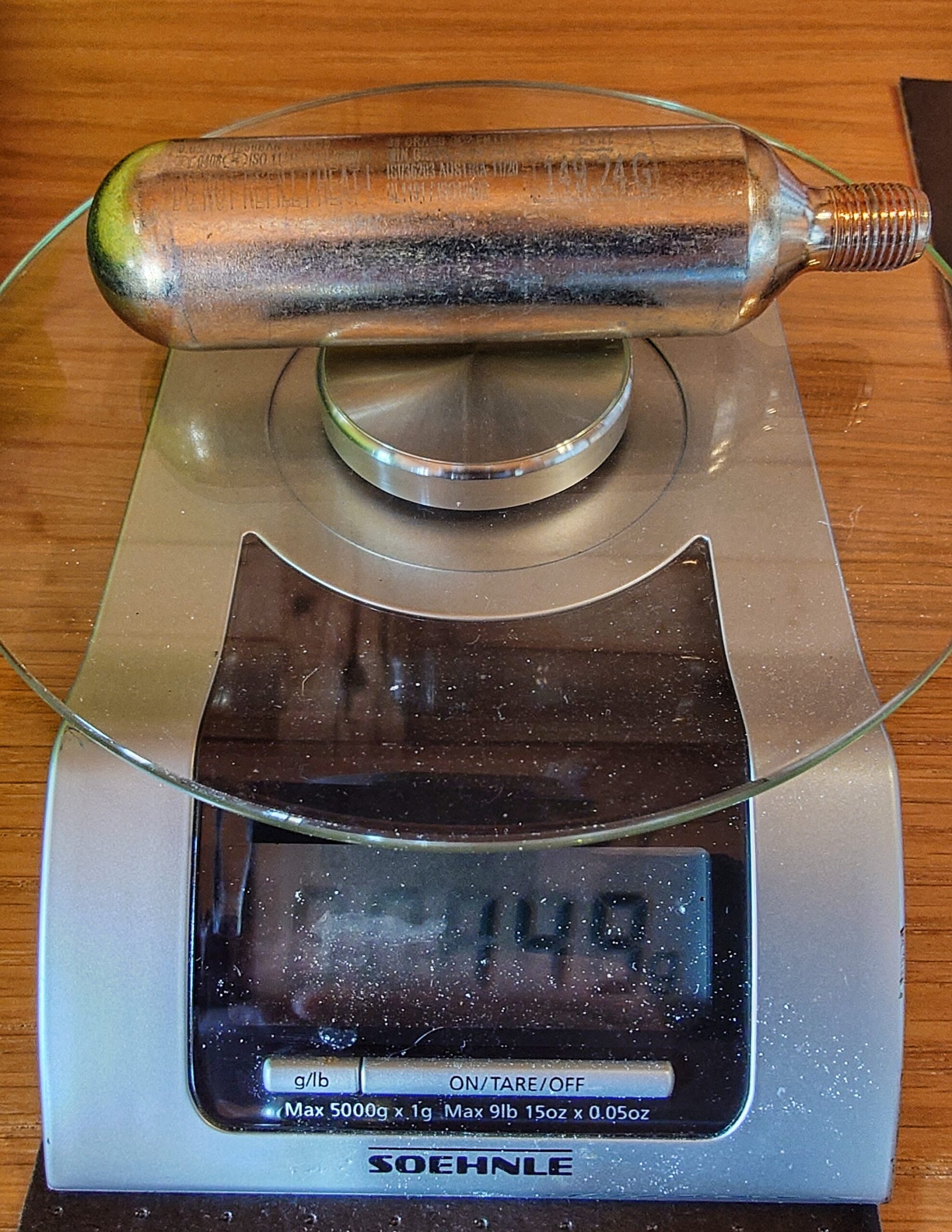
- The Stored Cylinder (Pass): On the other jacket, we removed the 38g cylinder. The stamp read 149.24g, and the scale showed 149g. This is within the safe tolerance (usually +/- 2g).
The Rule: If the weight on the scales is significantly lower than the stamped weight, the gas has escaped. Replace it immediately.
2. The “Hidden” Expiry Dates
This was the big catch on the stored jacket. Most modern life jackets use an auto-hydrostatic release or a chemical firing bobbin (like the UML Pro-Sensor).
Check the Firing Mechanism
These mechanisms contain a chemical element that degrades over time, even in dry storage.
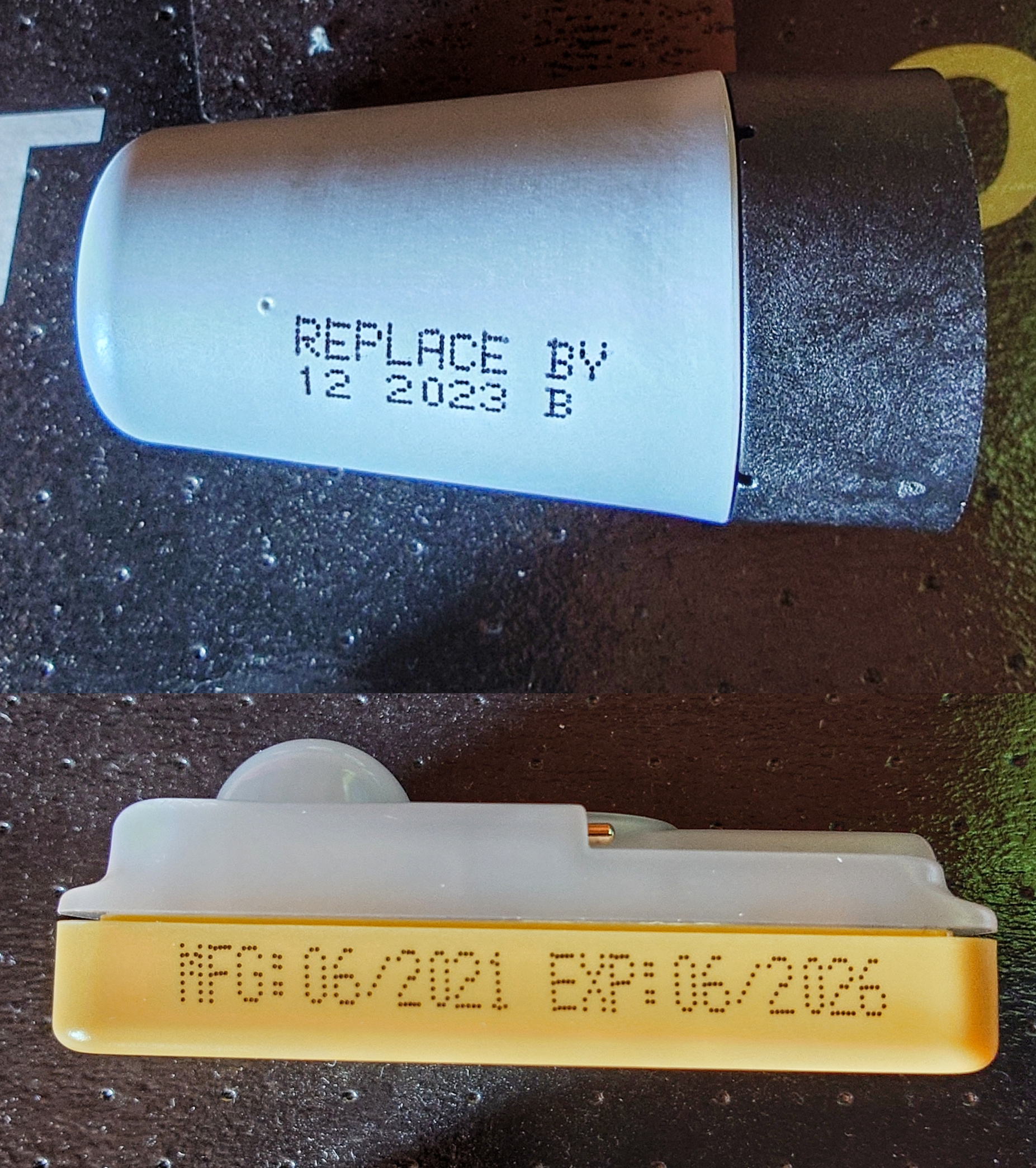
- Our Finding: The firing unit on Karin’s jacket was stamped 12/2023. It was strictly out of date and potentially unsafe, despite never touching the water.
Check the Safety Light
Don’t forget the peripherals.
- Our Finding: Our safety light was dated 06/2026. While it technically had 6 months left, it wasn’t functioning correctly. Since we were ordering a re-arm kit, we replaced the light to start the season with a clean slate.
3. The 24-Hour Leak Test
Checking the mechanics is only half the battle; you must ensure the bladder holds air.
The “No Mouth” Rule
Important: Never use your mouth to orally inflate a life jacket for a test. The moisture from your breath introduces bacteria and mildew into the lung of the jacket. Over time, this rots the fabric and seams from the inside out.
The Test Procedure
- Open the jacket casing to reveal the yellow/orange bladder.
- Use a hand pump (like a dinghy pump) attached to the oral inflation tube.
- Inflate until firm (do not over-pressurise).
- Leave it for 24 hours.
If the jacket is still firm the next day, it is airtight. If it has softened, you likely have a puncture or a leaky valve.
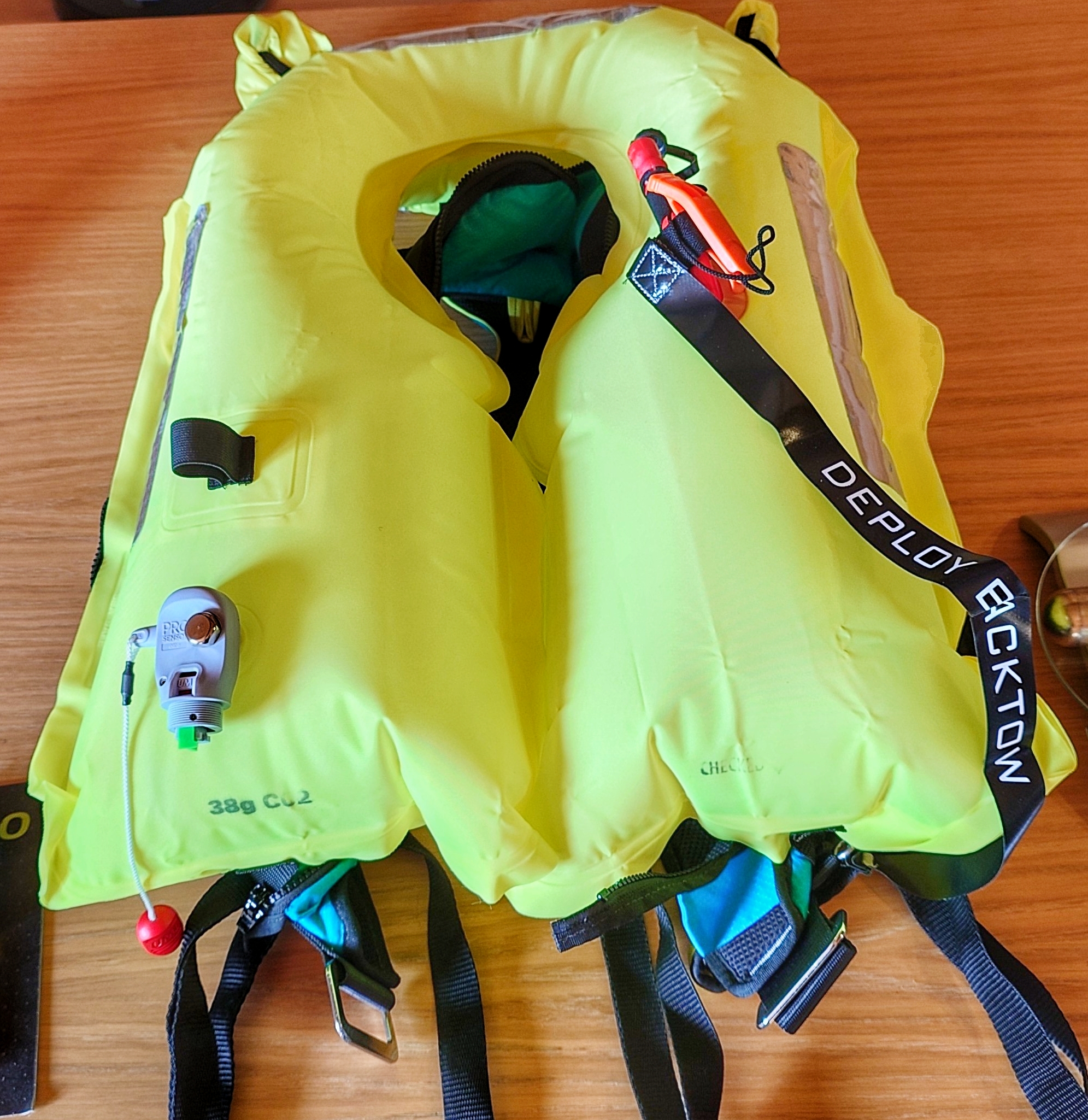
Reassemble, Pack, and Go Sailing
Once your jacket has passed all the tests, it’s time to get it ready for sea.
First, ensure all the air is completely out of the bladder. Squeeze it tightly while pressing the valve in the oral inflation tube; if any air remains, you will struggle to close the jacket.
Next, screw on the release mechanism and check the firing pin. Ensure the pin in the mechanism is retracted before you screw in the new CO2 cylinder. If the pin is protruding, it will pierce the new bottle immediately, wasting the cylinder.
Once the firing mechanism and the CO2 cylinder are screwed in, you should see two green indicators on the front of the housing holding the release bobbin and CO2 cylinder. If either of these indicators are red, then you need to check the corresponding element that it is screwed in correctly or that it has not already been deployed.
Finally, flake the jacket lungs neatly behind the release mechanism and the oral inflation tube, attach your light (if replaced), and close up the outer casing (zipper or velcro).
Summary
Whether you’ve just pulled the cord on a survival course or your gear has been sitting all winter quietly, the pre-season maintenance rule is the same: Check the weight, check the date, and inflate.
It’s not that complicated to service your life jacket, but if you are unsure about doing it yourself, it is best to bring it to a professional who will do it for you.
Don’t wait until the season has started to find out if your gear works.
You should perform a full inspection (weighing cylinders and inflating) at least once a year, typically at the start of the sailing season. Commercial jackets often require professional servicing annually.
Only if it passes the weight test. If the cylinder is corroded, pitted, or weighs less than the stamped gross weight, it must be discarded.
This is the “Replace By” date. After this date, the chemical tablet or hydrostatic mechanism may not dissolve or activate reliably when submerged in water.
Yes, it’s still best to service it; the indicators will show if the life jacket has been fired or if the cylinder and release mechanism are not properly screwed in, but the individual elements can still be out of date or the cylinder may have leaked – so it’s best to perform these tests on a yearly basis.
Usually, your life jacket should not inflate either in rain or if a wave comes over the deck. The newer release mechanisms need to be properly submerged (with a hydrostatic unit to a certain depth!) for them to release. Usually, the life jacket is well enough protected that it will not release with rain or a quick splash from a wave. There are, however, isolated cases of this happening, usually due to older-style or out-of-date release mechanisms.
In general, yes, but check with your specific airline. We usually remove the CO2 cylinder and carry the life jacket in hand luggage when flying with our life jackets. Most airlines allow one spare CO2 cylinder to be carried.
Yes, the crotch strap prevents the jacket from riding up over your head. In an emergency situation, this can be very important in helping keep your head out of the water, and you turned face-up.


No responses yet