
Whether you are wrestling a Laser on a gusty lake, cruising a yacht through the Mediterranean, or hanging onto a windsurfer, the physics of sailing remain universal. To move from “passenger” to “pilot,” you need to master the 5 Essentials.
At All Winds Adventures, we believe that understanding why the boat moves is just as important as knowing how to move it.
Part 1: The Engine (Understanding Wind)
Before we touch the controls, we must understand the fuel. Wind isn’t static; it changes based on geography (deflecting around headlands) and, crucially, your own movement.
To sail efficiently, you must distinguish between the three types of wind:
- True Wind: The wind you feel when standing still on the dock.
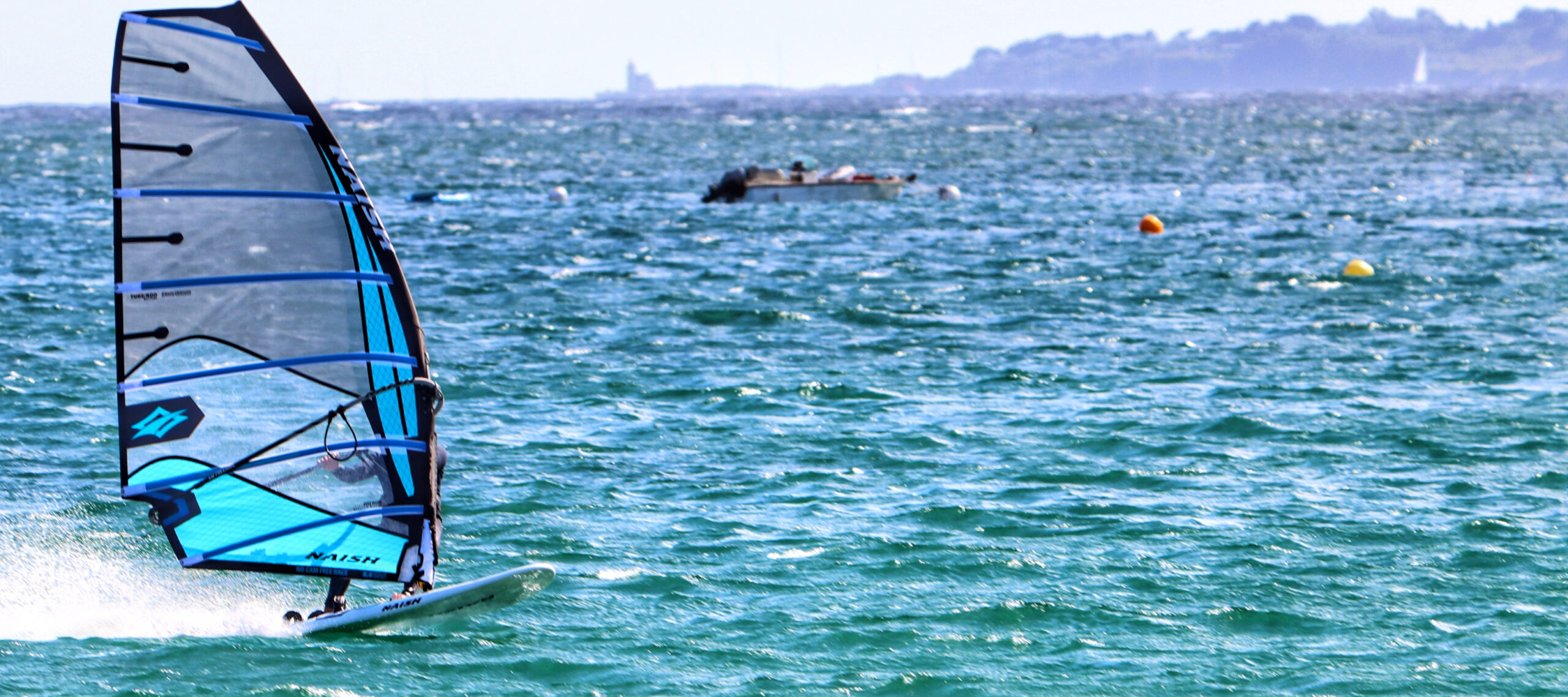
- Induced Wind: The wind created solely by your forward motion. (Think of cycling on a perfectly calm day—the breeze you feel on your face is induced wind).
- Apparent Wind: The combination of True and Induced wind.
Why does this matter?
The Apparent Wind is the wind the sails actually feel. Successful sailors trim their sails to the Apparent Wind, not the True Wind. This creates a dynamic relationship between the boat and the breeze:
- The Gust Response: When a gust hits (True Wind increases), the apparent wind angle moves back. You may need to sheet out.
- The Acceleration: As the boat speeds up (Induced Wind increases), the apparent wind angle moves forward. You may need to sheet in.
Pro Tip: Unless you are running dead downwind, you are always sailing in “Apparent Wind mode.”
Part 2: The 5 Essentials
(Or: “Can This Boat Sail Better?”)
These principles are the standard for RYA Dinghy, Dayboat, and Keelboat schemes. They represent the five distinct controls you have over the boat’s performance.
To remember them, just ask yourself: Can This Boat Sail Better? (C.T.B.S.B. = Course, Trim, Balance, Sail Set, Board)
1. Course (VMG or CMG)
The Golden Rule: Course is relative to the True Wind.
It’s not always about the shortest distance; it’s about the fastest arrival. When we select our course—whether we are beating upwind or running deep downwind—we are making strategic decisions based on the True Wind (the wind direction over the water).
- CMG (Course Made Good): Your speed directly toward your geographical destination.
- VMG (Velocity Made Good): Your speed toward or away from the True Wind.
Many boats, especially high-performance skiffs or foiling cats, sail faster by taking a “longer” route. By heading up (sailing closer to the True Wind) or bearing away, they increase their speed so much that they reach the destination faster than if they sailed a direct line.
The Critical Distinction: Think of the “Course” as the job of the Navigator/Tactician: they look at the water and the True Wind to decide the path. This is different from “Sail Set,” which focuses on the Apparent Wind.
2. Trim (Fore and Aft)
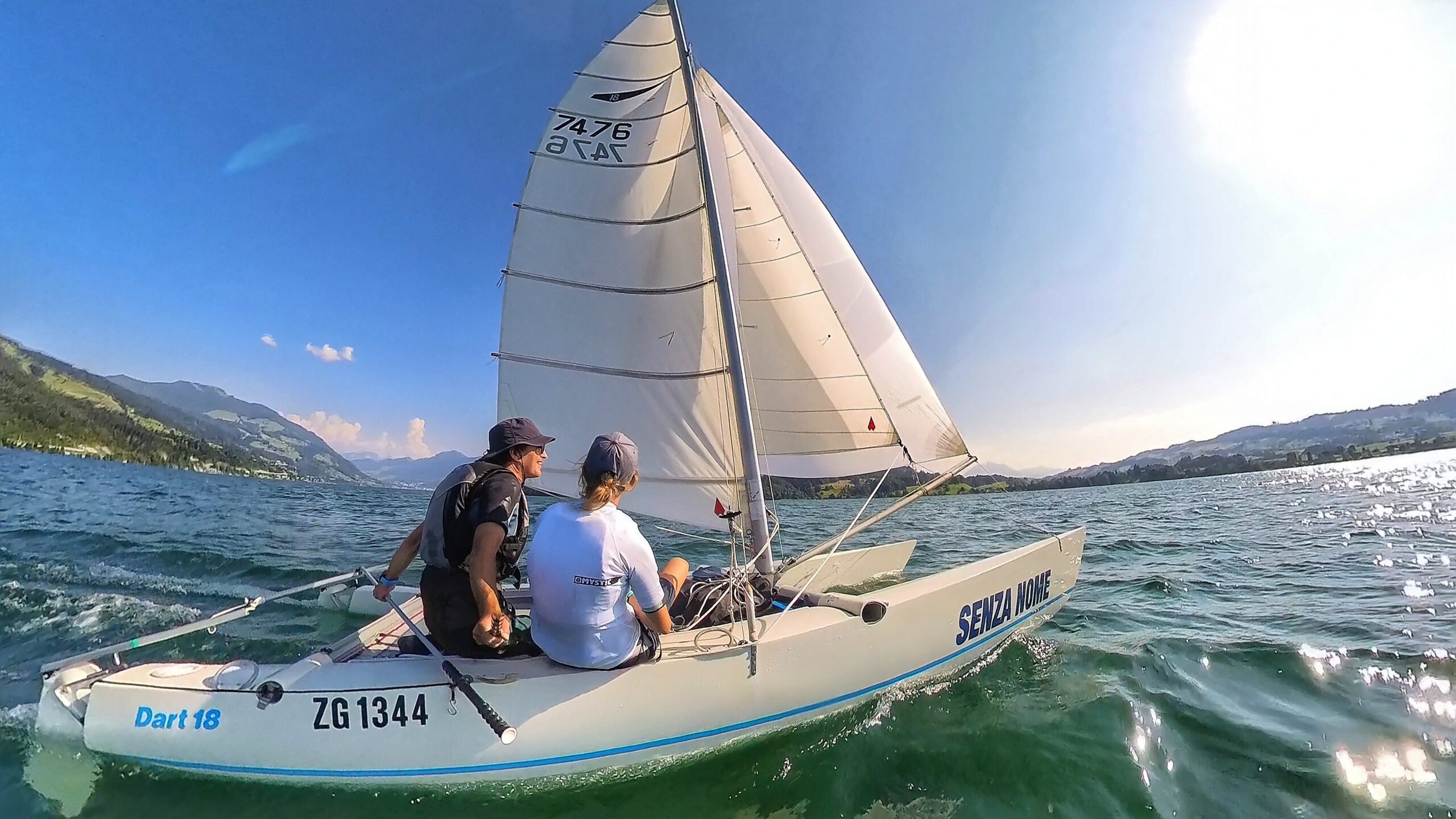
While “Balance” is left-to-right, “Trim” is front-to-back.
- Displacement Mode (Low Speed): A boat’s maximum speed is often limited by its waterline length. Keeping the boat flat fore-and-aft maximises this length.
- Planing Mode (High Speed): As you accelerate (like on a windsurfer or fast dinghy), you want to move weight back. This reduces the “wetted surface area,” allowing the bow to lift and the boat to plane over the water rather than pushing through it.
3. Balance (“Flat is Fast”)
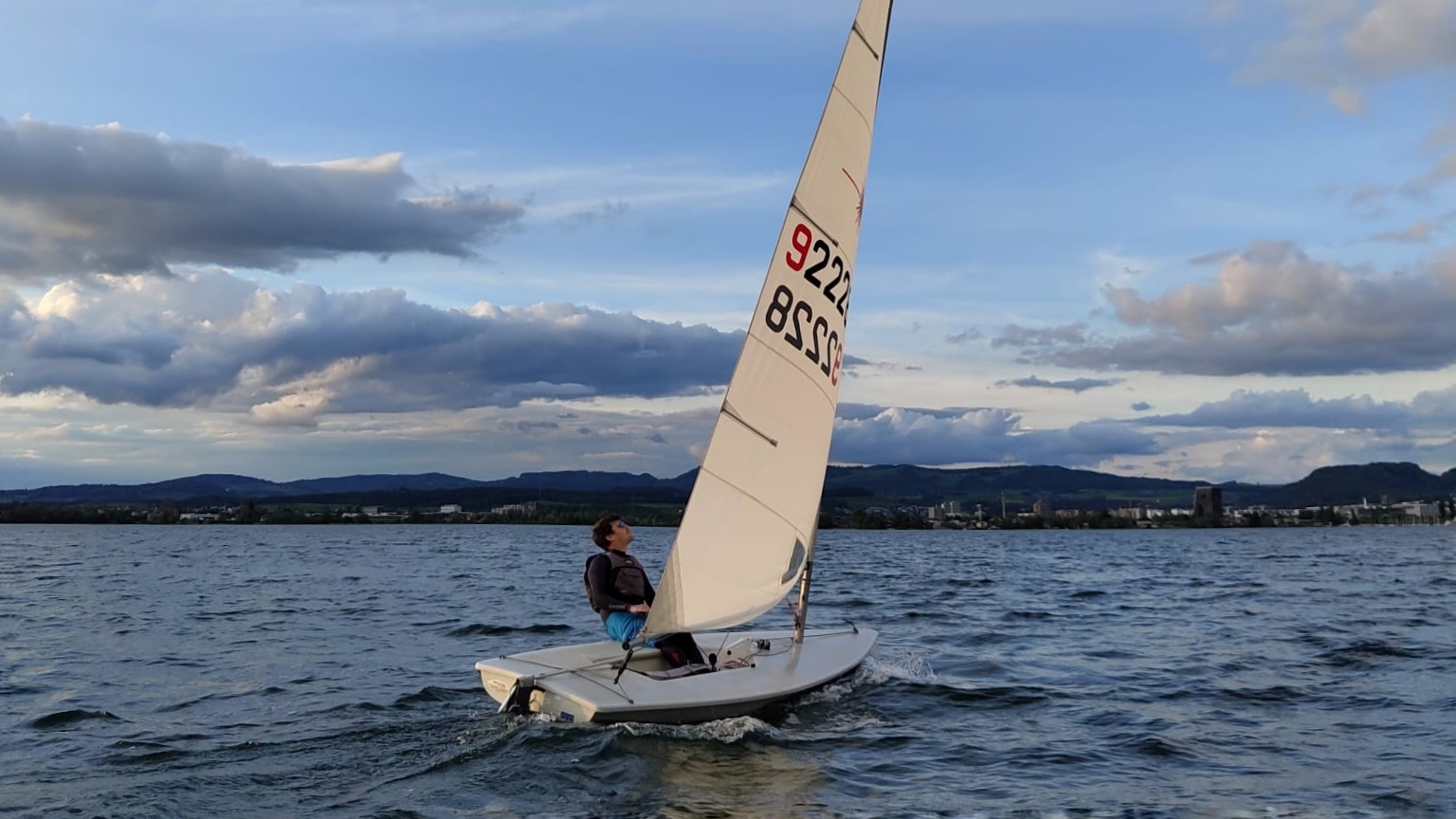
Balance refers to the lateral (port and starboard) angle of the boat. For 99% of boats, Flat is Fast. Leaning the boat over too far causes two major problems:
- Increased Drag: You are pushing more hull shape into the water, creating friction.
- Weather Helm: The boat shape acts asymmetrically, forcing the boat to turn into the wind. You have to fight this with the rudder, effectively using the rudder as a brake.
4. Sail Set
The Golden Rule: Sail Set is relative to the Apparent Wind.
While your Course is set to the True Wind, your sails must be trimmed to the Apparent Wind (the wind created by the combination of the weather and your own speed).
- Upwind (Laminar Flow): The sail acts like an airplane wing, generating lift.
- Downwind (Drag): The sail acts like a parachute, generating push.
- Active Trimming: Sailing is dynamic. If you accelerate (changing the Apparent Wind), you must sheet in. If you slow down, you must sheet out.

5. Board (Centreboard / Keel)
The centreboard prevents sideways slippage (leeway).
- Upwind: The sails exert a massive sideways force. You need the board fully down to provide maximum lateral resistance.
- Downwind: The wind is pushing you from behind, so side-slip isn’t an issue. You can raise the board to reduce drag.
- Reaching: Adjust the board halfway to balance drag reduction with leeway prevention.
Part 3: The Ultimate Test (Rudderless Sailing)
If you want to prove you truly understand the mechanics, try sailing without the rudder. This is a classic test for RYA Instructors (and old-school sailors like our very own Dave!) because it forces you to steer using only the 5 Essentials.
If your essentials are perfectly tuned, the helm should feel light. If you let go, the boat should continue straight.
How to steer without a rudder:
- To Bear Away (Turn away from wind): Heel the boat to windward (Balance) or sheet out the mainsail (Sail Set).
- To Head Up (Turn into the wind): Heel the boat to leeward or sheet in hard.
- Tacking: Head up aggressively using heel, and back the jib slightly to push the bow through the wind.
It takes practice, but once you master rudderless sailing, you stop fighting the boat and start dancing with it.
Ready to put theory into practice?
Reading about the 5 Essentials is one thing; feeling the helm balance perfectly in your hand is another.
At All Winds Adventures, we offer tailored sailing experiences where you can learn these skills or simply sit back and watch our skippers apply them. Whether you want to learn the ropes or just enjoy the ride, we have a boat waiting for you.
The 5 essentials are Course, Trim, Balance, Sail Set, and Board (Centreboard/Keel)
The mnemonic is “Can This Boat Sail Better?” (CTBSB).
Join one of our social sailing or private coaching sessions with All Winds Adventures to learn more about the 5 essentials.
No responses yet