
TL;DR Summary for Skippers:
- The Reality: Every sailor will eventually face an emergency. Even the elite pros making multi-million Euro mistakes.
- The Strategy: Disasters are a chain reaction (like a messy cockpit leading to a wrapped prop). Your job is to break the “Chain of Disaster” early.
- The PAME Framework: Always use Plan, Approach, Manoeuvre, Escape before committing to any high-risk boat handling.
- The Action: When chaos hits, hit your mental “Reset Button” (Stop, Breathe, Think). Always prioritise People first, Hull second, and Rig/Engine third.
If you spend enough time around boats, you will eventually realise a harsh truth: It’s not “If”, it’s “WHEN”!!!.
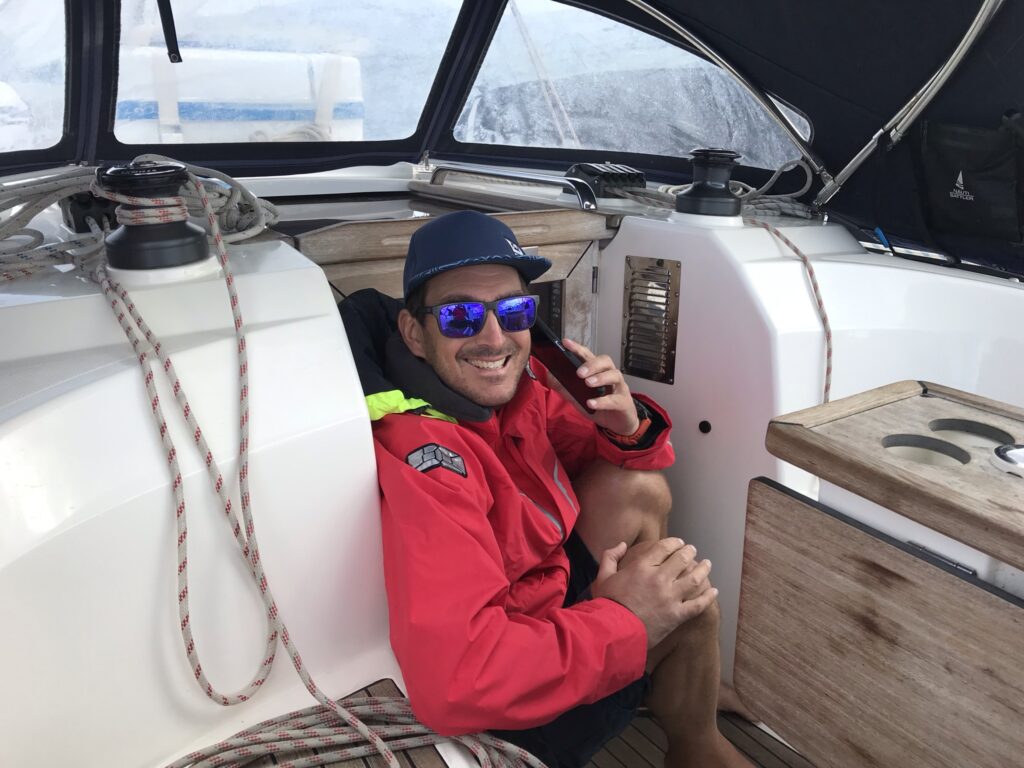
There is no worse sound on a bareboat charter holiday than the engine suddenly choking and dying as you reverse into a tight marina berth. The sea is unpredictable; equipment breaks, and as humans, we all make mistakes. I’ve spent 40 years on and around the water, and I can promise you that no skipper is perfect.
Even elite offshore professionals screw up. Look at the last Ocean Race: Charlie Enright’s 11th Hour Racing team suffered a massive, hull-crushing collision with Guyot environnement right at the start of the final leg. But they didn’t fall apart. They managed the immediate catastrophe, bounced back, and actually went on to win the entire global event. Elite sailors make mistakes. The difference isn’t that they are perfect; the difference is how they keep a mistake from becoming a disaster, and how they bounce back afterwards.
Whether you are sailing on a Swiss lake or navigating a 45-foot catamaran in Croatia, here is how you handle the chaos when things go wrong on the water.
1. Recognise “The Chain of Disaster”
Disasters are rarely one single event. They are almost always a chain reaction. The equation can often look something like this:
Minor Error + Fatigue + Rushing + Bad Weather = Catastrophe.
Let’s look at a highly realistic bareboat charter example:
- The crew is tired after a long sail and leaves the cockpit a tangled mess of lazy sheets.
- As you motor into a crowded marina in a crosswind, a sheet or a trailing mooring line fall into the water.
- The prop sucks it up and stops the engine dead.
- You have no propulsion, no steering, and you are drifting sideways into a million-Euro superyacht.
- Crash.
The strategy as a skipper is to catch the “Links” early. Prevention is better than cure. This means keeping a tidy “shipshape” cockpit and doing your safety briefings to tell the crew what to do before the drama starts.
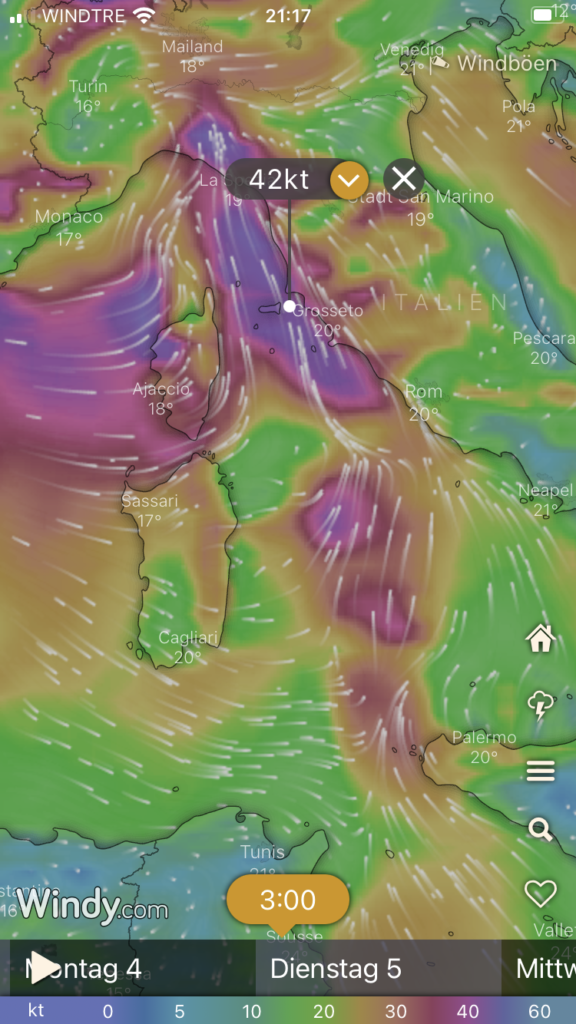
2. The PAME Method: Always Have an Escape Route
I learned this acronym on an RYA Powerboat Instructor course back in the late 90s, and it has saved my bacon more times than I can count. Before you commit to any tight docking or complex boat handling, run through the acronym PAME:
- P – Plan: What is the exact goal? (e.g., Docking stern-to on the windward pontoon).
- A – Approach: How are we getting there? What are the wind and tide doing?
- M – Manouvre: The actual execution of the plan.
- E – Escape: This is the most critical step. If a gust hits or the engine fails halfway through the manoeuvre, how do we bail out safely?
If you don’t have an Escape route, do not start the Approach.
3. Hit the “Reset Button”
When chaos hits, panic is the enemy. Panic causes tunnel vision, making the world shrink and making it very easy to miss something critical.
Let’s go back to 11th Hour Racing: On the wall of their cockpit, they literally had half a red tennis ball glued to the bulkhead. That was the team’s physical “Reset Button.” When things went sideways, they physically hit it to break the hypnosis of panic.
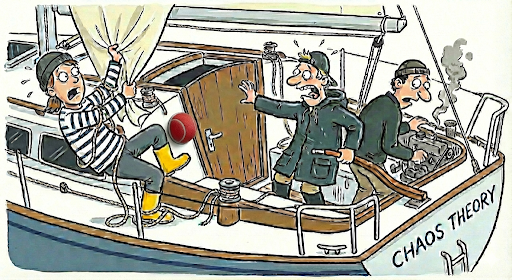
STOP, BREATHE, THINK.
Follow this cycle to regain control:
- Stop: Take your hands off the wheel, put the engine in neutral, or heave-to.
- Crew Welfare: Is everyone ok?
- Calm: Stay calm yourself—don’t make the situation worse with your own emotion. No shouting!
- Assess: What is actually wrong? Get feedback from your crew.
- Plan: Communicate the fix to the team.
Always remember your priorities:
1: People (Lives & Injuries)
2: Hull (Keeping the water out)
3: Rig & Engine (Propulsion)
4. Buy Yourself Time
If you are overwhelmed, you need to buy time. The ultimate way to press “Pause” on a sailing yacht is to Heave-to. Assuming you have the sea room, heaving-to stops the motion, flattens the boat, and allows you to make coffee and think.
5. Real-World Scenario: The Prop Wrap
Let’s say the nightmare happens: the engine just stopped dead because of a wrapped line.
- Immediate Action: Put the gear into NEUTRAL immediately. Do not try to restart it, you risk either making it worse or damaging the sail drive.
- Assess: Are we in immediate danger from rocks or other boats?
- Plan: Can we sail out of it? (Plan A). Should we drop the anchor to buy time and stop the drift? (Plan B). Or do we need to dive to clear it? (Plan C—Only if safe, engine off, keys in your pocket, spotter on deck).
The Bottom Line
Sh!t happens. There is often no definite right or wrong answer. You have to draw on your toolbox of skills. Prepare well, clear the cockpit, use the PAME framework, and when the chaos hits: hit the Reset Button.
Are you ready to take the helm with confidence? The best way to handle a catastrophe is to stop the chain before you even leave the pontoon. If you are planning your next sailing holiday, download the free All Winds Skippers Decision Matrix (now available as an offline Web App) to help you make safe, objective “Go/No-Go” decisions.
If you want a Yachtmaster in your corner to help you practice these catastrophe management skills in the real world, check out our Skipper Coaching Weeks in Croatia and Switzerland.
The most common (and preventable) disaster is a “prop wrap”—getting a mooring line or lazy sheet tangled in the propeller while maneuvering in a marina. This instantly kills your engine and leaves you drifting. This is why keeping a shipshape cockpit and using the PAME method (Plan, Approach, Manoeuvre, Escape) is critical. Want to practice this in real life?
Panic is contagious, but so is calm. The skipper must hit the mental “Reset Button” first. Take your hands off the wheel, put the engine in neutral (or heave-to), and assess the situation without shouting. If the skipper is calm and communicates a clear plan, the crew will follow. Check our Charter Guide with Decision Matrix
A Day Skipper ticket gives you the foundational mechanics of navigation and boat handling, but it is often taught in controlled environments. Real-world catastrophe management requires hands-on practice, dealing with fatigue, and managing human psychology—which is exactly what we teach during our shoreside support and on-the-water coaching sessions.
There is no single magic number—it depends on your crew’s experience, the sea state, and the specific yacht. However, most charter companies restrict sailing in sustained winds over 25-30 knots (Force 6-7). The real danger isn’t just the wind; it’s a lack of preparation and reefing too late, and very importantly the sea state. The golden rule is: “If you are thinking about reefing, you should have done it 10 minutes ago.
This is exactly why you pay a security deposit or buy charter insurance. If you crunch the gelcoat on a dock or tear a sail, you will likely lose part or all of that deposit. However, as a skipper, your priority during a catastrophe must always be safety: People first, Hull second, Rig/Engine third. Plastic and fibreglass can be repaired; people cannot!!!
Immediately put the throttle into neutral. Do not blindly try to restart it, as you could completely destroy the saildrive if a mooring line is wrapped around the prop. Then, immediately execute your “Escape” route from the PAME plan you made before your approach. If you don’t have sea room to sail out (which you won’t be able to do fixed to the mooring line by your prop!), prepare to drop the anchor to stop your drift before you hit another vessel, or very quickly attach yourself to the vessel you are alonside and “warp” the boat into it’s slip.

No responses yet