
A well-tuned autopilot is like having an extra hand on deck. It never gets tired, hungry, or seasick. However, it does consume power, so it’s vital to use it efficiently.
Many sailors simply press “Auto” and hope for the best. To truly sail efficiently and safely, you need to master your sailing autopilot modes relative to your point of sail and the sea state.
Whether you are fitting out your own vessel or chartering with All Winds Adventures, here is a guide to how your pilot thinks.
1. The Basics: Steering by Compass
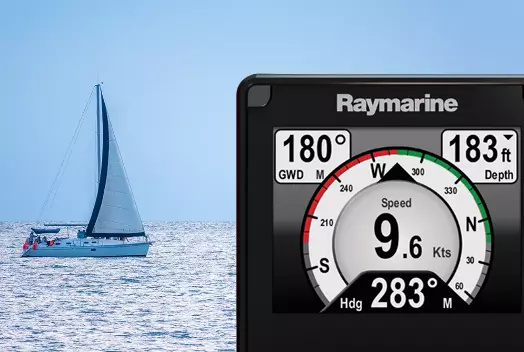
The most fundamental autopilot relies on a Fluxgate Compass. This is found on everything from small day-sailors with tiller pilots to large yachts.
When engaged, it locks onto your current magnetic heading. It controls the tiller or wheel to keep the bow pointing in that direction.
- The Pro: It is simple, reliable, and fits almost any boat.
- The Con: It is blind to the elements. If the wind shifts 20 degrees, the boat keeps going straight. Your sails will eventually luff or stall.
The Reality: You must constantly monitor the wind. You have to manually adjust the course to keep the sails happy. Furthermore, simple tiller pilots lack power; they are best used only in benign conditions.
2. The Upgrade: Steer to Apparent Wind
Modern charter boats (and well-equipped private vessels) use integrated systems. These networks connect the instruments to the Chart Plotter or Multi-function Displays (MFDs).
If your system feeds wind data from the masthead unit into the network (like NMEA2000 or Raymarine Seatalk), you unlock a powerful feature: Apparent Wind Mode.
This is a game-changer once the sails are up. The boat can now “see” the wind. As the wind gusts, lulls, or shifts, the pilot steers to keep the telltales flying perfectly. Instead of steering a compass heading (e.g., 270° West), the pilot steers to a specific wind angle (e.g., 45° off the starboard bow).
- The Benefit: This is freedom. If the wind gradually shifts, the boat alters course to follow it. This keeps your sails efficient and your speed high.
- The Watch-out: You are no longer sailing a straight line on the map. You must navigate carefully. Ensure a wind shift doesn’t push you into shallow water or a shipping lane.
3. The Advanced Setup: Steering to True Wind
To unlock the “Holy Trinity” of pilot options, you need one more data point: Speed Through Water.
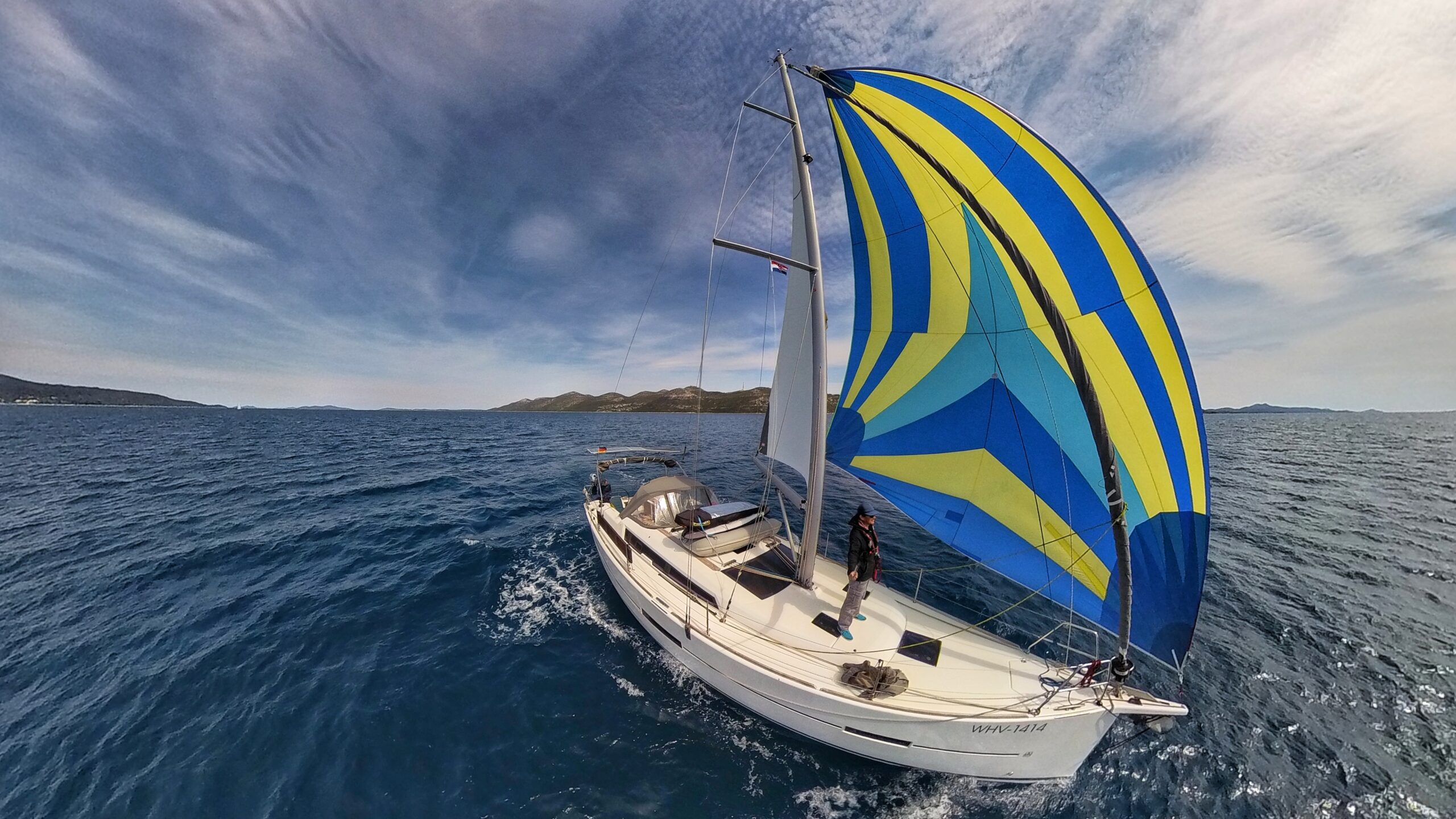
If your boat has a working speed transducer (Log), the system’s brain can calculate the True Wind. This allows the pilot to steer based on the actual wind direction, regardless of boat speed.
So, which mode should you use?
The Cheatsheet: Which Mode for Which Moment?
Here is the protocol we use at All Winds Adventures to ensure safety and performance.
Scenario A: Motoring or Motor-Sailing
Mode: Compass / Heading Hold. When sails are down, or you are punching through a calm, aerodynamic efficiency doesn’t matter. You want the shortest distance between two points. Set the pilot to a compass heading that maintains your desired Course Over Ground (COG).
Scenario B: Upwind & Reaching (Apparent Wind < 90°)
Mode: Apparent Wind When sailing close-hauled or on a beam reach, your speed usually remains steady. Steer to Apparent Wind. This ensures the boat hugs the “groove” perfectly. If the wind lifts you, the pilot follows; if it heads you, the pilot bears away to keep the sails full.
Scenario C: Downwind (True Wind > 130°)
Mode: True Wind When sailing deeper than 130 degrees, or when the sails go into “Push” mode, use True Wind Mode.
We have done this intuitively for years. Pip Hare, of Vendée Globe fame, wrote an article recommending this exact strategy some years ago. While her article discusses advanced racing systems, the physics apply to everyone.
The Downwind Danger: Why “Apparent” Fails in Waves
Why shouldn’t you use Apparent Wind when sailing downwind? It comes down to physics.
- Imagine you are sailing downwind. A large wave picks up the stern.
- The boat surfs and accelerates rapidly.
- As boat speed increases, the Apparent Wind physically shifts forward (towards the bow).
- If the pilot is in Apparent Wind Mode, it detects this shift. It thinks the boat is turning too far upwind.
- To “correct” this, the pilot bears away (steers away from the wind).
The Risk: By bearing away while accelerating down a wave, the pilot can steer you into an accidental Gybe.
This dynamic causes broaches and ripped sails on IMOCA 60s in the Ocean Race. However, you don’t need a carbon fibre racing machine for this to happen. The physics are identical on a standard cruising yacht.
The Solution: Use True Wind Mode. The autopilot will ignore the temporary wind shift caused by surfing. It holds the course relative to the actual wind, preventing a dangerous gybe.
A Note on Safety
Remember: The Pilot is only an aid to navigation. Do not trust it blindly.
You must still keep a lookout and avoid traffic, reefs, and headlands. Always be ready to jump to the helm and hit “Standby.”
I learned this lesson the hard way 30 years ago off the west coast of Ireland. We were sailing double-handed. My crew-mate was asleep, and I felt peckish. I checked the horizon, saw it was clear, and went below to make a sandwich.
Within seconds, the pilot gave up the ghost. The boat tacked aggressively. By the time I scrambled back to the helm, the jib was backed, and we were threatening to gybe. I regained control just in time to save the rig. I had to wait for my crew-mate to wake up before I finally got that sandwich!
Troubleshooting Your Pilot
The Cause: This is likely due to a clogged speed transducer (paddle wheel).
The Fix: If you are sure the boat has one, clean the paddle wheel. You can do this from the water or by removing the transducer from the hull. (Note: Always have the bung ready before removing the sensor!).
The “Plan B”: On Raymarine devices, look for “Ground Wind.” This is calculated using GPS Speed (SOG) rather than water speed. It is a passable backup if your paddle wheel is jammed (in areas with no significant current!). Note: For charter guests, do not remove hull sensors; this can cause dangerous water ingress.
The Cause: The system isn’t seeing the wind data.
The Fix: Check your settings. We have seen sailing yachts accidentally set as “Motor Boats” in the autopilot setup menu. Motorboat logic often hides wind settings. Change the boat type back to “Sail,” and voila—the wind pilot returns.
The Cause: In rough seas or high winds, the pilot struggles to react fast enough.
The Fix: Adjust the Response Level in the settings (often found under “Performance” or “Response”). Increasing this makes the pilot work harder and faster.
Note: This consumes more battery power and makes the drive unit noisier. Only use high response when necessary. In truly rough conditions, hand-steering is often safer (and more fun).
Understanding these systems allows you to relax and enjoy the view. If you want to master boat handling or try these systems on the water, check out our latest charter availability at All Winds Adventures.

No responses yet