
There is an old marina joke about the three ultimate tests of a relationship: assembling flat-pack furniture, surviving the holidays with the in-laws, and docking a sailboat in a crosswind.
If you spend an afternoon sitting at a Mediterranean café, you will inevitably see the cliché play out. A charter yacht comes reversing in too hot. The “Skipper” (usually the man) is glued to the helm, shouting contradictory distances over the roar of the diesel engine. Meanwhile, the crew stands on the bow with a roving fender, looking stressed and terrified of doing the wrong thing.
It is a terrible dynamic. When a docking manoeuvre devolves into shouting, it is almost never the fault of the person holding the mooring line. It is a failure of leadership, preparation, and delegation by the person holding the wheel.
I know this because I have been that exact skipper, and I have made that exact mess.
The Spectator Café Disaster
Years before All Winds, Karin and I took our first charter holiday together. I had been a qualified sailing and powerboat instructor back in the 90s and early 2000s. However, handling a bulky charter yacht in tight quarters in an unfamiliar marina as a couple was a completely different beast.
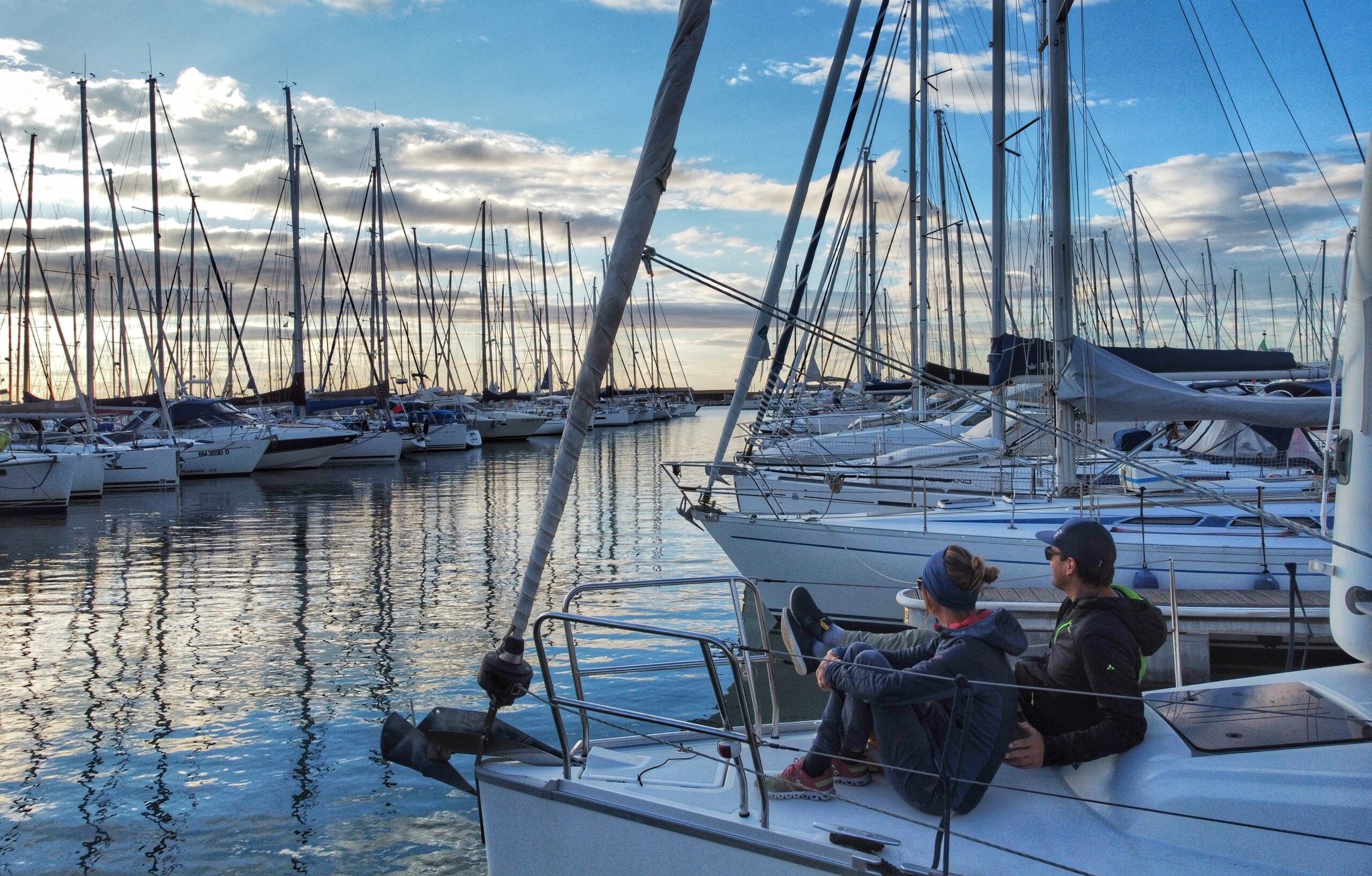
Our very first docking manoeuvre happened at Marina di Scarlino in Tuscany. We were coming stern-to onto a finger berth with a nasty crosswind. Because the boat had no bow thruster, I knew the moment we lost forward momentum, the bow was going to blow off violently. I tried to communicate this reality before we committed to the move, but my briefing was clearly inadequate.
I got the boat into the slip reasonably well, stopped our momentum, and asked Karin to get the line on the bow. Then… nothing happened.
What followed was pure panic. I literally jumped over the helm station, sprinted forward, grabbed both the bow and stern lines at the same time, and wrestled the boat fast to the cleats. I nearly fell into the water in the process. It was a chaotic, ugly recovery, performed directly in front of a café full of spectators.
The frosty words afterwards, and my own intense disappointment in myself for botching the manoeuvre, forced some serious introspection. How could we do this better?
Couples Cruising: Breaking the Vicious Cycle at the Helm
When a skipper gets scared or messes up a manoeuvre, human nature dictates that they retreat to where they feel safest: the helm. They hoard the wheel because it gives them an illusion of control.
This creates a vicious cycle. The “Skipper” gets 100% of the driving practice, and the partner gets relegated to the role of a permanent, nervous deckhand. Consequently, the skills gap widens, resentment builds, and the boat becomes reliant on a single point of failure.
For couples cruising together, this is a massive, life-threatening problem. What happens if that “Skipper” goes overboard?
The Pressure Cooker: Hidden Nerves and Pride
If one partner is visibly nervous on the bow, the reality is that the person on the helm is probably just as nervous. However, they feel compelled by pride to hide it. Because they are not entirely comfortable themselves, they overcompensate and micromanage. When the stress peaks, they vent those hidden nerves onto their partner.
Taking your nerves out on your crew is the fastest way to ensure that the boat ends up on the brokerage market by the end of the season.
Home Truths: You Don’t Have to Drive
In many countries, you legally need someone on board with a specific certificate. That person holds the ultimate legal responsibility for the vessel. But being the responsible person does not mean you have to be the person doing everything.
A good skipper delegates. There is a catch, though: To be comfortable delegating a task, you must be incredibly comfortable doing it yourself. You cannot clearly explain to a partner how to lasso a cleat if you don’t deeply understand it yourself. Furthermore, you cannot explain why a boat has no steerage in reverse until it’s moving, or how a heavy throttle hand creates massive prop walk, unless you have mastered those concepts.
The Slime Line Stereotype: Brains Over Brawn
If you want to see this vicious cycle in action, watch a boat doing a stern-to Mediterranean mooring with lazy lines (slime lines). The stereotype is painfully common. The man is glued to the helm. The woman is wrestling with a heavily tensioned mooring line, screaming that she isn’t strong enough to pull the bow of a 15-ton yacht against the wind. The skipper simply shouts, “Just pull harder!”
There are two very simple ways to solve this.
- Solution 1: Swap Roles. Put the heavier, stronger person on the bow to haul the wet lines, and put the partner on the helm to drive the boat.
- Solution 2: Use the Engine, Not Your Back. You have a powerful diesel engine under your feet. Use it to do the heavy lifting!
Here is the All Winds method for stress-free slime lines:
- The Long Stern: Fix your stern lines first, but let them slip so the boat is sitting further out of the slip than you ultimately want to be.
- Neutral is Critical: As the crew lifts the slime line from the stern to walk it forward, put the engine in neutral to avoid a catastrophic prop wrap.
- Power Forward: Once the crew is at the bow with the line, gently engage forward gear, motoring against your stern lines. The boat will hold itself in place.
- Zero-Tension Cleating: Because the engine is holding the boat, the crew just has to take up the slack and drop the slime line onto the bow cleat. Absolutely zero heavy pulling required.
- The “OXO” Trust Hack: If the crew is terrified they will tie a bad cleating hitch, don’t shout. Ask them to do an “OXO” (a full turn and figure eights, followed by another full turn). This creates enough friction to hold the boat safely without a locking hitch.
- Power Reverse: Before you shift into reverse to tighten the stern lines, the skipper can calmly walk to the bow and put the final locking hitch on themselves. Once the bow is locked off properly, walk back to the helm, power astern, pull the stern lines tight, and make them fast.
The Power of Play
The real breakthrough for Karin and me didn’t come from rigid drills. It came from playing.
We started turning manoeuvres into low-stress games. If we were at anchor and the wind was right, we would start the engine as a backup, hoist the sail, and practice sailing off the anchor. Crucially, Karin was on the helm for that first attempt, not me.
When we leave a marina, I will often throw a fender overboard (when it’s safe to do so), point at it, and say, “That’s me in the water. What are you going to do?”
Because we built actual, mutual trust, the payoff was massive. When we did our first night passage from Italy to Corsica, I took the darkest watch to make the experience as enjoyable and low-stress for her as possible. But she still took a solo watch while I slept in the cockpit. Today, she anchors the boat while I work the bow, and can completely manage the vessel without me for a night watch.
“Once you’ve built that baseline trust, executing physical manoeuvres under sail becomes far less intimidating. For a deeper look into line routing, autopilot strategies, and stress-free sail changes, check out our guide to shorthanded sailing techniques for couples.
The Myth of Perfection
Whether it stems from a cultural expectation that demands flawless execution or just pure, stubborn ego, we have to accept one fundamental truth: On the water, perfect does not exist.
We are playing in nature, and things will go wrong. The goal of a competent skipper isn’t to execute a flawless, brochure-ready manoeuvre every time. The goal is catastrophe management. Catch the small mistake early enough to ensure no one gets injured, and nothing gets broken. If the bow blows off, you abort, reset, and try again.
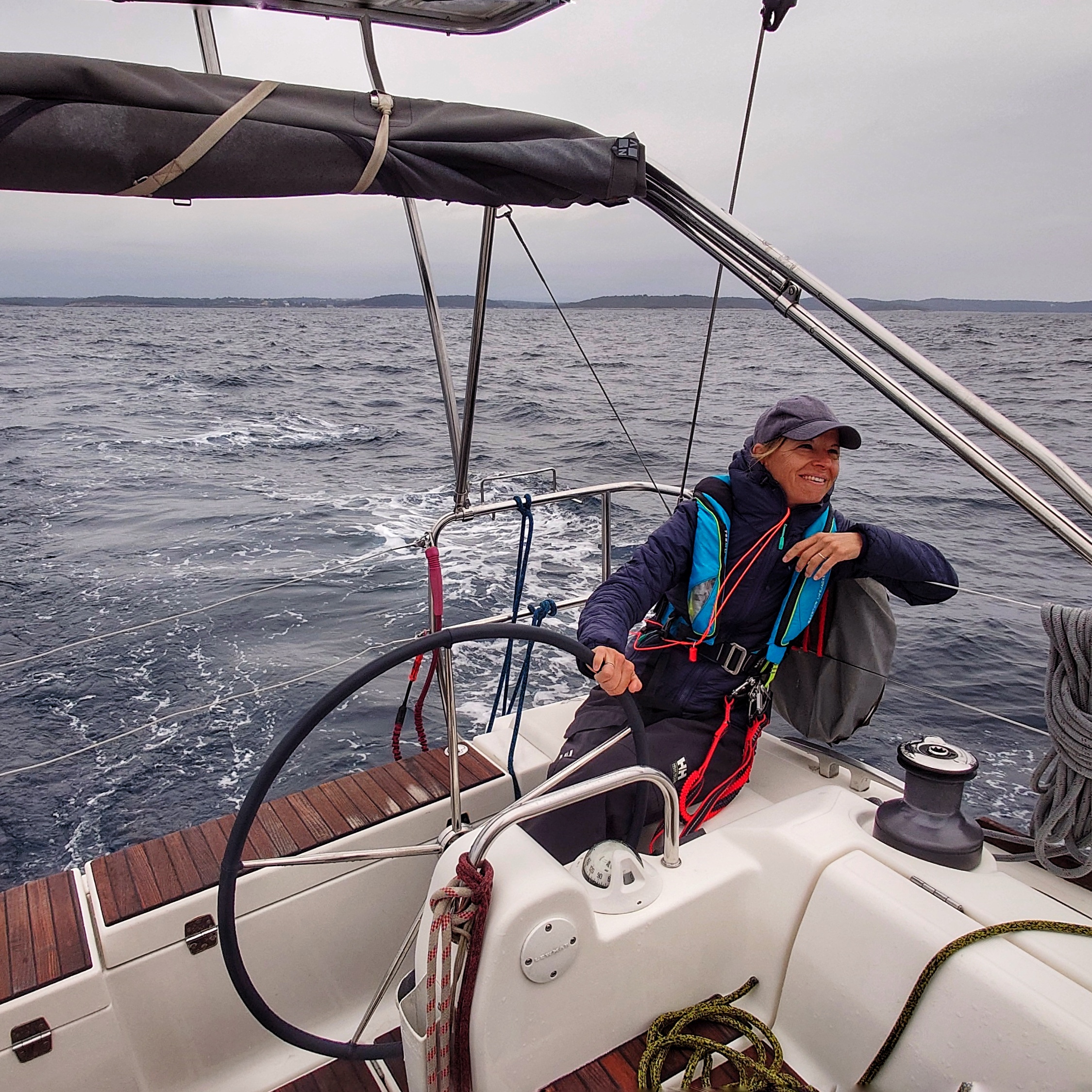
Own It and Move On
When a manoeuvre does go wrong, own it. Do not pass the blame to the partner holding the line. Stand up, take the failure on your own shoulders, and look for the lesson. Nobody has made it through life, or across an ocean, without making mistakes.
The true mark of a great couples cruising partnership isn’t that you never mess up. It is the ability to recognise the failure, learn how to prevent it next time, put it down to experience, and move on.
Let go of the wheel. Build your partner up. Work together, not against each other. Wash the salt off the deck, drop the gangway, and go enjoy that apéro.
Want to fast-track your teamwork on the water? Reading about it is one thing; practising it on the water is another. If you and your partner want to build confidence, swap roles safely, and learn how to dock without the shouting, we offer Private Couples Coaching onboard All Winds. We take the stress out of the learning curve so you can focus on enjoying the journey together. Contact us here to discuss private coaching.
Start incredibly small, and get far away from the dock. Do not ask a nervous partner to steer the boat into a tight marina on their first try. Go out into open water, turn on the engine, and ask them to steer toward a distant visual landmark (like a headland or an island) while you sit right next to them.
Once they are comfortable going in a straight line, have them do some large figure-of-eights, slow circles, or steer up and down the wind. Holding a strict compass course is actually surprisingly difficult for a beginner; what they need right now is to just get a physical feel for the wheel, the momentum, and how the boat responds to their inputs. The goal is to slowly build the baseline confidence that they are in control of the vessel.
They are often called “marriage savers,” and while they are fantastic tools, you have to understand that they treat the symptom, not the cause. They solve the problem of having to shout over a diesel engine, but they do not solve the problem of a skipper who is secretly panicking or a crew member who doesn’t understand the maneuver. Use them to keep your voices at a calm, conversational level, but do not use them as a crutch to avoid doing a proper pre-docking briefing or practicing your skills.
Yes, it does—which is exactly why you should swap roles: put the physically stronger person on the bow, and put your partner on the helm. However, a good mooring manoeuvre should always prioritise brains over brawn. If you are using sheer physical strength to drag the bow of a 15-ton yacht against a crosswind, your technique is wrong. The boat’s engine should be doing the heavy lifting. Use the engine to hold the boat in place so the lines can be secured with almost zero physical tension.
You have two great, low-stress options:
The Fender Drill: Don’t practice in the marina. Take a spare fender, tie a bucket to it to slow its drift, and throw it overboard in a quiet, open anchorage. (Note: Be very careful here not to run over the line and cause a prop wrap!) You can practice your approach angles, reversing, and judging momentum on the fender. If you get it wrong and hit the fender, it costs you nothing and nobody is watching.
The Off-Season Approach: Go sailing in the off-season when the marinas are quiet. Find an empty quay or pontoon, and when there is no wind, practice approaching without actually making fast. Just get a feel for the angles and the prop walk. Slowly build up to doing easier manoeuvres to build mutual confidence.
In general, you want a boat small enough to be easy to handle, but large enough to offer some comfort. We recommend 38 to 41 feet for a cruising couple, though you could easily go down to 34 or 35 feet if you prefer. Anything bigger than 41 feet is usually unnecessary space for just two people. In that 38-to-41-foot range, you already have a decent waterline length for efficient cruising, and the boat remains a very manageable size for tight marinas.
Before attempting a night watch, both crew members should already feel relatively comfortable handling the boat during the day. From there, build up gently. For our first night passage together, we waited for a perfect weather window and a bright moon for most of the night. We also planned around the moonset so that the more experienced sailor was on watch for the darkest hours. I even brought a bivvy bag so I could sleep in the cockpit while Karin did her first solo night watch. With good planning, the experience was so beautiful that the pleasure far outweighed the fear. Planning is everything.

No responses yet