
Finding the perfect boat for a sailing holiday is a balance of stability, space, and ‘power-to-weight’ performance. As a Switzerland-based boutique charter agency serving all of Europe, we draw on extensive time at the helm of popular charter models. This allows us to provide practical, first-hand advice based on real-world experience
We draw on over 35 years of wind-sports experience. This spans from family cruisers to high-performance yachts like the RM 1350. We created this guide to explain how different designs handle. Crucially, we show how those traits scale as boats get bigger.
How to “Scale” Your Expectations
How do you know if a 46-foot boat feels like the 38-foot version you read about? Larger boats are naturally more stable due to their weight. However, a boat’s “soul” depends on technical ratios.
The SA/D Index: Your Performance Compass
For those who prioritise sailing, look for the Sail Area-to-Displacement (SA/D) ratio in the specs:
- Under 15: Often under-sailed. Expect to motor in light winds.
- 16–18: The “sweet spot” for modern cruising.
- 20+: High-performance (like an RM or Pogo). Expect higher loads and active sailing.
As you scale up—for example, from a Sun Odyssey 410 to a 440—waterline length adds speed. However, check that the sail area increases with the weight. If it doesn’t, the larger boat may feel “slower” in light air than its smaller sibling.
Size Matters: Crew Comfort vs. Handling
Size influences two major factors: Space and Load.
- Small Crews (Couples): A boat in the 34 to 41-foot range is often perfect. It offers luxury without becoming a chore to manage in a marina.
- Two Couples or 4–5 Friends: Aim for 38 to 43 feet. This ensures everyone has “breathing room” and storage.
- Large Families: Boats over 41 feet or Catamarans are best for larger parties.
Pro Tip: Never fill a boat to its absolute maximum capacity. A 41-foot boat may sleep eight, but we recommend a limit of 4 to 5 people. This ensures everyone has a cabin and enough storage for a comfortable holiday.
Technical Specs: Handling the Rig
Pay close attention to the sail plan. It dramatically affects your daily experience:
- Fully Battened with Slab Reefing: Best for performance. It offers more sail area and better tuning.
- Roller Furling Mainsail: Offers easy reefing from the cockpit. It is great for small or less experienced crews.
- Self-Tacking Jibs: These make tacking effortless. They are ideal if your group isn’t active in sailing. However, you do sacrifice some sail area.
- Autonomy: If you love secluded bays, prioritise solar panels and large water tanks (500L+).
Real-World Case Studies: Our Honest Reviews
We have personally tested these models in various conditions. Here is our take:
Bavaria Cruiser Series (34, 41 & C38)
Cruiser 34 & 41: These are exceptionally stable with a comfortable motion. They have a “classic” hull shape that handles choppy seas smoothly.
Bavaria C38: A modern style with hull “chines.” While it has good form stability, the self-tacking jib version can feel under-sailed.
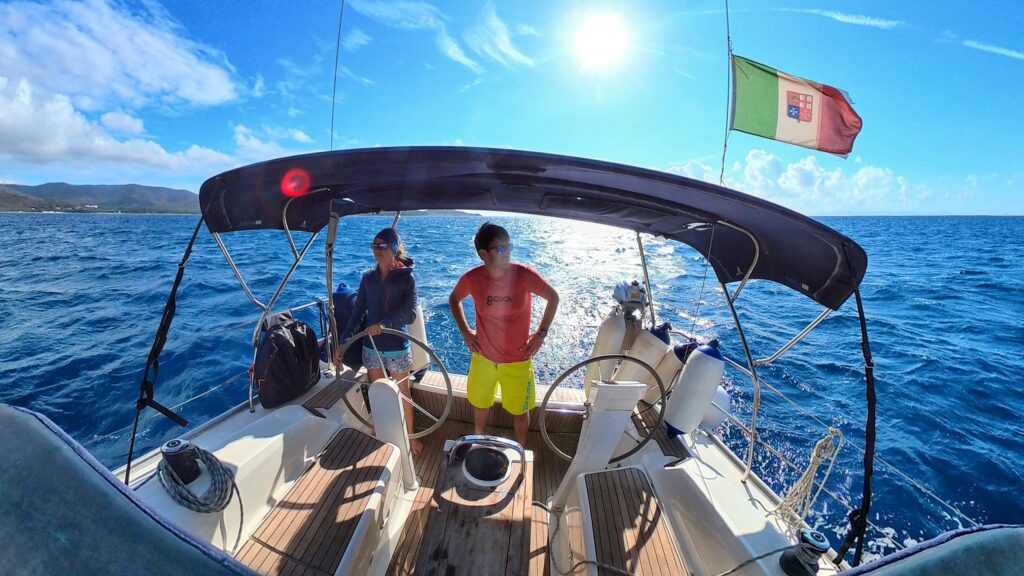
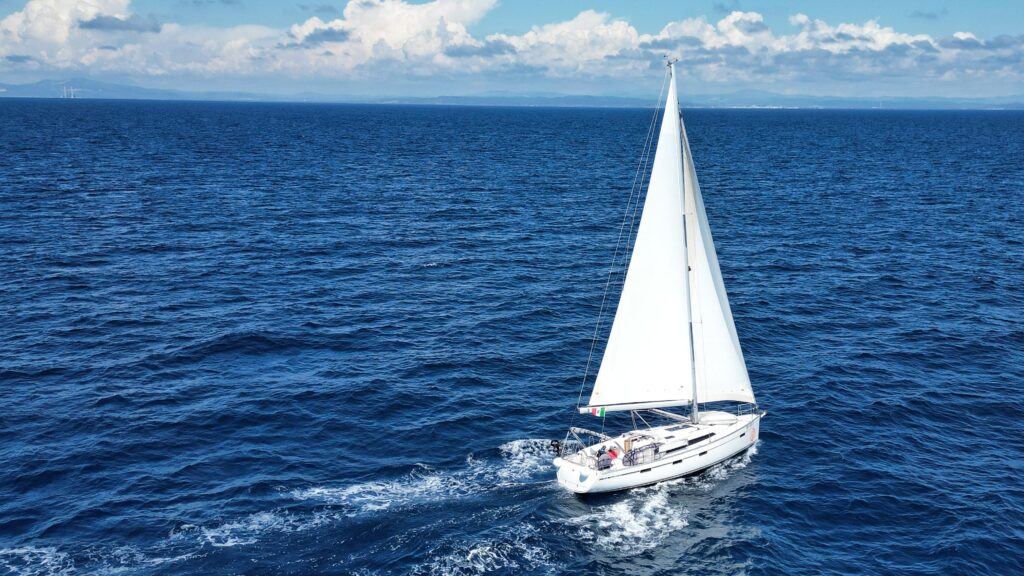
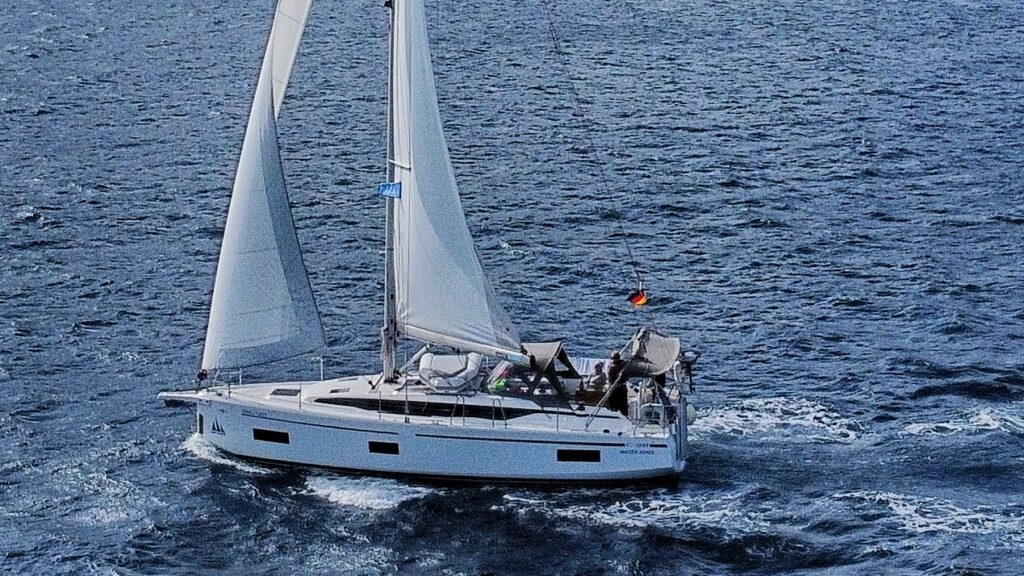
Beneteau Oceanis Series (35.1 & 41.1)
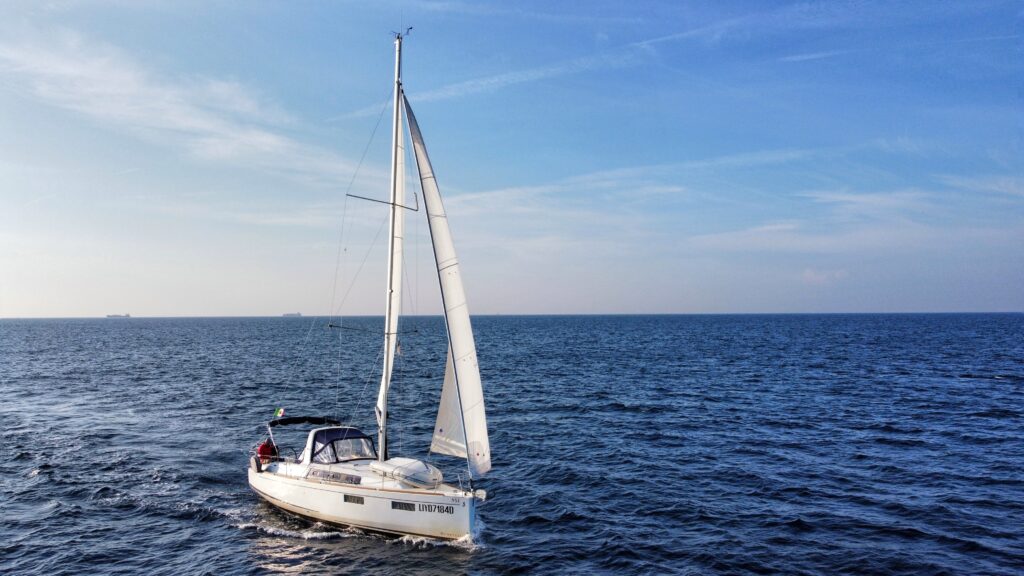
Oceanis 35.1: Very easy to handle in marinas. It is perfect for a couple’s getaway but can feel “light” under sail.
Oceanis 41.1: A significant step up. We’ve seen speeds over 10 knots on this boat.
Expert Choice: We chose an Oceanis 41.1 with a fully battened mainsail for our own personal boat and for coaching. The battened main provides the power and precision needed for high-level coaching.
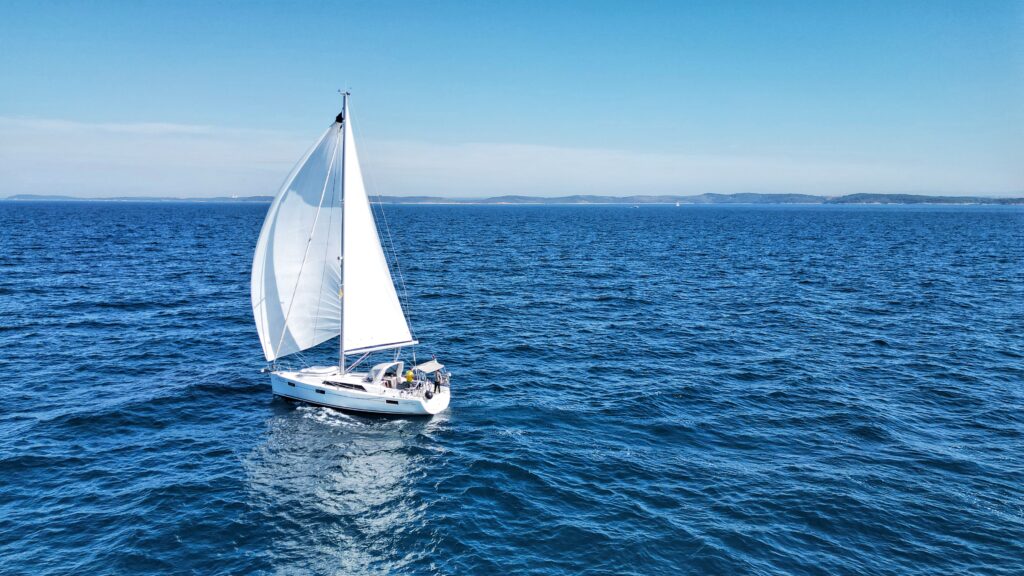
Jeanneau Sun Odyssey (410)
A personal favourite. The walk-around side decks provide incredible security at night. It feels reactive, almost like a large dinghy. The twin rudders provide excellent grip during marina manoeuvres.
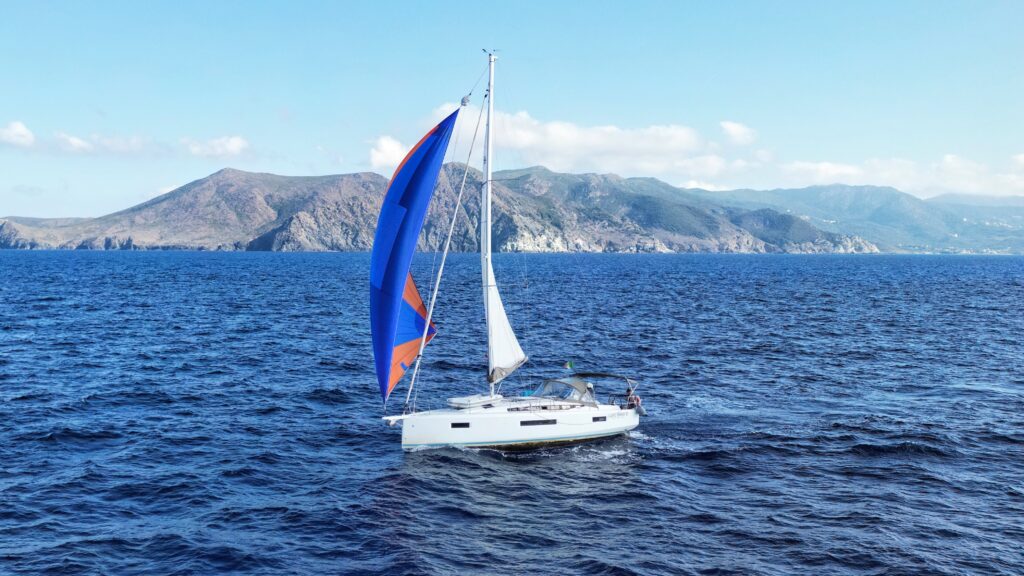
Dufour Grand Large (412)
This boat offers a massive interior and a fun transom gas grill. While it is a great “floating holiday home,” its sailing performance was the lowest among the group we tested.
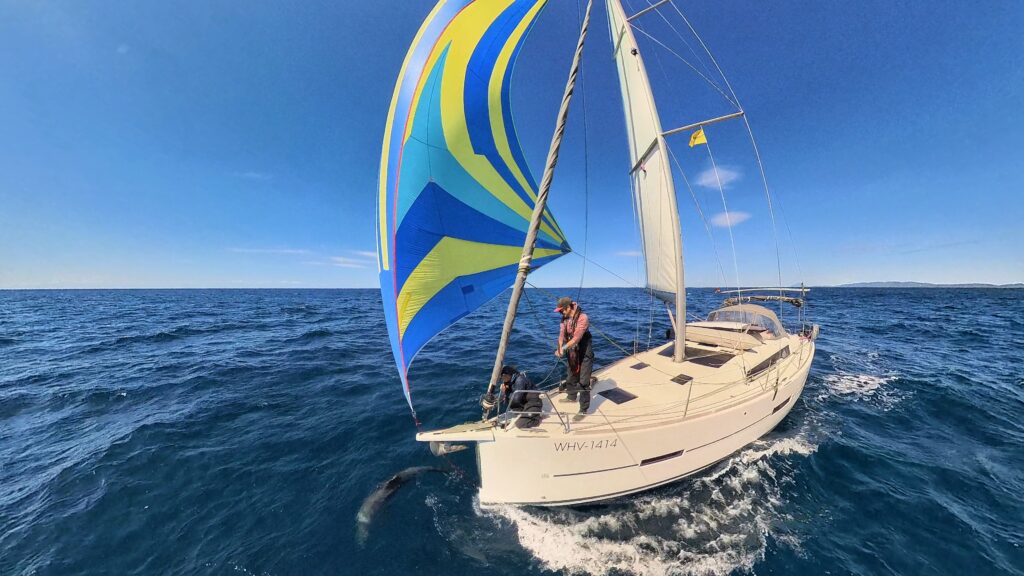
Alternative Options: Performance & Space
- Performance Cruisers (Pogo, RM): These are for experienced sailors wanting a sporty ride. Expect higher loads and technical systems like running backstays.
- Catamarans (Bali, Lagoon): The ultimate for space. They don’t heel (tilt), making them great for nervous sailors. Twin engines make them manoeuvrable, but their width requires good communication when docking.
Summary Comparison Table
| Feature Focus | Typical Characteristics | Best Suited For… | Example Models |
| Classic Feel | Good stability, solid build. | Families or friend groups wanting a reliable sail. | Bavaria Cruiser 34 / 41 |
| Social & Autonomy | Huge cockpit, large water tanks. | Groups, Couples or Families who love nights at anchor. | Beneteau Oceanis 41.1 |
| Sporty & Innovative | Active sailors want a fun ride. | Active sailors who want a fun sail. | Sun Odyssey 410 / 440 |
| Family Comfort | Focus on living space, outdoor grills. | Relaxed holidays; sailing is secondary. | Dufour GL 412 |
| Group Comfort | Focus on living space, outdoor grills. | Relaxed holidays; sailing is secondary. | Catamarans |
| High Performance | Sailing characteristics before comfort | Experienced sailors looking for a top performance | Pogo 44/RM 1370 |
Ready to find your perfect boat? Contact us to discuss your needs. We are happy to help you find your dream charter boat. Why not read our Step-by-Step Guide to booking your first charter?
Frequently Asked Questions (FAQ)
Larger boats don’t reward inexperience. Line loads are higher, the boats tend to be more affected by wind when manoeuvring, and they carry more momentum due to more weight. More precise control from the helmsperson and crew is required. They do, however, (for a given boat type) provide more stability and a more comfortable motion in heavier seas.
It comes down to performance and education. A battened main allows for a better sail profile. For coaching, it is essential to show how sail shape affects the boat’s balance.
It will be very tight. You would need to sleep in the saloon, and storage will be a major challenge. For a group of eight, we strongly recommend a 45-foot boat or a catamaran.
In the Mediterranean, a standard deep keel is usually fine and will help the boat go upwind better. If you are chartering in shallow areas like the Bahamas, a shallow-draft boat or catamaran is essential.
Absolutely. We have sailed almost every major model in the charter fleet. We can help you look past the brochures to the technical specs that define your holiday.
No responses yet